Quick answer: A pool can help or hurt a sale. In warm markets buyers may expect one; elsewhere many see upkeep and safety costs. Fix leaks, the pump and barriers, disclose known problems, and compare that cost with an as-is offer. DispoKey buys pool homes as they are, with a written net, and you can close in as little as 21 days.
- Know your pool's age, surface, equipment and any leak history.
- Check that fencing and gates meet your local barrier rules.
- Compare repair cost with the price difference, not the repair bill alone.
Does a pool add value to a house?
Sometimes. A pool tends to matter most where buyers can use it most of the year and nearby homes also have one. In colder areas it can narrow your buyer pool.
Look at recent sales near you with and without pools rather than relying on rules of thumb. If similar homes with pools sold for about the same price as homes without, a pool is not adding much in your market, and spending heavily on it before a sale is hard to recover.
Buyers also think about cost of ownership: chemicals, electricity for the pump, opening and closing, insurance and eventual resurfacing. Some buyers with small children skip pool homes altogether.
Gather your pool records
Pull together what you have: the pool's install year, resurfacing or liner dates, equipment receipts, any permits and recent service records. Buyers and inspectors trust a pool with a paper trail, and the records help a cash buyer price the house without guessing at the worst case.
What buyers and inspectors look at
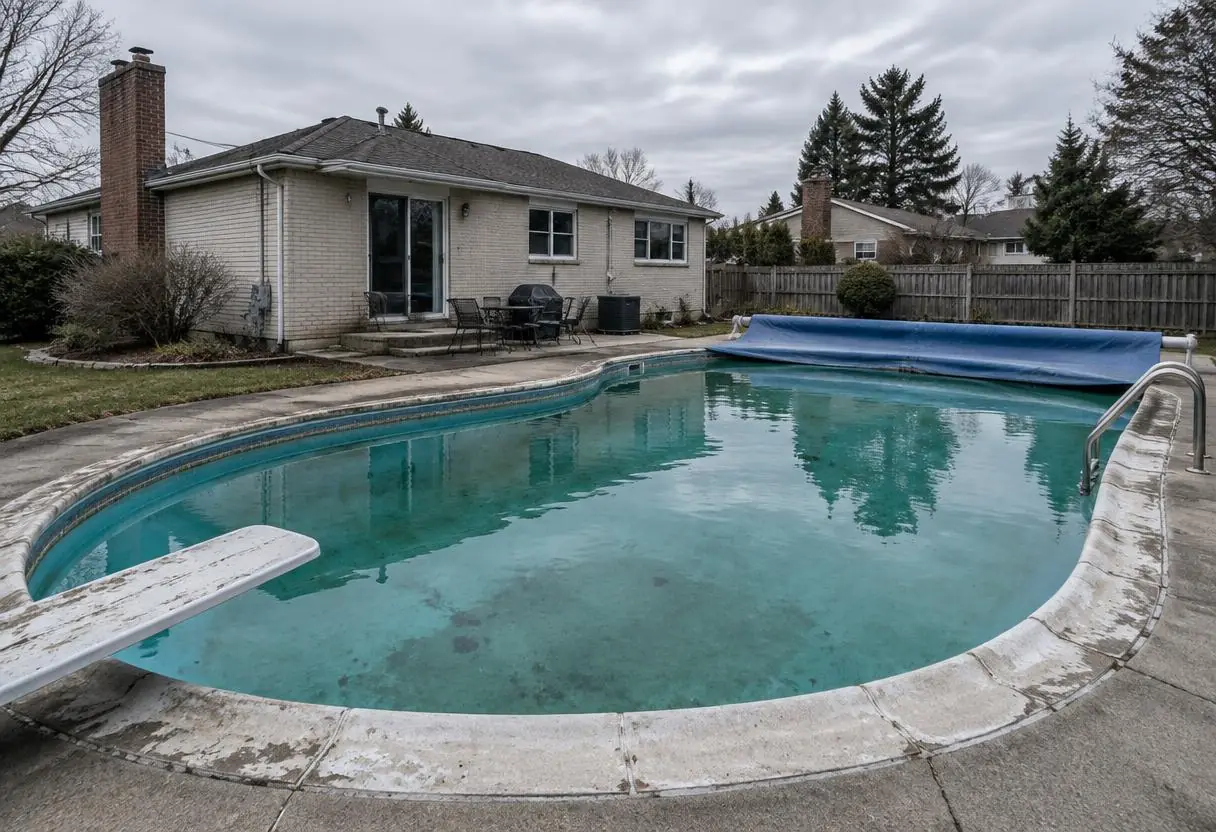
A home inspector or pool inspector checks the basin, equipment and safety features. Knowing these items before you list helps you decide what to fix and what to disclose.
- Surface: cracks, staining or rough plaster, liner tears in vinyl pools.
- Leaks: water loss beyond normal evaporation.
- Equipment: pump, filter, heater, timer and electrical bonding.
- Decking and coping: trip hazards, heaving or loose stones.
- Barriers: fence height, self-closing and self-latching gates, door alarms.
- Drain covers: damaged covers are an entrapment hazard.
Pool safety and barrier rules
Barrier rules are set by your state, county or city, often through the building code. Check with your local building department before you sell, because an inspection report may list a missing or failing barrier.
The U.S. Consumer Product Safety Commission publishes pool barrier guidelines describing fences, gates and alarms that help keep young children out. Its Pool Safely program also explains drain cover hazards. Many local codes follow similar standards, but the exact height and gate rules vary, so use your local code, not a general list.
A broken gate latch is cheap to repair and removes an easy objection. Replacing a whole fence is a bigger decision you can price against an as-is offer.
Should you fix the pool before you sell?
Fix small safety and equipment items, and think hard before large projects. Resurfacing or replacing a liner is expensive and buyers rarely pay the full cost back.
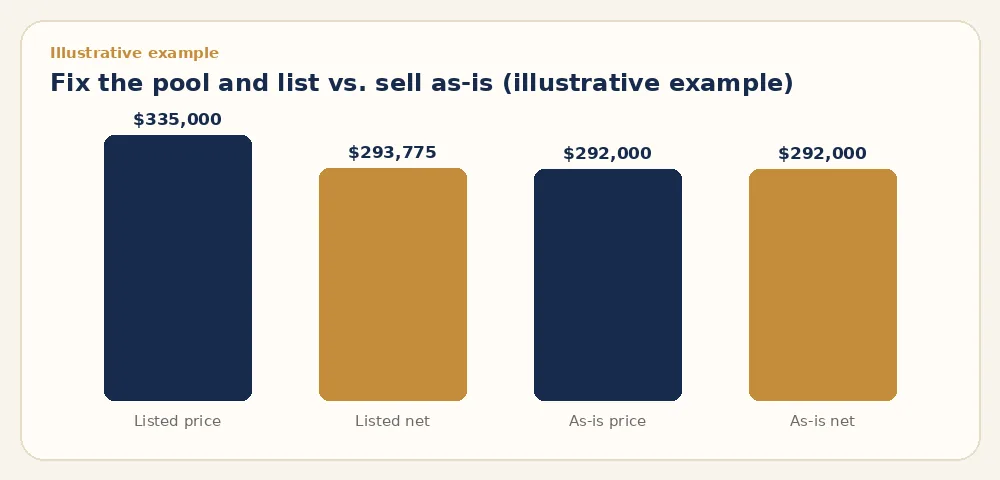
Use the illustrative comparison in this guide. Add the repair quote, the extra months of mortgage, taxes and utilities while you wait for contractors, and the agent commission on a listed sale. Then compare your expected net with a written as-is offer. Our guide to how to sell a house as-is walks through the same math for other repairs.
Is it worth filling in a pool before selling?
Filling in a pool usually needs a permit, and a partial fill can leave drainage questions buyers will ask about. Only consider it with a permitted, documented job, and compare its cost with an as-is sale first.
| Path (illustrative example) | Listed after resurfacing | As-is cash sale |
|---|---|---|
| Sale price | $335,000 | $292,000 |
| Resurfacing and equipment | -$16,500 | $0 |
| Commission (5.5%) | -$18,425 | $0 |
| Three extra months of carrying costs | -$6,300 | $0 |
| Estimated net before payoff | $293,775 | $292,000 |
What to disclose about a pool
Disclose what you know. Most states require sellers to share known material defects, and leaks, cracks or failed equipment usually qualify.
State disclosure forms differ. Some ask directly about pools and spas; others ask about structural or equipment problems in general. Answer honestly and keep repair invoices. Even in an as-is sale, the as-is wording does not excuse hiding a known defect. If you live in California or Texas, see our California and Texas seller pages for state-specific steps.
Selling a pool home with DispoKey
DispoKey's buyers purchase houses as they are, pools included, so you do not have to resurface, open the pool or replace equipment before closing. A Seller Success Manager reviews photos and any repair quotes and gives you a written net.
You pay $0 in fees to DispoKey, and you choose a closing date, as soon as 21 days out. Start with your address on the cash offer page, and mention the pool's age and condition so the first number already reflects it.
When DispoKey may not be your best option
If your pool is in good shape, your market values pools and you have time, listing it in peak season with good photos may bring a higher price. A cash offer fits best when the pool needs major work, the timing is tight, or you want to avoid inspections and repair negotiations.
Key takeaways
- Pool value depends on your local market; compare nearby sales.
- Repair cheap safety and equipment items; price big projects against an as-is offer.
- Barrier rules are local; check your building department.
- Disclose known pool defects even when selling as-is.
Frequently asked questions
Does a pool increase home value?
It depends on your market. Compare recent nearby sales with and without pools to see what buyers actually pay.
Do I have to fix my pool before selling?
No. You can sell as-is, but you must still disclose known defects under your state's rules.
What pool safety rules apply when selling?
Barrier rules are set locally. The CPSC publishes general barrier guidelines, but your local code decides what is required.
Can I sell a house with a broken pool for cash?
Yes. Cash buyers, including DispoKey's, buy homes with pools that need repair, and the price reflects the condition.