
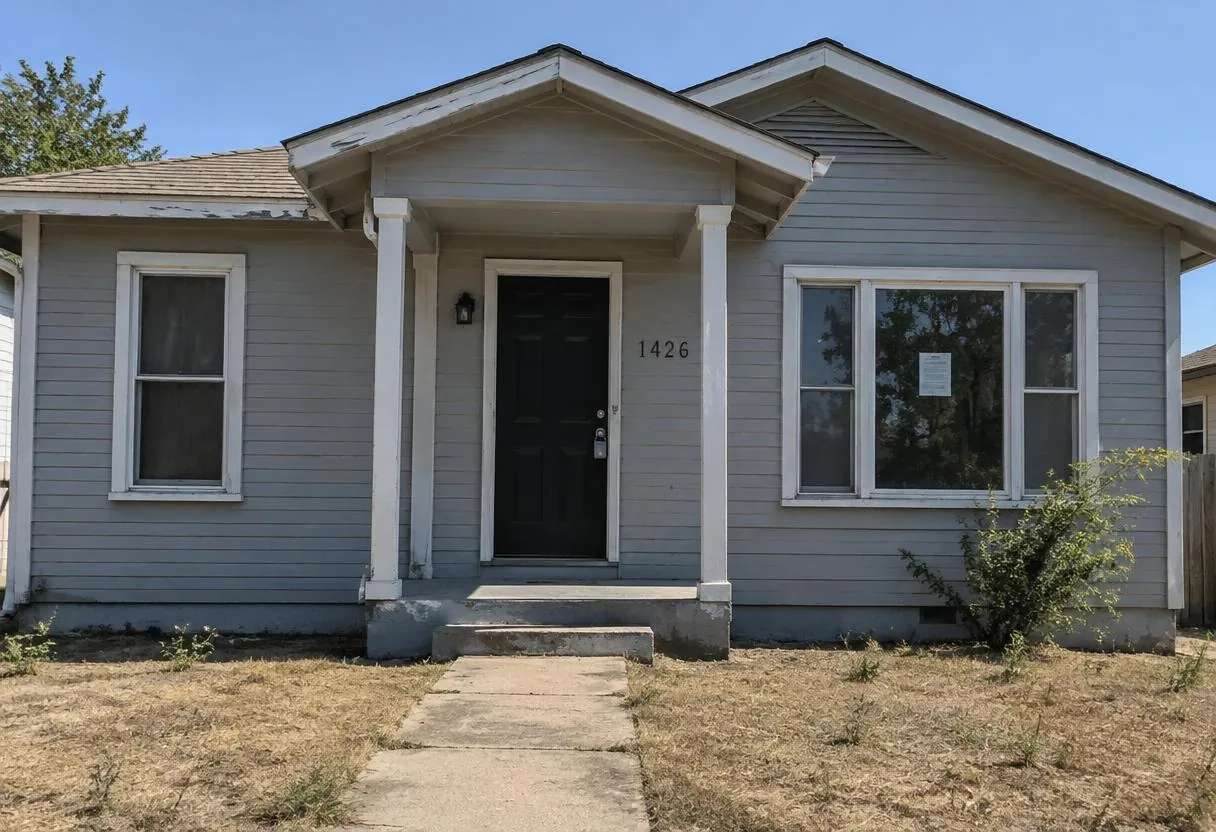
Quick answer: REO properties are homes a lender or government agency owns after a foreclosure auction fails to sell them. They are usually listed with agents and sold as-is, with bank addenda that favor the seller. HUD lists its homes on HUD Home Store, often with priority periods for owner-occupants. Inspect, budget repairs and know the title terms. DispoKey shows approved buyers off-market deals.
- Find REOs through agents, HUD Home Store and lender sites.
- Expect as-is sales and seller-friendly addenda.
- Inspect and price repairs before you offer.
What is an REO property?
REO stands for real estate owned. When a foreclosure auction ends without a third-party buyer, the lender takes the property back and it becomes part of the lender's REO inventory. Government agencies such as HUD also sell homes acquired through insured loans.
Lenders want to sell quickly, but they also follow internal approval processes, so negotiations can be slower than with an individual seller. Our auction guide explains the step before REO.
Where to find REO properties
- Listing agents who specialize in bank-owned homes.
- HUD Home Store for HUD-owned homes.
- Lender and agency sites that list their own inventory.
- MLS searches filtered for bank-owned or REO listings.
- County records showing deeds to lenders after foreclosure.
How buying HUD homes works
HUD sells homes through its HUD Home Store site, using bids submitted by registered agents. HUD's listings often give owner-occupant buyers an exclusive bidding period before investors may bid. Each listing shows its status, bidding period and whether it is eligible for FHA financing. Read each listing's terms before planning your offer.
How REO offers and bank addenda work
Banks typically sell as-is and add an addendum that overrides parts of the standard contract. Common terms limit seller disclosures, set deadlines and per-day penalties for late closing, require specific title companies and cap the seller's repair obligations.
Read every addendum before signing. Offers often need proof of funds or a pre-approval letter and may take days to get a response.
Condition risks with bank-owned homes
REO homes have often been vacant. Watch for winterization damage, stolen copper, mold, roof leaks and code violations. Utilities may be off, which limits inspections; ask the listing agent whether the bank will turn them on.
Budget repairs with our rehab cost guide, and for pre-1978 homes plan for lead-safe work practices and the federal lead disclosure.
Title and occupancy
Foreclosure should clear junior liens, but confirm with your own title search and policy. Check for unpaid HOA dues, municipal liens and code fines. Most REOs are delivered vacant, but confirm before closing.
Run the numbers
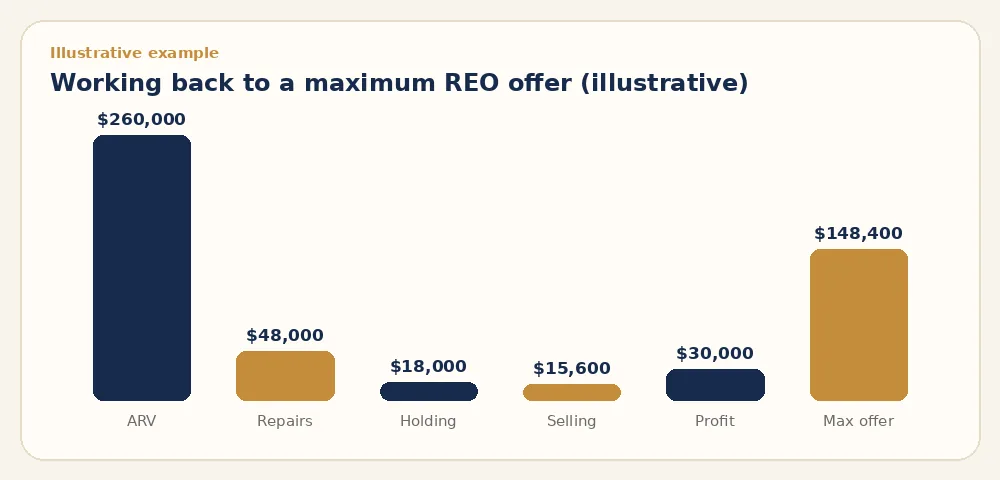
Price your offer from ARV, repairs, holding and selling costs, and profit or cash-flow targets. The illustrative example in this guide works back to a maximum offer. Our ARV guide explains how to support the value.
| Line (illustrative REO example) | Amount |
|---|---|
| After-repair value | $260,000 |
| Repairs | -$48,000 |
| Holding and closing costs | -$18,000 |
| Selling costs | -$15,600 |
| Target profit | -$30,000 |
| Maximum offer | $148,400 |
How to finance an REO purchase
Many investors buy REOs with cash, hard money or a portfolio loan because vacant, damaged homes may not meet conventional lending standards. Homes in better condition may qualify for conventional or FHA financing; HUD listings show whether a home is eligible for FHA. Get a pre-approval or proof of funds ready before you start, since banks often ask for it with the offer.
If you plan to repair and hold, line up a refinance plan early. Our BRRRR guide covers seasoning and appraisal issues.
Tips for winning REO offers
- Submit a clean offer with proof of funds and a realistic closing date.
- Keep inspection periods short but long enough to see the major systems.
- Ask the listing agent how the bank prefers offers and whether multiple offers are pending.
- Be ready to sign the bank's addendum quickly once you have read it.
- Track counteroffers and deadlines closely; late responses can void a deal.
Patience matters. Some banks reduce prices after a listing sits, so keep watching homes that did not fit at first.
REO due diligence checklist
- Order your own title search and check for municipal liens, HOA dues and code fines.
- Ask whether utilities can be turned on for inspection.
- Inspect roof, foundation, plumbing, electrical, HVAC and signs of freeze damage.
- Check whether the home was winterized and whether pipes were drained.
- Look up permits and open violations with the city or county.
- Confirm the property is vacant and personal property has been removed.
- Read the bank addendum for closing deadlines and per-day fees.
- Get repair bids before your inspection period ends.
Bank-owned homes rarely come with seller knowledge, so your own inspection carries more weight than usual. Budget extra for surprises behind walls.
REO vs. short sale
A short sale happens before foreclosure: the owner still holds title and the lender agrees to accept less than the loan balance. An REO happens after foreclosure, when the lender already owns the home. Short sales need lender approval for each offer and can take months; REO sales are usually faster to approve because the bank is the seller, but they come with bank addenda and as-is terms.
REO vs. off-market deals
REO homes are public, so competition is often heavy. Off-market deals come from motivated owners before they reach the MLS. DispoKey's marketplace lists off-market Buy & Hold and Fix & Flip properties for approved cash buyers; access requires team approval. Apply as a buyer.
When DispoKey may not be your best option
If you are an owner-occupant planning to use FHA financing, a HUD home during its owner-occupant period may fit better. Our deals suit investors who close with cash or investor financing.
Key takeaways
- REO homes are owned by lenders after failed foreclosure auctions.
- HUD lists its homes on HUD Home Store with bidding periods.
- Bank addenda favor the seller; read them closely.
- Inspect for vacancy damage and confirm title.
Frequently asked questions
What does REO mean in real estate?
Real estate owned: a property a lender or agency took back after a foreclosure auction.
Are REO properties cheaper?
Sometimes, but many need repairs and draw competition. Price from ARV and repair costs.
Can investors buy HUD homes?
Yes, often after the owner-occupant priority period shown on each HUD Home Store listing.
Are REO homes sold as-is?
Usually. Banks add addenda that limit disclosures and repairs.