
Quick answer: You can sell a house with a septic tank like any other home, but buyers and lenders often want a recent pumping and inspection, and some places require one. Massachusetts requires an inspection within 2 years before most sales. Gather records, disclose known problems, and compare repair cost with an as-is offer. DispoKey buys as-is and can close in as little as 21 days.
- Find the tank, pull pumping records and check local transfer rules.
- Order an inspection early if buyers or your area expect one.
- Price any repair against an as-is cash offer before you commit.
What sellers should know about septic systems
A septic system treats household wastewater on the property instead of sending it to a city sewer. It usually has a tank that settles solids and a drain field that lets treated water soak into the soil.
Buyers worry about septic systems because repairs can be costly and problems are hidden underground. A home with a working, documented system usually sells normally. The questions start when records are missing, the tank has not been pumped in years, or the drain field shows signs of failure, such as soggy ground, odors or slow drains.
The EPA notes that household tanks are typically pumped every three to five years, depending on size and use. A recent pumping receipt is one of the simplest things you can hand a buyer.
Is a septic inspection required to sell a house?
It depends on where you live. There is no single national rule, and requirements are set by states, counties and local health departments.
Massachusetts is a clear example. Under its Title 5 rules, a septic system must generally be inspected within 2 years before a sale, or within 6 months after if weather prevents it, with exemptions for some family transfers. Other states and counties have their own transfer rules, and many have none. Call your county or local health department to ask.
Even where the law is silent, lenders and buyers often ask for an inspection. FHA, VA and many conventional lenders want evidence the system works before they fund a loan.
What a septic inspection checks
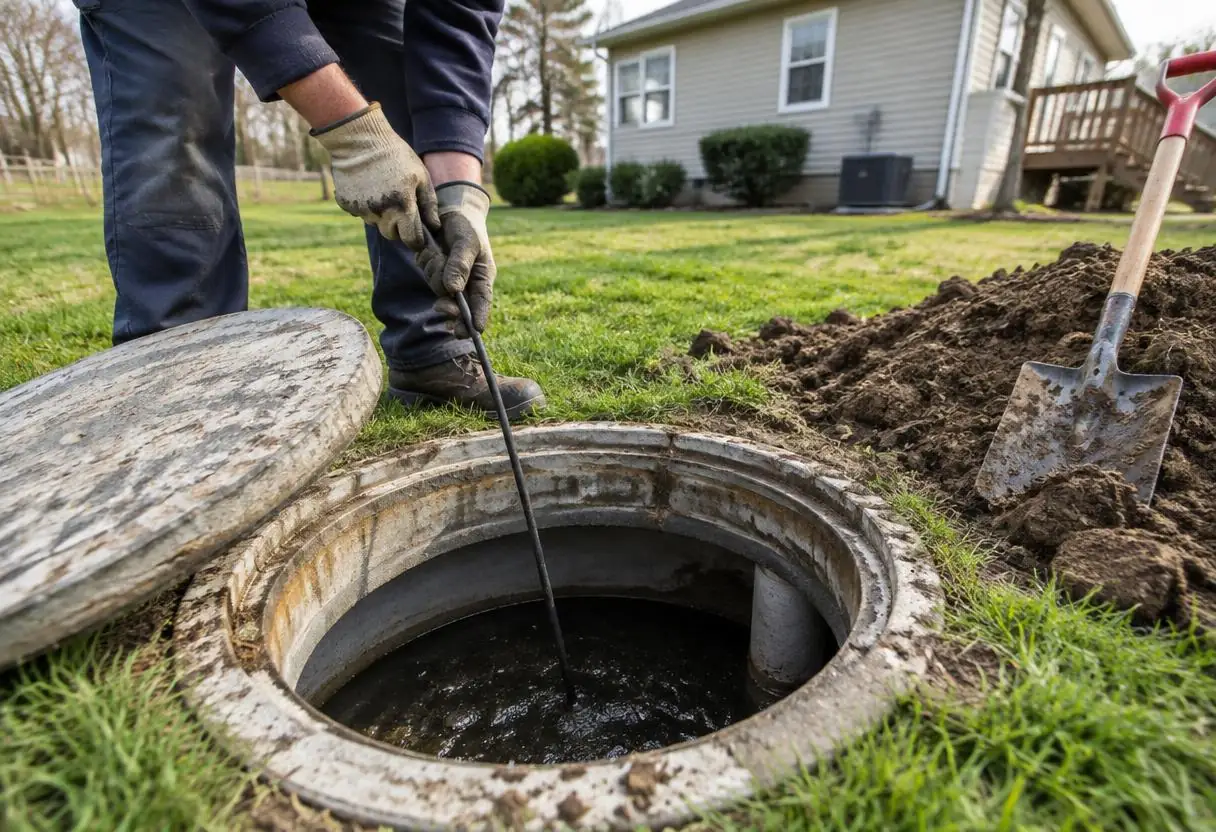
A full inspection usually includes locating and opening the tank, checking the sludge and scum levels, looking at baffles and pipes, and assessing the drain field.
- Tank condition: cracks, damaged baffles or a missing lid.
- Levels: whether the tank needs pumping now.
- Drain field: standing water, odors, or roots in the lines.
- Distribution box and pipes: blockages or breaks.
- Records: permits, system size and the number of bedrooms it was designed for.
Some inspectors also do a dye or flow test. Ask what is included and get the report in writing.
Should you repair the septic system before selling?
Fix small, clear problems and think carefully about big ones. Replacing a broken baffle or lid is modest; replacing a drain field is a larger project that needs design, permits and soil work.
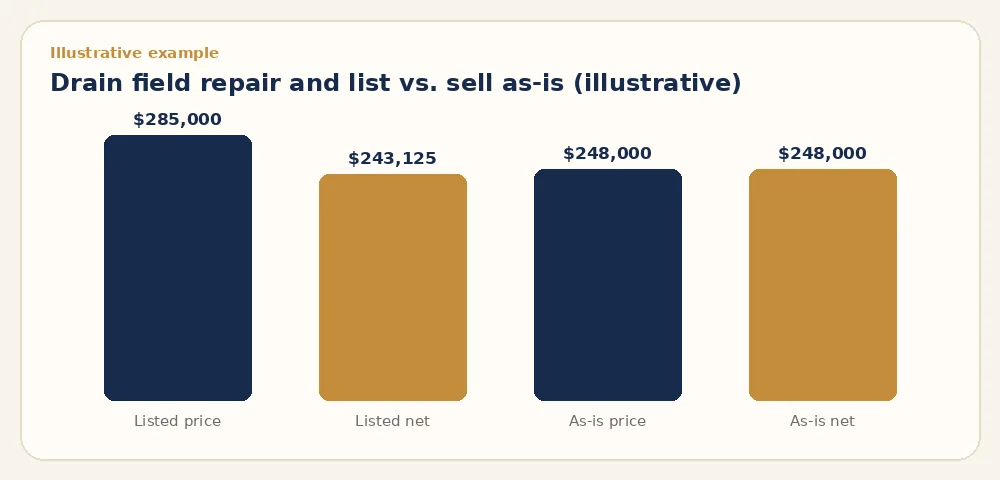
Get a written quote, then add the time until a contractor and the health department can complete the job, plus your carrying costs while you wait. Compare that net with an as-is offer. The illustrative example in this guide shows how a drain field quote can change the answer. Our guide on how to sell a house as-is uses the same approach for other repairs, and failed septic system explains the warning signs.
| Path (illustrative example) | Replace drain field, then list | As-is cash sale |
|---|---|---|
| Sale price | $285,000 | $248,000 |
| Drain field design, permit and install | -$19,000 | $0 |
| Commission (5.5%) | -$15,675 | $0 |
| Four extra months of carrying costs | -$7,200 | $0 |
| Estimated net before payoff | $243,125 | $248,000 |
What to disclose about a septic system
Disclose what you know. Most state disclosure forms ask whether the home uses a septic system and whether you know of defects.
Share pumping and repair records, the inspection report if you have one, and any history of backups. Selling as-is does not excuse hiding a known defect. If you have inherited the home and know little about it, say so and share what records you found. For estate sales, see how to sell a house during probate.
Where to check septic rules in your area
Your county or city health department is the main source. Many publish septic permits and transfer rules online.
In Massachusetts, MassDEP's Title 5 pages list when inspections are required and who may do them. In other states, search your county health department for onsite wastewater or septic permits, and ask whether the original system permit is on file. That permit shows the system's design size, which buyers compare with the home's bedroom count.
Selling a septic home with DispoKey
DispoKey's buyers purchase homes as they are, including older or failing septic systems. A Seller Success Manager reviews what you know and any reports, and gives you a written net.
You pay $0 in fees to DispoKey and choose your closing date, as soon as 21 days out, where local transfer rules allow. Start with your address on the cash offer page or read about our seller process.
When DispoKey may not be your best option
If your system passed a recent inspection, the house is in good shape and you have time, listing it may bring a higher price. A cash offer fits best when the system needs major work, you cannot wait for repairs, or you would rather not manage contractors and permits.
Key takeaways
- Septic transfer rules are local; Massachusetts requires inspections before most sales.
- Pumping records and a recent inspection reassure buyers and lenders.
- Price big septic repairs against an as-is offer.
- Disclose known septic problems even in an as-is sale.
Frequently asked questions
Do I need a septic inspection to sell my house?
Only some states and counties require one, such as Massachusetts. Lenders and buyers often ask for one anyway.
How often should a septic tank be pumped?
The EPA says household tanks are typically pumped every three to five years, depending on size and use.
Can I sell a house with a failing septic system?
Yes. You can repair it or sell as-is, but you must disclose known problems under your state's rules.
Will a cash buyer take a house with septic problems?
Many will. DispoKey's buyers purchase homes as-is, and the offer reflects the system's condition.