Quick answer: Bandit signs are small roadside signs like "We buy houses." Many cities ban them in public rights-of-way; Houston fines violators $300 to $500. If you use signs, place them only on private property with permission, follow local sign codes and track every call. DispoKey JVs your signed off-market contracts with a 72-hour buyer match.
- Check your city's sign code before you print anything.
- Use private property with written permission only.
- Track calls by number so you can measure cost per contract.
What are bandit signs?
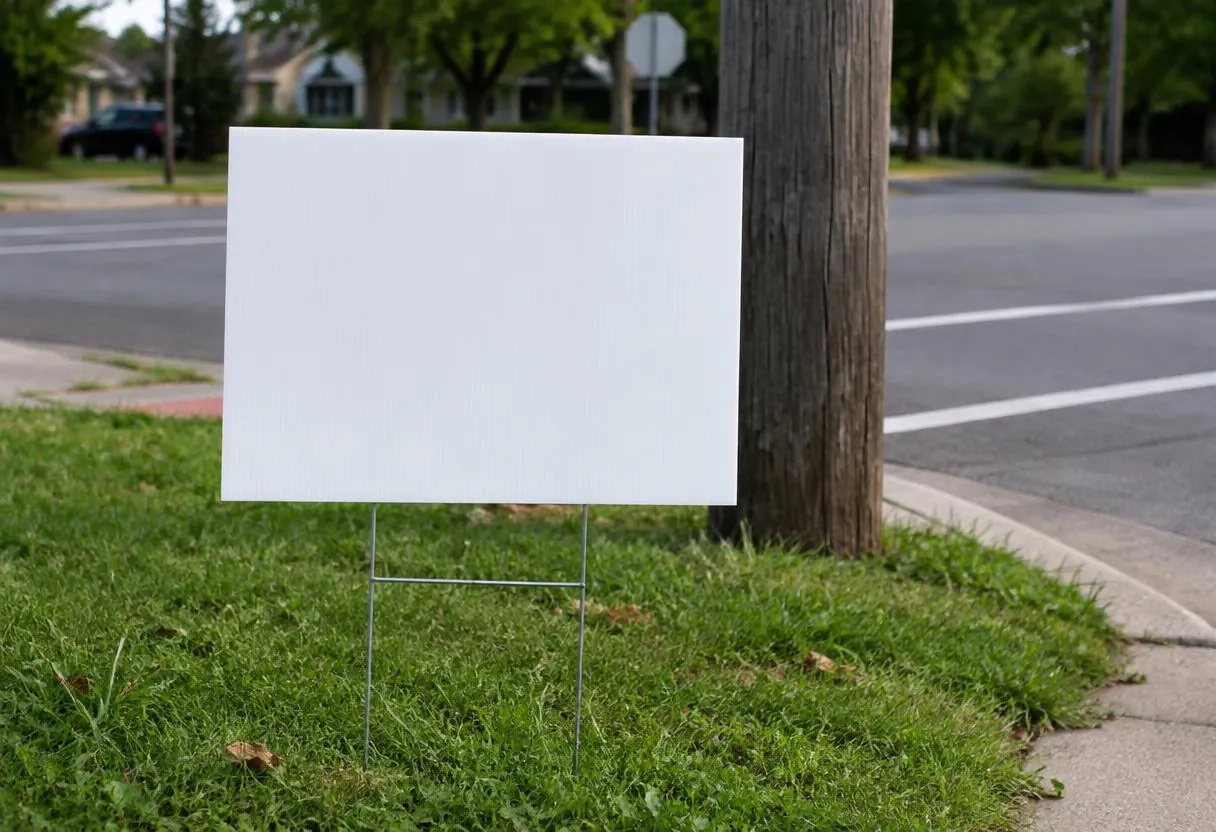
Bandit signs are small, cheap signs placed along roads and intersections, usually with a short message and a phone number. Investors have used them for years to reach owners who want to sell quickly.
They are cheap per sign, but the hidden costs are fines, lost signs and a brand that looks careless. Many cities treat them as litter.
Are bandit signs illegal?
In many cities, yes, when they are placed in the public right-of-way. That usually includes medians, sidewalks, the strip between the sidewalk and the street, and utility poles.
Houston says bandit signs placed on public streets, sidewalks, rights-of-way and public structures break its code, with fines of $300 to $500 and possible court action. San Antonio tells residents not to attach bandit signs to utility poles, trees or other objects on city right-of-way. Katy, Texas, prohibits signs in public rights-of-way and authorizes the city to remove them. Rules differ by city and state highway agency, so read your local sign code.
Legal ways to use signs for seller leads
Signs can still work when they follow the rules.
- Private property with written permission: a business owner's lot or fence, if the sign code allows it.
- Vehicle signs: magnetic signs or wraps on your own car.
- Permitted temporary signs: some cities issue permits for limited times.
- Signs at properties you control: a house you own or have permission to market.
Even on private property, size, height and spacing limits may apply.
How much do bandit signs really cost?
Count everything, not just printing. Include stakes, placement time, signs removed by the city, fines and the phone line.
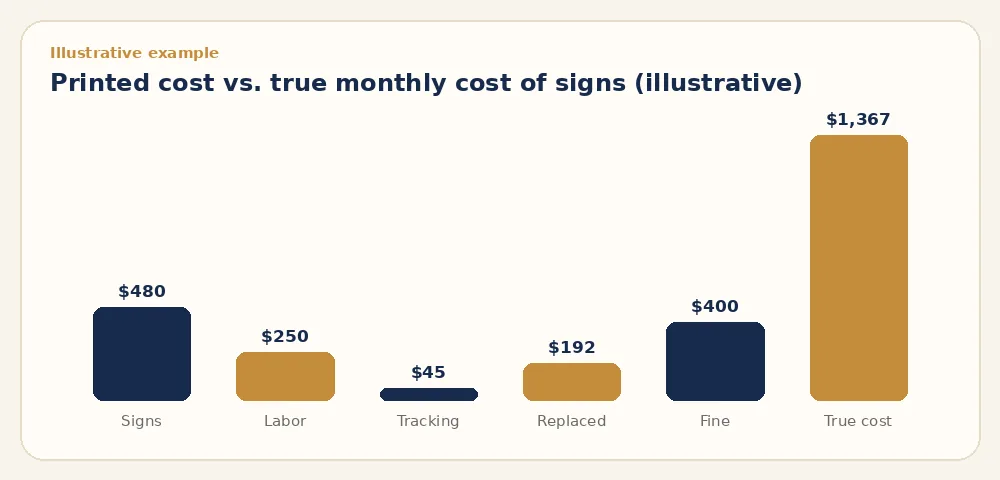
The illustrative example in this guide compares the printed cost with the true cost after fines and losses. If a single fine erases a month of leads, the channel is not cheap. Compare it with driving for dollars or yellow letters, which carry fewer legal risks.
| Monthly cost line (illustrative example) | Amount |
|---|---|
| 200 signs and stakes | $480 |
| Placement time (10 hours at $25) | $250 |
| Tracking line | $45 |
| Signs removed and replaced (40%) | $192 |
| One code fine | $400 |
| True monthly cost | $1,367 |
How to track calls from signs
Give each campaign its own tracking number so you know which signs ring. Log every call with the date, source and outcome in your CRM.
Measure cost per lead and cost per signed contract, not calls. Our guide to call tracking shows how to set it up. Answer quickly: callers from signs often call several numbers.
Alternatives that reach the same sellers
Bandit signs aim at owners who drive by and want a quick sale. Other channels reach the same people with less legal risk.
- Driving for dollars to find distressed homes, then mail the owner.
- Absentee owner lists for tired landlords; see our absentee owner list guide.
- Probate filings for inherited homes; see our probate leads guide.
- Search ads and SEO for sellers actively looking online.
Test one channel at a time with a fixed budget and compare cost per signed contract after 60 to 90 days.
Calling sign leads back the right way
A person who calls your sign has contacted you, so returning that call is normal follow-up. Long-term marketing calls to people who never reached out are different and must respect the National Do Not Call Registry. Keep a record of who called you, when and why, so your follow-up stays within the rules and your CRM shows the real source of each deal.
What should a seller sign say?
Keep it short and honest. Say what you do and how to reach you, and avoid promises you cannot keep, such as a guaranteed price or a closing date before you see the house. Use a business name and a number you answer.
Sign placement checklist
Before any sign goes up, run through a short checklist.
- Is this private property, and do I have written permission from the owner?
- Does the city sign code allow this size, height and placement?
- Is the sign clear of sidewalks, sight lines and traffic signals?
- Does it have a dated tracking number so I can measure results?
- Do I have a plan to remove it by a set date?
If any answer is no, skip that spot. A few compliant signs are worth more than many that get pulled and fined.
Turn sign leads into closed deals with DispoKey
When a sign lead becomes a signed off-market contract, submit it to DispoKey. We match it with vetted cash buyers within 72 hours, split the fee 60/40 in your favor and charge $0 upfront. We do not accept on-market listings. Submit a deal or text (802) 618-0015 with your DK ID.
When DispoKey may not be your best option
If you already have a reliable buyer for the deal type, or your contract is on the MLS, a JV partner is not the right fit. We help most when you need a buyer quickly for an off-market contract.
Key takeaways
- Many cities ban signs in public rights-of-way.
- Houston fines bandit signs $300 to $500.
- Use private property with permission and follow sign codes.
- Track cost per signed contract, not calls.
Frequently asked questions
Are bandit signs legal?
Often not in public rights-of-way. Houston, San Antonio and Katy, Texas, all restrict them. Check your local sign code.
How much is a bandit sign fine?
It varies by city. Houston lists fines of $300 to $500 per violation.
Where can I legally put a we buy houses sign?
On private property with the owner's permission and within local sign code limits, or on your own vehicle.
Do bandit signs still work for wholesalers?
They can generate calls, but fines and removals raise the true cost. Track cost per contract.