Quick answer: A buyer walkthrough access log records who entered a property under contract, when, with whose permission and which code they used. DispoKey recommends one written access window per showing, a code changed after each window, a sign-in record for every verified buyer and a same-day note to the seller.
- Get the seller's written access permission first.
- Rotate lockbox codes per window, not per week.
- Log names, times and condition notes.
Walkthroughs are where a contract becomes real to buyers, and where most avoidable problems start: a code shared in a group chat, a door left unlocked, a buyer who returns alone. A clean access log protects the seller, the house and your reputation with every buyer who wants the next deal. The glossary entry on buyer walkthroughs defines the term; this guide covers how to run and record them.
What permission do you need before buyer walkthroughs?
You need the seller's written agreement on access: who may enter, when and how. Your purchase contract may address access; if it does not, get a short written confirmation.
Confirm whether the house is occupied, whether pets or tenants are present and which rooms are off limits. Some states regulate wholesaling activity, including marketing and showing a property you do not own, so check your state's real estate agency guidance; Oregon, for example, publishes wholesaling FAQs. [3] Licensing rules vary and may change how you can show the property, so check that guidance before you schedule showings.
Open the walkthrough access checklist
- Seller's written access permission and windows
- Occupancy, tenant notice and pet notes
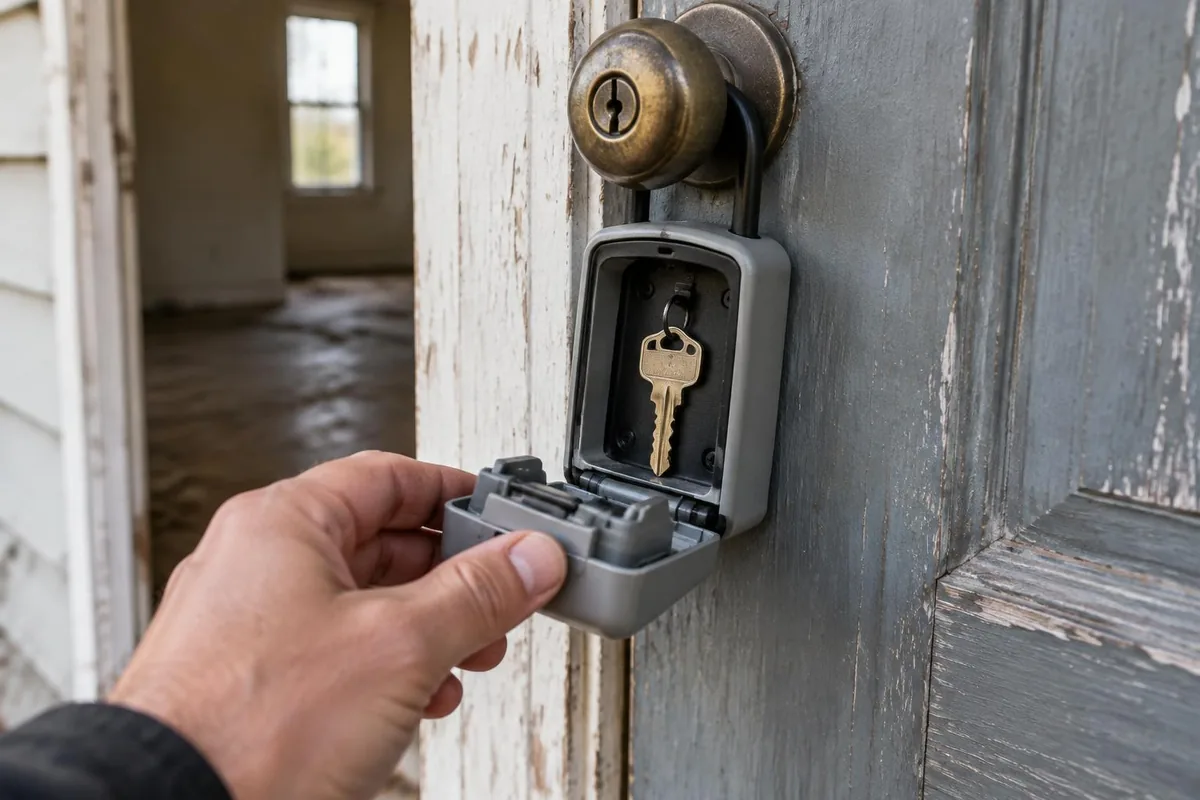
- Lockbox location and current code owner
- Verified buyer list for each window
- Sign-in record and condition photos
- Code change and lock-up confirmation
- Same-day summary to the seller
What should a walkthrough access log include?
Record the property, window, every person who entered, their company, arrival and departure times, the code used and anything noticed about condition or security.
Keep it short enough that you will fill it in every time. A shared spreadsheet or form works if only the right people can edit it. Collect only what you need: name, company and contact details are usually enough to verify attendance. The Federal Trade Commission's guide for businesses recommends taking stock of the personal information you hold, keeping only what you need and protecting it. [2] Do not ask for copies of identification unless you have a real reason and a secure place to store them.
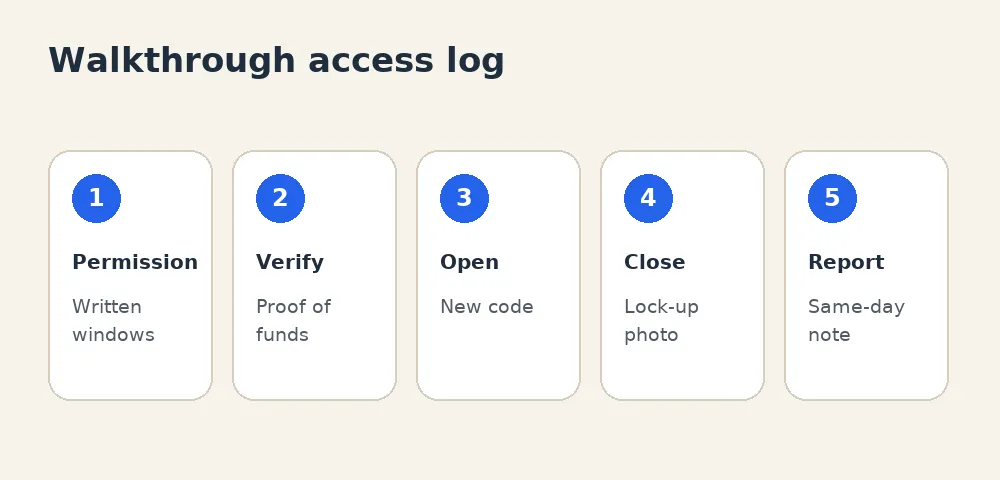
| Step | Owner | Record |
|---|---|---|
| Permission | Seller and wholesaler | Written access windows |
| Verify buyers | Wholesaler | Names and proof of funds on file |
| Open window | Wholesaler | New code, arrival times |
| Close window | Wholesaler | Lock-up photo, code changed |
| Report | Wholesaler | Same-day note to seller |
How often should you change the lockbox code?
Change it after every access window. A code that outlives its window is how uninvited return visits happen, and you cannot reconstruct who knew a week-old code.
Share the code privately with each confirmed attendee shortly before the window, never in a group message or a public listing. If a buyer cannot make the window, offer the next scheduled one instead of a private code. When the window ends, walk the house, lock up, photograph the locked door and the lockbox, then reset the code.
Should buyers ever visit without you?
Avoid it unless the seller has approved it in writing for that buyer and that time. Unaccompanied access shifts the risk to the seller and makes condition disputes harder to resolve.
A worked scheduling example with labeled numbers
Group buyers into a small number of windows. The numbers below are an illustrative plan, not a requirement or a promise of buyer turnout.
Suppose five verified buyers want to see a vacant house this week and the seller approved two windows: Tuesday 10:00 to 11:00 and Thursday 4:00 to 5:00. Three buyers confirm Tuesday and two confirm Thursday. That plan uses two codes, two lock-up photos and ten sign-in lines instead of five separate visits and five codes. If one Thursday buyer cancels, the log shows four attendees and one cancellation, which is exactly what the seller needs to hear.
What should you do if something goes wrong after a walkthrough?
Tell the seller the same day, share the log entry for that window and photograph the issue. Prompt, factual reporting keeps a small problem from becoming a dispute over the contract.
Common issues are a door left unlocked, a light or faucet left on, a broken blind or a buyer returning outside the window. Compare the condition notes and lock-up photo from the end of the window with what you see now. If entry happened outside an approved window, change the code immediately and ask the seller whether they want to involve local authorities. Do not guess who caused damage; the log shows who was present and when, which is enough to start a calm conversation. If the seller wants to pause access, pause it and confirm the new plan in writing before scheduling the next window.
How do you treat every buyer fairly during walkthroughs?
Use the same access rules, windows and information for every verified buyer. Consistency protects buyers and keeps you clear of discrimination concerns.
The federal Fair Housing Act prohibits discrimination in the sale of housing because of race, color, national origin, religion, sex, familial status or disability. [1] Base buyer verification on objective criteria, such as proof of funds, and apply them the same way to everyone. The glossary entry on the Fair Housing Act has more detail.
When DispoKey may not be your best option
If you already have a strong buyer who has walked the house and is ready to close, adding more walkthroughs may only create risk. Close with that buyer.
If you need more qualified buyers for an off-market contract, submit your deal or run it through the MAO calculator first. DispoKey offers a 72-hour buyer-match guarantee, a 60/40 fee split in your favor and $0 upfront; on-market deals are not accepted. Existing partners can text (802) 618-0015 with their DK ID. Related reading: inspection periods, marketing permissions and earnest money.
Key takeaways
Get written access permission, verify buyers before sharing codes, change the code after every window, log each entry and report to the seller the same day. Licensing and access rules vary by state, so check your state real estate commission's guidance.