

Quick answer: You can sell a house with a mortgage at any time. The loan is paid off from the sale price at closing, and you keep what is left after costs. With DispoKey, a Seller Success Manager orders the payoff, shows your net in writing, and you can close in as little as 21 days.
- Request a written payoff statement from your servicer.
- Subtract the payoff, other liens and closing costs from the offer.
- If you owe more than the price, ask your lender about a short sale before you sign.
How selling a house with a mortgage works
Selling with a mortgage is normal. Most sellers still owe money on the home, and the title or escrow company pays the lender directly from the buyer's funds at closing.
Your mortgage is a lien recorded against the property. The buyer gets clear title only when that lien is released, so the closing agent sends the payoff amount to your servicer, waits for confirmation, and the lender records a release. You never have to pay the loan off first with your own money, as long as the sale price covers it.
Most loans also have a due-on-sale clause, which means the full balance is due when ownership changes. That is why the loan is paid off rather than handed to the buyer, unless the buyer formally assumes it with the lender's approval.
How do I find out how much I owe on my house?
Ask your mortgage servicer for a payoff statement, not your monthly statement. The balance on your statement is not the amount needed to close the loan.
The payoff figure adds interest through the payoff date, any unpaid fees, and sometimes escrow shortages, and it subtracts nothing for your escrow account, which is refunded separately after closing. The CFPB explains that once you request a payoff amount, your servicer must give you an accurate statement of the total needed to pay off the loan as of a specified date. Ask for a good-through date that matches your expected closing, and request an updated figure if the date moves.
Check for other liens too
A second mortgage, a home equity line of credit, unpaid property taxes, HOA dues or a court judgment are paid the same way. A title search finds them before closing, so they do not surprise you at the table. Our guide to selling a house with a lien explains each type.
How to estimate what you will walk away with
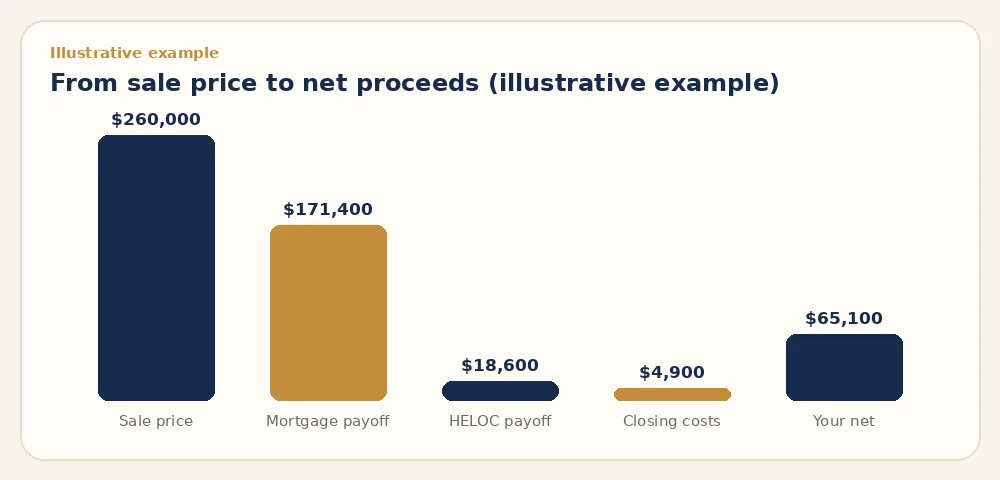
Your net is the sale price minus every payoff and cost. Work it out before you accept any offer, so you compare offers on the money you keep.
The example below is illustrative. Your own numbers come from your payoff statement, your tax bill and the buyer's written offer.
- Sale price: the amount in the purchase agreement.
- Mortgage payoff: from the servicer's statement.
- Other liens: second loans, HELOC, taxes or judgments.
- Closing costs: title, recording, transfer tax and prorated taxes, which vary by state.
- Agent commission: only if you list with an agent.
| Line (illustrative example) | Amount |
|---|---|
| Sale price | $260,000 |
| Mortgage payoff | -$171,400 |
| HELOC payoff | -$18,600 |
| Title, recording and prorated taxes | -$4,900 |
| Estimated net to seller | $65,100 |
Can you sell a house if you owe more than it is worth?
Yes, but the shortfall has to be covered. You either bring cash to closing or ask your lender to accept less than the full balance in a short sale.
A short sale needs the lender's written approval, and the lender decides whether to forgive the remaining debt. If you are behind on payments, a HUD-approved housing counselor can explain your options at no cost. If you are facing a sale date, read how to sell a house before foreclosure first.
Underwater sales are slower because the lender reviews the price. Start early, and give your lender a hardship letter, recent statements and a copy of the offer.
What happens to the mortgage at closing
At closing the escrow or title company wires your payoff to the servicer, then sends you the remaining proceeds. The lender records a lien release a few weeks later.
Keep paying your mortgage until the payoff is confirmed. A missed payment before closing can add late fees to the payoff and hurt your credit. After closing, watch for your escrow refund, which the servicer sends separately, and the recorded release, which you can look up with your county recorder.
If you are moving, schedule the closing date so you are not paying two mortgages for long. A cash sale lets you pick that date.
Selling with a mortgage through DispoKey
DispoKey makes cash offers on houses as they are. You request an offer, and a Seller Success Manager walks you through the numbers, including your payoff, before you agree to anything.
Because our buyers pay cash, there is no lender appraisal on the buyer's side to delay closing. You can close in as little as 21 days, or later if you need more time. You pay $0 in fees to DispoKey. Start with your address on the cash offer page, or read how the seller process works.
When DispoKey may not be your best option
If your home is move-in ready, you have equity and you have months to sell, listing with an agent may bring a higher price even after commission. A cash offer is usually strongest when you need a fixed date, the house needs work, or you would rather skip showings. Compare both options against your payoff before you decide.
Key takeaways
- The mortgage is paid from the sale price at closing; you do not pay it first.
- Use a written payoff statement, not your monthly balance.
- Owing more than the price means bringing cash or asking for a short sale.
- Keep making payments until the payoff is confirmed.
Frequently asked questions
Do I have to pay off my mortgage before I sell?
No. The closing agent pays it from the buyer's funds, and you receive what is left after costs.
Is my payoff amount the same as my balance?
No. The CFPB explains that the payoff adds interest through the payoff date and any unpaid fees, so it is usually higher.
What if I owe more than my house is worth?
You can bring cash to closing or ask your lender to approve a short sale for less than the balance.
Will I get my escrow balance back?
Yes. The servicer refunds any remaining escrow balance after the loan is paid off, separately from your sale proceeds.
Official references
- CFPB: What is a payoff amount?
- HUD: Find a housing counselor
- CFPB: What is a short sale?
- IRS Publication 523: Selling Your Home