
Quick answer: You can sell a house with squatters, but most buyers will not close until the occupants are lawfully removed or the price reflects the risk. Owners usually report the trespass to police and, if needed, file a court removal case. DispoKey can make a cash offer on an occupied house as-is and close in as little as 21 days after possession terms are settled.
- Document the occupancy with dated photos and records.
- Report trespass to local police and ask what proof they need.
- If police will not act, file the court case your state requires.
Squatter or tenant? Settle that first
A squatter occupies a property without the owner's permission and without a lease. A tenant, or a former tenant who stayed after the lease ended, has a different legal status, and the removal process is usually an eviction.
The distinction decides who can act. Police in many places will remove a trespasser quickly, but they generally treat anyone who claims a lease as a civil matter for the courts. Read the squatters entry and the eviction entry for definitions, and see selling a house with tenants if the occupants have a lease. HUD's tenant rights page shows how tenant protections are set by state and local law, which is why the label matters.
First steps when you discover squatters
Do not change the locks, cut utilities or remove belongings yourself while people are living inside. In many states, those self-help steps can expose an owner to liability, even when the occupants have no right to be there.
Instead, gather proof of ownership, such as your deed and property-tax statements, and dated photos of the occupancy. Call the non-emergency police line, explain that you did not authorize anyone to live there, and ask whether they will treat it as trespass. Write down the officer's name and the report number. If officers say it is a civil matter, the next step is the court process for your county.
How court removal works
When police will not remove occupants, owners file a removal case in the local court, often the same unlawful detainer or eviction process used for tenants. The court sets a hearing, and if the owner wins, a sheriff or marshal carries out the order.
Names and steps vary by state. In Los Angeles County, the Superior Court of Los Angeles County handles unlawful detainer filings and posts self-help resources. Other large counties post similar self-help pages on their official court sites, so check yours before filing. Read the unlawful detainer entry before filing so you understand the notice and hearing stages, and keep copies of every notice you serve.
Can squatters claim ownership?
In rare cases, yes, through adverse possession, but the bar is high. A claimant must typically occupy the property openly and continuously for a period set by state law, often many years, and some states also require paying property taxes.
An owner who acts promptly, reports the trespass and files for removal usually defeats that claim. Paying your own property taxes on time also helps. See the adverse possession entry for how the doctrine works in general terms.
Selling while the house is occupied: the math
You can list or sell during the removal process, but buyers price in the delay, the legal cost and possible damage. A worked number helps you decide whether to finish the removal first or sell now.
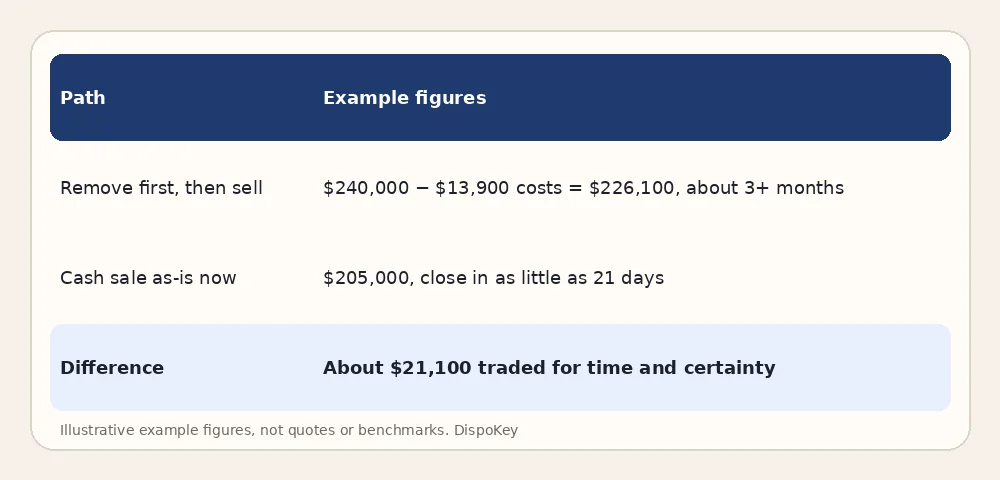
Illustrative example only: a house might sell for $240,000 vacant after cleanup. Finishing removal yourself might take three months with an estimated $3,500 in court and service costs, $2,400 in carrying costs and $8,000 in cleanup and repairs, leaving $226,100 before closing costs. A cash offer of $205,000 today, as-is, would give up about $21,100 in exchange for skipping the wait and the work. Your own figures will differ; the point is to compare both paths in writing.
| Path | Example figures |
|---|---|
| Remove first, then sell | $240,000 − $13,900 costs = $226,100, about 3+ months |
| Cash sale as-is now | $205,000, close in as little as 21 days |
| Difference | About $21,100 traded for time and certainty |
Protect a vacant house from future squatters
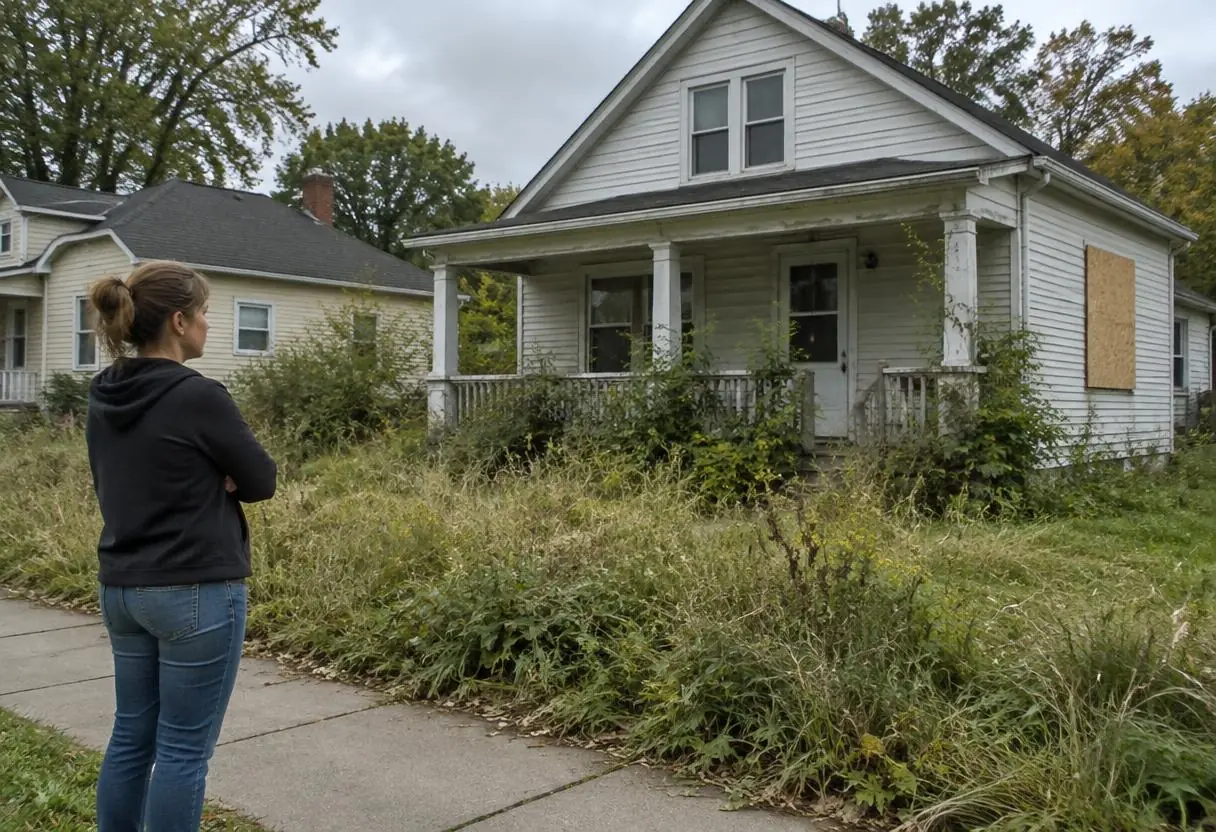
Vacant houses attract occupants when they look abandoned. Keep the lawn cut, collect mail, light the exterior and ask a neighbor to report activity.
Check the property in person on a schedule and note each visit. Some cities run vacant-building registration programs, so ask your local building department whether yours does. If the home is inherited and sitting empty during probate, our guide to selling during probate explains who has authority to act on the estate's behalf.
A cash offer for an occupied house
DispoKey reviews occupied houses as-is. Your Seller Success Manager asks what you know about the occupants, any police report and any court filing, then explains how possession affects the offer and the closing date.
Once possession terms are settled, a cash sale can close in as little as 21 days. Start on the cash offer page or enter the address on the offer form. For state context, see the California seller page and others in the state directory.
When DispoKey may not be your best option
If removal is nearly finished and the house will need little work, waiting a few weeks and listing with an agent could net more. If the occupants are actually tenants with a lease, a buyer who wants a rental may pay more than a cash buyer pricing in removal. Run both numbers before you choose.
Key takeaways
- Decide first whether the occupant is a squatter or a tenant.
- Avoid self-help removal; use police and the courts.
- Compare the remove-first and sell-now numbers in writing.
Frequently asked questions
Can I sell my house if squatters are living in it?
Yes. Some cash buyers purchase occupied houses as-is, but the price reflects the time and cost of removal.
Can I call the police on squatters?
Yes. Report it as trespass; officers decide whether to act or treat it as a civil matter for the courts.
How long does it take to remove squatters?
It depends on your state and court calendar. Police removal can be quick, while a court case can take weeks or months.
Do I have to disclose squatters to a buyer?
Tell any buyer the property is occupied, because it affects possession at closing. Disclosure rules vary by state.