
Quick answer: You can sell a house with knob and tube wiring, but expect questions from inspectors, insurers and lenders. Sellers usually rewire before listing, give the buyer a credit, or sell as-is. Partial or full rewiring is often a multi-thousand-dollar job, so get a written electrician estimate first. DispoKey buyers make as-is offers and you can close in as little as 21 days.
- Ask a licensed electrician to inspect and write up what is still active.
- Get an estimate for full or partial rewiring.
- Compare a rewired sale with an as-is cash offer on what you keep.
What knob and tube wiring is
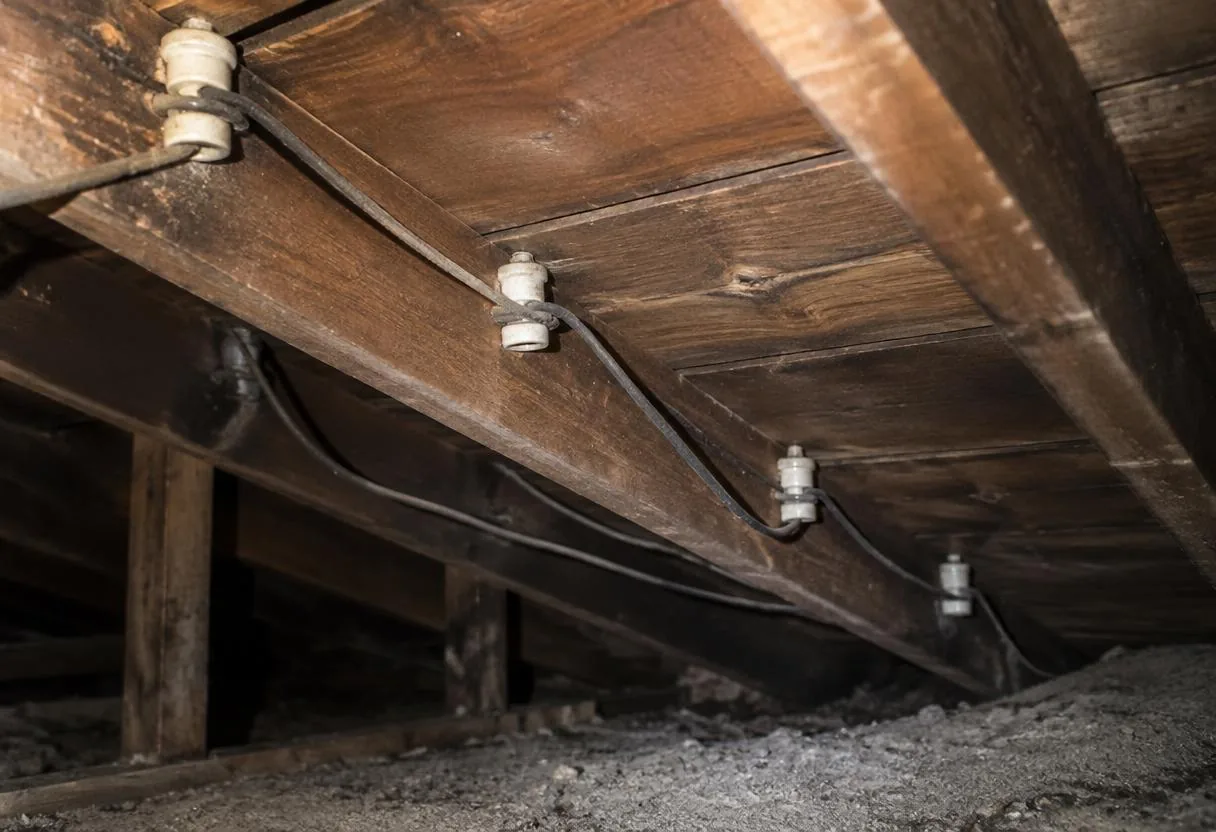
Knob and tube is an early electrical system that runs single wires through ceramic knobs and tubes in walls, floors and attics. It was common in houses built from the late 1800s into the 1930s and 1940s, and many of those homes still have some of it in service.
The wiring was not built for modern loads. It has no ground conductor, the original cloth and rubber insulation becomes brittle with age, and it was designed to shed heat into open air, so burying it in insulation or splicing new circuits onto it adds risk. The U.S. Fire Administration tracks residential electrical fires and lists wiring and related equipment among their leading causes.
Why it matters when you sell
Knob and tube becomes a sale issue through three groups: home inspectors, insurers and lenders. Each one can slow a traditional sale or push a buyer to ask for money back.
Home inspectors
Inspectors note active knob and tube, any spliced or damaged runs, and wiring buried in attic insulation. A typical report recommends evaluation by a licensed electrician, which gives the buyer a reason to renegotiate.
Insurance companies
Some insurers decline to write a policy, add a surcharge or ask for an electrician's letter when knob and tube is still in use. If the buyer cannot get coverage, a lender will not fund the loan. Ask your own agent or insurer what they require in your state rather than relying on another seller's experience.
Lenders
Lenders rely on the appraisal and the insurance binder. A buyer who needs a repair can use renovation financing such as FHA's 203(k) program, but that adds paperwork and time to the closing.
Your options before you list
You can rewire, credit or sell as-is. The right answer depends on how much of the system is still live and how long you can wait.
- Full rewire. An electrician replaces the old circuits with grounded wiring, opens and patches walls, and pulls a permit. You hand buyers a clean report and the final inspection sign-off.
- Partial rewire. Only the remaining live runs are replaced. This often costs less, but you need documentation showing what was replaced and what was left.
- Credit at closing. You leave the wiring in place and give the buyer money toward the work, if their lender allows it.
- As-is cash sale. A cash buyer prices the rewiring into the offer and handles the work after closing.
Keep every electrician invoice and permit. They answer the first question every buyer asks.
Example: rewire first vs as-is
These figures are an illustrative example, not a quote. Your electrician's estimate and local prices will differ.
| Line (example) | Rewire, then list | As-is cash offer |
|---|---|---|
| Sale price | $240,000 | $214,000 |
| Rewiring, permits and wall patching | − $14,000 | $0 |
| Agent commission (example 5%) | − $12,000 | $0 |
| Seller closing costs (example) | − $3,600 | − $2,000 |
| Holding costs, 90 vs 21 days | − $3,900 | − $900 |
| Estimated net | $206,500 | $211,100 |
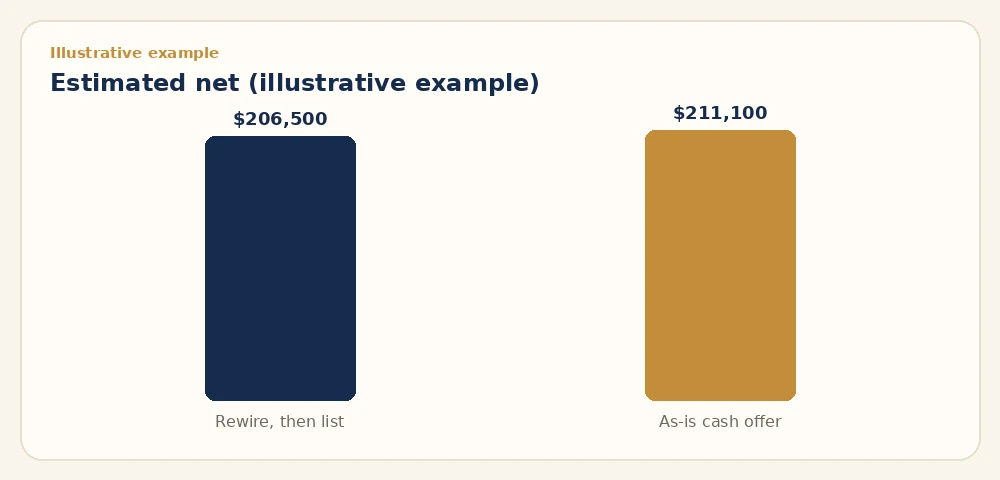
In this example the as-is route nets slightly more because rewiring is expensive and slow, and the house sits longer while walls are opened and patched. If most of the wiring has already been replaced, the math can swing the other way.
Disclosure: answer what you know
Answer your state's disclosure questions about the electrical system accurately. If you know knob and tube is still active, say so; if a prior owner replaced part of it, share the invoices. Your state's seller disclosure form sets the questions, and a real estate attorney in your state can help if a question is unclear.
How the as-is route works with DispoKey
You start with the address, tell us what you know about the wiring and any other repairs, and a Seller Success Manager walks you through the offer. Our buyers buy the home as it is, and you pay $0 in fees to us.
Start with the address-first cash offer form, or compare your selling options. Related guides: selling a house with unpermitted work, selling a house with fire damage and how to sell a house as-is. Older housing stock is common in states like Ohio and New York.
When DispoKey may not be your best option
If only a small run of knob and tube is left, the rest of the house is updated and you can wait a few months, a partial rewire followed by a listing may net more. A cash sale fits best when the wiring is extensive, the house needs other updates, or a buyer's insurer has already balked.
Key takeaways
- Knob and tube has no ground and aging insulation, so inspectors and insurers flag it.
- Get a licensed electrician's written scope before you decide.
- Compare rewire-first and as-is on net proceeds, including holding time.
- DispoKey buyers make as-is offers, and you can close in as little as 21 days.
Frequently asked questions
Can you sell a house with knob and tube wiring?
Yes. Many older homes sell with it. Sellers rewire first, give a credit, or sell as-is to a cash buyer who prices the rewiring into the offer.
Is knob and tube wiring a deal breaker?
Not always, but it can be if the buyer cannot get insurance or financing. Cash buyers who do not need a lender are less affected.
Do I have to replace knob and tube wiring before selling?
Generally no law requires it before a sale, but buyers, insurers and lenders may. You can negotiate a repair, a credit or an as-is price.
How much does it cost to replace knob and tube wiring?
It varies with house size and access. Get written estimates from licensed electricians; full rewires with patching are often five-figure projects.