
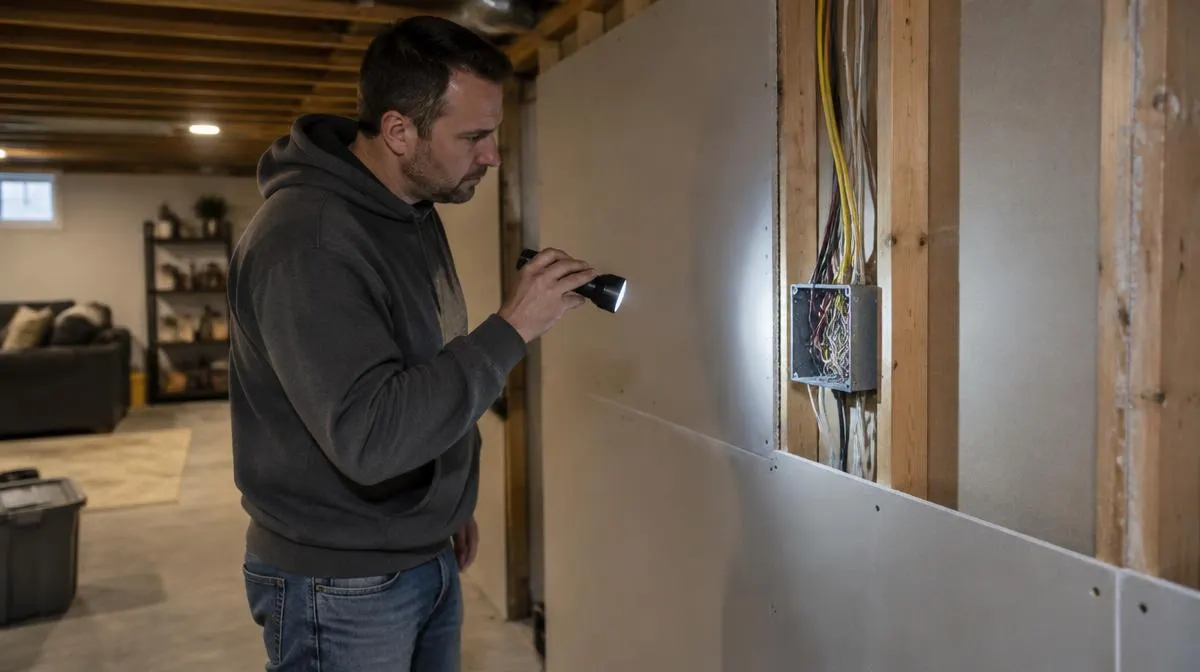
Quick answer: You can sell a house with unpermitted work. Your three options are a retroactive permit, removing the work, or an as-is sale with honest disclosure. Permits can take weeks to months; an as-is sale skips that. DispoKey buyers make as-is cash offers and can close in as little as 21 days.
- List every project done without a permit and when.
- Pull the permit history from your building department.
- Price the three options side by side.
- Answer disclosure questions accurately, whatever you choose.
Finished basements, garage conversions, added bathrooms and replaced water heaters are the usual suspects. Sometimes a past owner did the work; sometimes you did. Either way, the permit record will not match the house, and a buyer's inspector or appraiser may notice. This guide covers the three realistic options, what buyers check and how disclosure works. For the term itself, see our unpermitted work definition.
Can you sell a house with unpermitted work?
Yes. Selling a house with unpermitted work is allowed in most places; the issue is disclosure, financing and price, not legality of the sale itself.
Buyers using loans face the most friction. An appraiser may leave unpermitted square footage out of the value, and some lenders want corrections first. Cash buyers can usually close regardless, but they price in the risk of permits or removal later.
How do I find out what was permitted?
Ask the local building department for the permit history on your address. Many cities post it online.
Chicago's Department of Buildings and New York City's Department of Buildings both publish permit records for property owners. [2] [3] Compare the list with the rooms, systems and square footage you actually have.
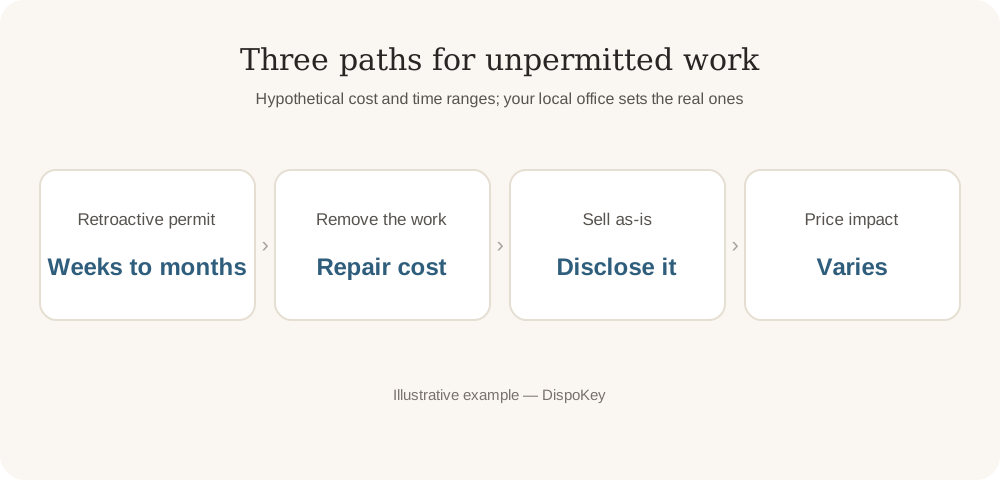
| Option | Typical time | Cost driver | Best when |
|---|---|---|---|
| Retroactive permit | Weeks to months | Plans, fees, opening walls, corrections | Work is sound and adds real value |
| Remove the work | Days to weeks | Demolition and repair | The space is small or unsafe |
| Sell as-is with disclosure | Your closing date | Lower price or credit | You need a firm timeline |
Option 1: Get a retroactive permit
A retroactive or as-built permit brings existing work into the record. It usually needs plans, fees and an inspection.
Open the retroactive permit checklist
- Call the building department. Ask whether it issues permits for completed work and which trades need separate permits.
- Gather documents. Contractor invoices, photos taken during construction and product specifications help.
- Hire licensed trades where required. Electrical and plumbing work often must be certified by a licensed contractor.
- Prepare for opened walls. Inspectors may need to see framing, wiring or plumbing behind drywall.
- Budget for corrections. Work built to an older code or without required fixtures may need changes before final approval.
The San Diego County building services page describes the permit and inspection steps for its unincorporated areas, which is a useful model of the process. [4] Expect the timeline to depend on how busy the office is and what inspectors find.
Option 2: Remove or reverse the work
Removing the work returns the house to its permitted condition. It makes sense when the work is small, poorly built or unsafe.
A basement bedroom without a legal exit, or a bathroom with unvented plumbing, may cost less to remove than to correct. Removal can still need a permit, so ask before demolition.
Option 3: Sell as-is with disclosure
An as-is sale means you sell the house in its current condition and the buyer takes on the permit question. You still disclose what you know.
Many state disclosure forms ask directly about work done without required permits. The Texas Real Estate Commission's Seller's Disclosure Notice is one example, and TREC notes the notice reflects the seller's knowledge and is not a warranty. [1] State rules differ; your state selling guide covers local disclosure basics, including California and Illinois.
How much does unpermitted work lower the price?
There is no fixed discount. The price effect depends on what it would cost a buyer to permit, correct or remove the work.
Labeled example: a buyer estimates $18,000 to open walls, rewire and permit a basement. A cash offer on that house would typically reflect that cost plus some allowance for the unknown. If your own estimate is far lower, get a contractor bid and share it.
Which option fits your house?
Pick by comparing net proceeds and time, not by which option feels cleanest.
- Permit it if the work adds living space, was built well and you have three months or more.
- Remove it if correcting costs more than the value it adds.
- Sell as-is if you have a moving date, other repairs are piling up or the scope is unknown.
Our cash offer calculator lets you compare an as-is figure with a repaired-and-listed one. For broader repair issues, see selling a house with code violations.
When a cash offer may not be your best option
If the unpermitted item is minor, a retroactive permit is quick in your city and the house is otherwise move-in ready, listing it will usually net more. A cash offer fits better when the scope is large, walls would need opening or your timeline is short.
How DispoKey handles unpermitted work
Enter your address for an as-is cash offer. Tell your Seller Success Manager what was done without permits; buyers price it up front, so there is no repair list after you accept. You can close in as little as 21 days. Start your cash offer or see all selling options.
Key takeaways
- Pull your permit history before you price the house.
- Choose between permitting, removing or selling as-is with disclosure.
- Answer disclosure questions accurately in every option.
- Compare net proceeds and time, not just the sale price.
Related: selling with foundation problems and how to sell a house as is.
Frequently asked questions
Can you sell a house with unpermitted work?
Yes. It is legal to sell a house with unpermitted work in most places, but you must answer disclosure questions truthfully, and some buyers or lenders may walk away.
What happens if an inspector finds unpermitted work?
A buyer's inspector may note it and the buyer can ask for a credit, a permit or cancellation within the contract terms. A city inspector can require permits, corrections or removal.
How do I get a permit after work is done?
Contact the local building department. Many offer a retroactive or as-built permit that requires plans, fees and an inspection, sometimes with walls opened.
Do I have to disclose unpermitted work?
Many state disclosure forms ask directly about work done without permits. Answer what you know accurately; Texas's form, for example, includes that question.