
Quick answer: You can sell a house with foundation problems three ways: repair it first, list it as-is with full disclosure, or sell to a cash buyer who prices the repair into the offer. Repairs often cost thousands to tens of thousands of dollars, and FHA or VA financing may require repairs or further structural evaluation before closing. DispoKey buys as-is and can close in as little as 21 days.
Foundation trouble rarely announces itself all at once. A door starts sticking, a crack in the drywall grows past the corner of a window, the kitchen floor develops a slope you can feel in socks. Then an inspector writes "recommend evaluation by a structural engineer" and the sale you planned suddenly feels uncertain. The good news: houses with foundation issues sell every day. The key is choosing the path that matches your budget, your timeline and the kind of buyer who can realistically close.
How serious is the foundation problem?
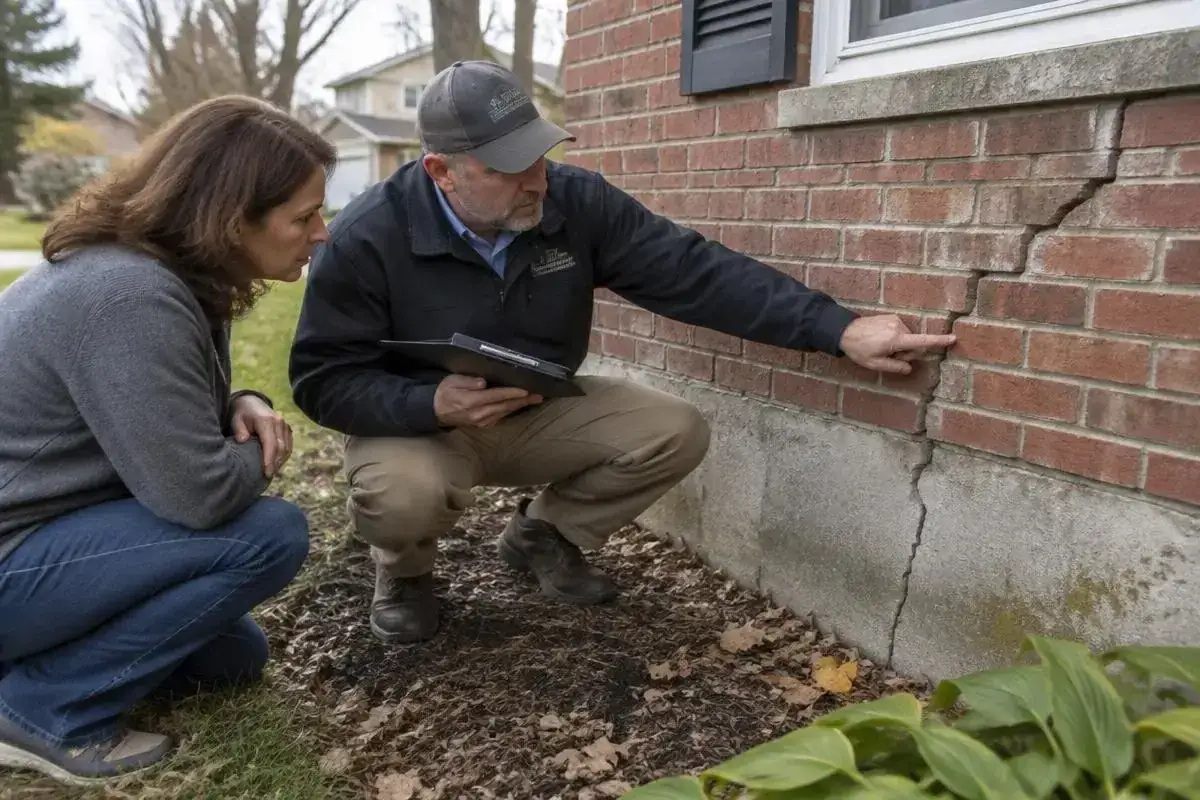
Start by separating cosmetic cracking from structural movement, because buyers and lenders treat them very differently. Hairline vertical cracks in poured concrete are common as concrete cures. Wider cracks, stair-step patterns in brick or block, and cracks that are wider at one end usually point to settlement or soil movement.
- Usually minor: hairline vertical cracks, small shrinkage cracks in a slab, cracks that have not changed in years.
- Worth an engineer: stair-step cracks in masonry, doors and windows that suddenly stick, gaps between walls and ceilings, floors that slope noticeably.
- Serious: bowing basement walls, water entering through cracks, chimneys pulling away, cracks wider than a quarter inch that keep growing.
Soil plays a big part. The U.S. Geological Survey notes that expansive clay soils swell when wet and shrink when dry, which is why foundation movement is especially common in parts of Texas, Colorado, Oklahoma and the Southeast. A structural engineer's report, often a few hundred dollars, tells you which category you are in and becomes a document every buyer will want to see.
Your three options for selling
Each route trades money against time and risk. Here is how they compare.
| Option | Who buys | Typical timeline | Main risk |
|---|---|---|---|
| Repair, then list | Any buyer, including FHA/VA | 1-3 months of repairs + 30-90 days on market | Repair costs run over; you carry the house meanwhile |
| List as-is with disclosure | Cash or conventional buyers who accept the defect | 30-120+ days | Buyer's lender or inspector kills the deal late |
| Sell to a cash buyer | DispoKey or another as-is buyer | As little as 21 days | Lower price than a fully repaired listing |
Option 1: Repair, then list
Repairing makes sense when the fix is moderate, you have the cash, and the home is otherwise in good shape. Get two or three bids based on the engineer's report, not on a contractor's sales visit. Ask for a transferable warranty; buyers value it, and it answers the first question every buyer's agent asks. Keep permits, invoices and the engineer's sign-off together, because you will still disclose the past repair.
Option 2: List as-is with full disclosure
Listing as-is can work in hot markets, but the buyer pool shrinks. FHA and VA property requirements address structural soundness. An appraiser may require further evaluation or repairs depending on the defect; not every foundation crack disqualifies a property. Conventional lenders may also require repairs if the appraiser flags the foundation. Expect lower offers, longer negotiations and a real chance a deal falls apart after the buyer's own inspection.
Option 3: Sell to a cash buyer
A cash buyer does not need lender approval, so the foundation does not block closing. The buyer estimates the repair, subtracts it along with their costs and risk, and makes an offer on the house as it stands. You skip repairs, showings and inspection renegotiations. When you request an offer from DispoKey, a Seller Success Manager walks you through how the number was built.
Worked example: what each path nets (illustrative numbers)
Suppose a home would sell for $310,000 with a sound foundation. An engineer recommends piering along one wall, and bids come in around $22,000. These are labeled example figures, not a quote.
- Repair, then list: $310,000 minus $22,000 repair, 5.5% commission ($17,050), 2% concessions ($6,200) and five months of carrying costs at $1,300 ($6,500) nets about $258,250.
- List as-is: a buyer offers $265,000 after their inspection; minus commission ($14,575), concessions ($5,300) and four months of carrying costs ($5,200) nets about $239,925, if the deal holds.
- Cash sale: an as-is offer of $236,000 with no commissions and buyer-paid closing costs nets about $236,000 in as little as 21 days.
In this example the repair route nets the most, but only if repairs stay on budget and you can manage the project. The cash route nets less and removes the uncertainty. Run your own numbers before deciding.
What you must disclose
Almost every state requires sellers to disclose known material defects, and foundation movement is the textbook example. Disclose current cracks, past repairs, engineer reports you received and any water intrusion. Selling as-is does not remove this duty; it only means you will not make repairs. Failing to disclose is one of the most common reasons for lawsuits after closing, so when in doubt, disclose and attach the report.
Will insurance cover the repair?
Usually not. Standard homeowners policies generally exclude settlement, earth movement and wear. Coverage sometimes applies when a covered event, such as a burst pipe, causes the damage. Read your policy's exclusions and ask your insurer in writing before you plan the sale around a claim.
When a cash sale may not be your best option
If the engineer finds only cosmetic cracking, fix it, document it and list normally; you will likely net more. If repairs are modest, you have savings, and you are not in a hurry, repairing first often wins. A cash sale fits best when repairs are large or uncertain, the home also needs other work, or you need to move on a set date. Compare options on our seller page.
Key takeaways
- Get a structural engineer's report first; it sets the price conversation for every buyer.
- FHA or VA financing may require repairs or further structural evaluation.
- Disclose known foundation issues and past repairs in every sale, including as-is.
- Insurance rarely pays for settlement or soil movement.
- Compare the repair, as-is listing and cash paths on net proceeds and certainty, not price alone.
Want a number for the house as it stands? Enter your address for a no-obligation cash offer, or read our guides on selling a house with structural or mold damage, selling after water or storm damage and selling an inherited house in probate.
Related reading
- Sell House With Water Damage: Compare Your Options
- How to sell a house with code violations
- Selling a house with tenants in place
- Compare repair, credit and as-is routes for a leaking roof
- Compare repair, credit and as-is routes for termite damage
- Unpermitted additions or basements? Your three options
- Selling a House That Needs a New Roof: Your Options
- Selling a House With a Wet Basement: Fix or Sell As-Is