Quick answer: When selling a house with termite damage, you can treat and repair it first, offer the buyer a credit or sell as-is. DispoKey suggests comparing all three with written numbers: one licensed pest inspection, one repair estimate from a contractor and an as-is offer. Disclose what you know, and close in as little as 21 days on the cash route.
- Get a current wood-destroying insect report.
- Separate treatment cost from structural repair cost.
- Compare net proceeds, not headline prices.
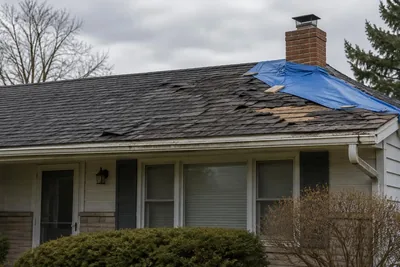
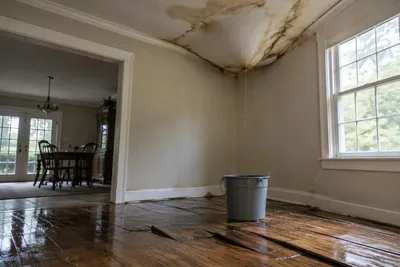
Termites worry buyers for a simple reason: the damage they leave is often hidden inside walls, sills and floor framing. A buyer who sees mud tubes along a foundation imagines the worst. This guide covers the decision in front of you as the seller: what to document, how buyers and lenders react to an inspection report, and how to compare repairing first with selling in current condition. If moisture is part of the problem, read selling a house with water damage as well, because damp wood and termite activity often appear together.
What does termite damage look like?
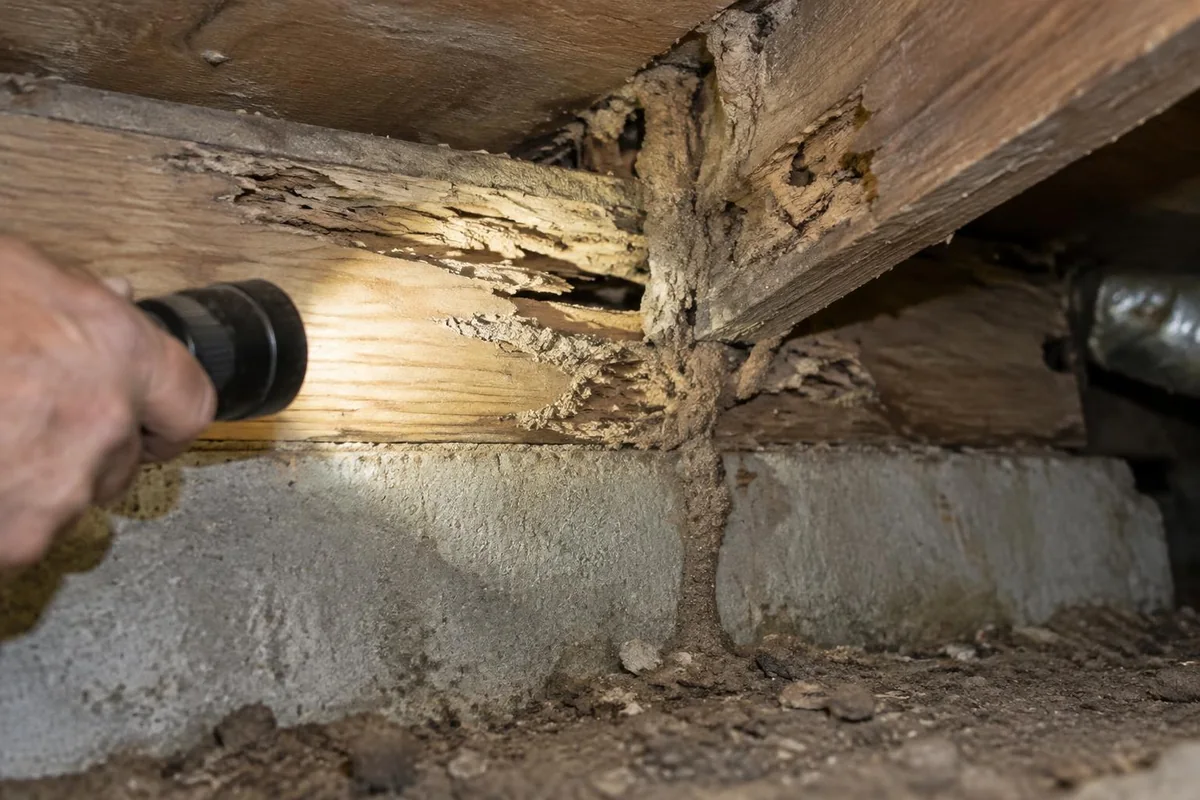
Common signs are mud shelter tubes on foundation walls, discarded wings near windows, and wood that sounds hollow or crumbles when probed. Only a licensed inspector can tell you whether activity is current.
The Environmental Protection Agency describes subterranean termites building mud tubes to travel between soil and wood, and recommends probing exposed wood for hollow spots. [1] Drywood termites behave differently: they live inside the wood and can leave small piles of pellets. Mississippi State University Extension lists swarmers, shed wings and visible wood damage as other warning signs. [2] Photograph anything you see with the date, but avoid pulling apart framing yourself. Disturbing the area can make the inspection harder and does not tell you how far the damage runs.
Open the termite evidence checklist
- Dated photos of tubes, wings or damaged wood
- The most recent wood-destroying insect inspection report
- Treatment contract, warranty or service history, if any
- At least one written repair estimate for damaged framing
- Receipts for past treatments or repairs
- Notes on where moisture collects around the house
What is a wood-destroying insect report?
It is a standardized record of a visual inspection for termites and other wood-destroying insects in readily accessible areas. Many buyers, and some lenders, ask for one before closing.
The common form is known as the NPMA-33. The version HUD publishes states that it records visible evidence such as live insects, shelter tubes, exit holes and damage, and that it is not a structural damage assessment or a guarantee against hidden or future damage. [3] That last point matters. A report can say damage is present without saying what it costs to fix, so you will usually need a contractor or structural engineer for the repair side.
How do you check that a pest company is licensed?
Use your state regulator's license lookup before you hire anyone. In California, for example, businesses doing structural pest control for hire are licensed by the Structural Pest Control Board. [4] Ask the company for the license number in writing and check it yourself.
Do FHA and VA buyers need a termite inspection?
Sometimes. Government-backed loans can require a wood-destroying insect inspection depending on the property, the location and what the appraiser sees, so a buyer's loan can bring the issue to the table even if you never ordered a report.
HUD's archived FHA reference guidance lists triggers such as evidence of active infestation, a state or local requirement, local custom or the lender's discretion; buyers should confirm current rules with their lender. [5] For VA loans, the VA says a report is required for certain properties in areas rated for heavier termite activity when the appraisal calls for it, and that veterans may pay the inspection fee and required repairs or negotiate those costs with the seller. [6] In practice, this means an active infestation can delay or reprice a financed sale until it is treated and the damage is addressed.
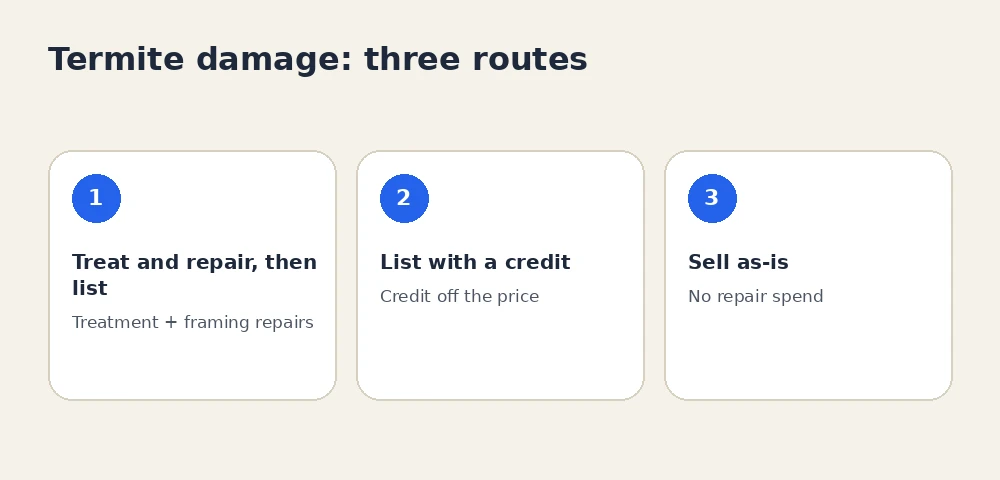
| Route | What you pay or give up | Main risk |
|---|---|---|
| Treat and repair, then list | Treatment plus framing repairs | Hidden damage widens scope |
| List with a buyer credit | Credit off the price | Lender may require repairs first |
| Sell as-is for cash | Lower price, no repair spend | Leaving equity behind |
A worked net comparison with example numbers
Write each route as net proceeds after costs and time. The figures below are invented examples for illustration, not an offer, an appraisal or a typical repair price.
Suppose a home would list at $240,000 in sound condition. Treatment is quoted at $1,800 and replacing a damaged sill plate and two joists at $9,500. Repairs add five weeks of holding costs at $1,100 per month, about $1,400. Listing costs of 7%, or $16,800, leave an example net of $210,500 before payoff: $240,000 − $1,800 − $9,500 − $1,400 − $16,800.
Now treat only and list at $231,000 with a $9,500 credit. Seven percent of $231,000 is $16,170, so the example net is $203,530 after treatment, provided the buyer's lender accepts the credit. An as-is cash offer of $198,000 with $2,500 of seller closing costs leaves $195,500, with no contractor to schedule and no second inspection.
In this example, repairing first nets the most on paper, but only if opening the walls does not reveal more damage. The cash route nets less and removes that risk. Your own reports and estimates decide which matters more.
Do you have to disclose termite damage when selling?
In most states you must disclose known material defects, and past or present termite damage usually qualifies. The form and wording depend on where the house is located.
Disclose what you know, including past treatments and repairs, and keep the paperwork. Texas, for example, uses a seller's disclosure notice that records the seller's knowledge on the date signed and states it is not a substitute for inspections or warranties. [7] A treated, documented problem is easier for a buyer to accept than one found at inspection. The glossary entries on real estate disclosure and as-is sales explain the basics; your state's form and a real estate attorney settle the specifics.
When DispoKey may not be your best option
If the activity was caught early, treatment is done and the damage is cosmetic, listing on the open market will often net more. Use a cash offer as a comparison, not a default.
If the report shows structural damage, a lender is requiring repairs you cannot fund, or you cannot carry the house through a repair, request an as-is cash offer and compare it with your listing numbers. A Seller Success Manager reviews the reports and estimates you already have; you can close in as little as 21 days, subject to title and the transaction. Related reading: selling a house with foundation problems and selling a house with a leaking roof.
Key takeaways
Get a current inspection from a licensed company, price treatment and repairs separately and compare repair, credit and as-is routes as net proceeds over time. Disclose what you know and verify loan, contract and disclosure terms yourself. This is educational information, not legal advice; disclosure duties vary by state and need qualified review.