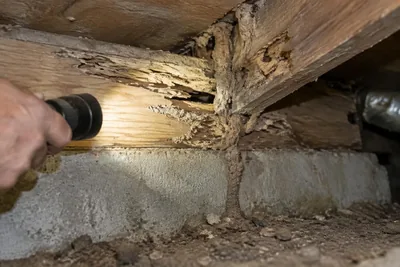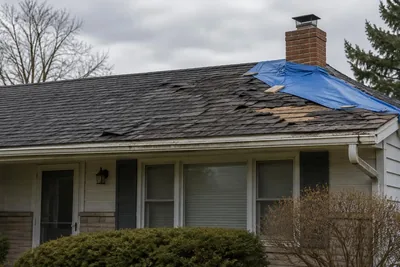
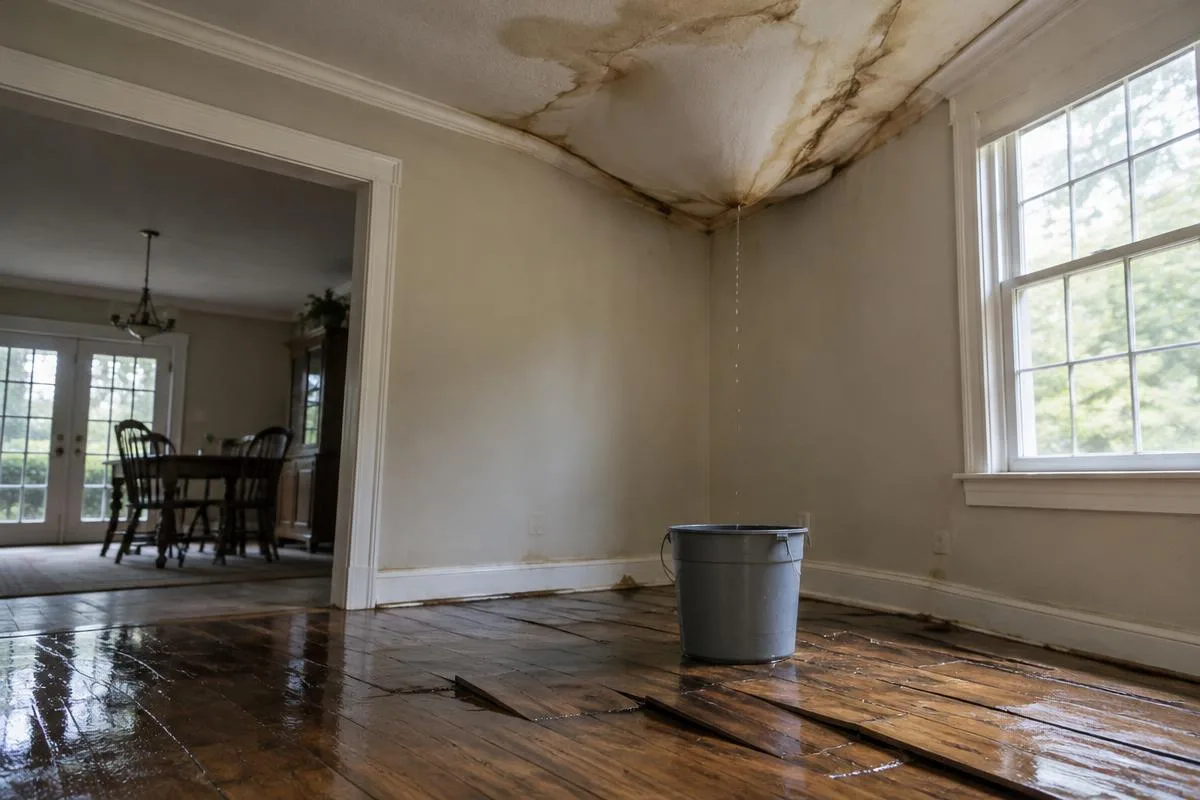
Quick answer: You can sell a house with water damage, but first separate active leaks from repaired damage, collect records and compare three routes: repair, list in current condition or request an as-is offer. DispoKey helps homeowners compare a cash option; local disclosure duties still matter even when no repairs are required.
- Make the house safe before arranging visits.
- Document the source, affected rooms and unresolved work.
- Compare money left after costs, not headline prices.
A stained ceiling and a recently flooded ground floor are different problems. Neither should be reduced to a fresh coat of paint and a reassuring sentence. This guide focuses on the homeowner's decision: what information to collect, when professional help matters and how to compare sale options without assuming a national repair price.
Identify the water source before choosing a sale route
Start with the cause and whether water is still entering the home. A plumbing leak, roof leak, sewage backup and storm flood require different safety and repair conversations.
If access is unsafe, stay out and arrange qualified assistance. Do not enter standing water around electrical equipment or open walls yourself to prove a point to a buyer. Photograph visible conditions only where safe. Record when the damage appeared, which rooms were affected and whether the source was stopped. Separate what you know from what a contractor still needs to assess.
What should you do about mold and hidden moisture?
Fixing moisture is part of addressing mold; painting a stain does not establish that the problem is resolved. EPA advises additional guidance when mold covers more than roughly ten square feet or there is substantial water damage. [1]
That guidance is not a home-sale inspection certificate. Ask a restoration professional what measurements, removal and drying documentation are appropriate for your situation. Keep their report, including limitations. A dry-looking wall can conceal uncertainty, and an old stain can remain after a sound repair. Describe those differences honestly instead of diagnosing from photographs.
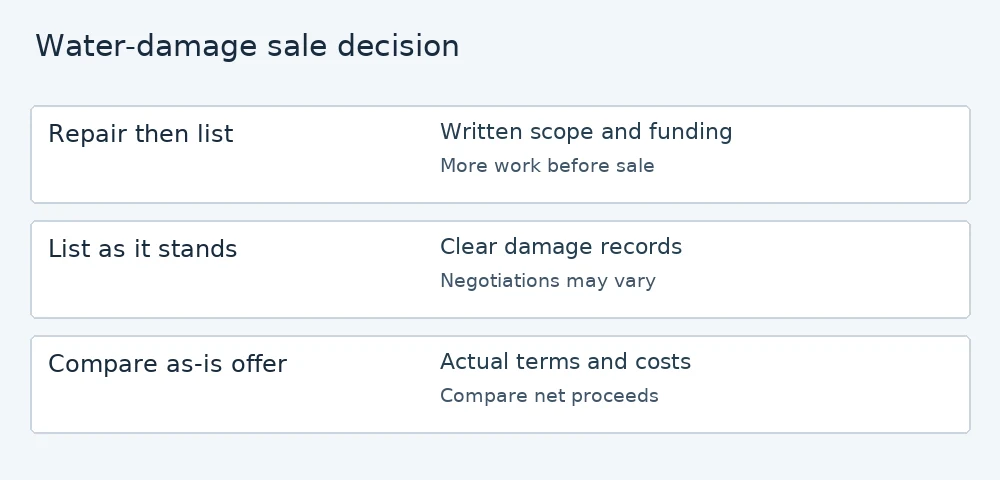
Compare three water-damage selling paths
The useful comparison is net proceeds, time and uncertainty across all three paths. A higher expected sale price can disappear into repairs, holding costs and concessions.
Open the homeowner decision checklist
- Can I fund repairs without relying on an unresolved claim?
- Do I have a written scope and schedule?
- Can I stay safely while work happens?
- What happens if repairs take longer?
- Have I compared an actual offer with realistic listing costs?
| Route | Information needed | Main trade-off |
|---|---|---|
| Repair then list | Written scope, funding and completion records | More preparation and spending before sale |
| List in current condition | Clear disclosures and realistic price | Buyer financing and repair negotiations vary |
| Request an as-is offer | Damage history and actual offer terms | Compare lower preparation with net proceeds |
When does repairing before listing make sense?
Repairing may fit when the source is understood, the scope is manageable and you have money and time. Obtain a written estimate separating source repair, drying, damaged-material replacement and finishing.
Ask what might change the estimate, whether permits are needed and what completion evidence you receive. Discuss likely pricing with a local agent rather than assuming every repair dollar returns at closing. Buyers and their lenders may assess the condition differently. A repair plan improves the information available; it does not guarantee financing or a particular price.
Can you sell a house with water damage in current condition?
Yes, a sale can be possible without completing every repair, subject to the property, buyer and applicable rules. Make unresolved damage visible in the information buyers receive.
Ask your agent how condition may affect marketing, lender requirements and negotiations. Give buyers access through safe, agreed arrangements. Avoid “minor issue” descriptions when the scope is unknown. For adjacent concerns, read selling with foundation problems and selling with code violations; their documents may belong in the same evidence packet.
A worked net comparison, not a repair-cost forecast
Subtract sale costs and property-specific expenses before comparing offers. The following invented figures demonstrate the arithmetic; they are not market estimates or DispoKey offers.
Suppose a repaired listing could sell for $260,000. Subtract $22,000 of quoted repairs, $16,000 of selling costs and $4,000 of extra holding costs: $218,000 remains before mortgage payoff and other obligations. Suppose an actual current-condition offer is $225,000 with $5,000 of seller costs: $220,000 remains on the same basis.
The $35,000 difference in headline prices would not determine the choice. Replace every input with your own written figures, then test a delayed completion or larger repair scope. Include temporary accommodation if needed and avoid counting the same expense twice. Compare mortgage payoff on the same closing-date basis.
Prepare a water-damage evidence packet
A short factual packet helps everyone separate completed work from unresolved risks. Organize records by event date rather than sending a folder of unexplained pictures.
- Cause and date, described without speculation.
- Before-and-after photos of each affected area.
- Inspection and restoration reports, moisture readings and limitations.
- Contractor scope, invoices and permits where applicable.
- Insurance claim status and paid or outstanding work.
- Remaining damage, unanswered questions and safe access restrictions.
Keep originals and share copies without account numbers or unnecessary personal information. Note when a report concerns only one room. A buyer should not mistake a limited assessment for a whole-house clearance.
Water damage, flood history and disclosure are different questions
An as-is sale does not automatically erase disclosure obligations. State forms and local requirements determine what must be provided; get advice when you are unsure.
FEMA's flood-risk disclosure guidance describes differences among state approaches, not one nationwide seller rule. [2] A pipe leak is not the same as flood exposure, and being outside a mapped high-risk area does not establish that a home cannot flood. Do not represent an insurance claim, repair or flood-history question as resolved without records. Read the seller disclosure glossary for terminology, then confirm the actual local form with a qualified professional.
Keep the insurance claim separate from the mortgage
A claim does not automatically pay every expense or stop mortgage payments. Contact your insurer and mortgage servicer about your specific situation.
CFPB advises disaster-affected homeowners to contact their insurer and servicer; payments generally remain due unless an arrangement is made. [3] Ask how claim proceeds, outstanding repairs and a pending sale will be handled. Do not assume proceeds transfer to a buyer or are available for closing. If a payment deadline or unsafe condition is urgent, address it directly with the appropriate professional rather than waiting for a sale estimate.
When DispoKey may not be your best option
A move-in-ready home with time to list may be better suited to the open market. A modest completed repair with strong records may also justify an agent conversation first.
If preparation and uncertainty are the main obstacles, compare a cash-offer request with those alternatives. A Seller Success Manager can discuss the home's condition and your timing. Close in as little as 21 days, subject to your transaction's circumstances. Review our fire, storm and water-damage situation guide and home-selling options before deciding.
Key takeaways
Identify the source, obtain appropriate assessment and preserve records. Compare net proceeds using your own costs. Keep local disclosure, insurance and mortgage questions separate.
Related reading
- Update the payoff if your closing moves
- Compare repair, credit and as-is routes for a leaking roof
- Check for termite damage where moisture has collected
- Behind on payments? Sell before the auction
- Selling a house with mold: options and disclosure
- Compare claim, repair and as-is routes after a house fire
- Selling a House With a Pool: Value, Repairs, Safety
- Selling a House With a Septic Tank: Inspect or As-Is
- Selling a House With a Wet Basement: Fix or Sell As-Is