Quick answer: When selling a house with a leaking roof, you can repair it, offer a credit or sell as-is. DispoKey suggests comparing all three with written numbers: one roofer estimate, your realistic listing timeline and an as-is offer. Disclose known leaks as your state requires, and close in as little as 21 days on the cash route.
- Stop active water first and photograph everything.
- Get written roof estimates before deciding.
- Compare net proceeds, not headline prices.
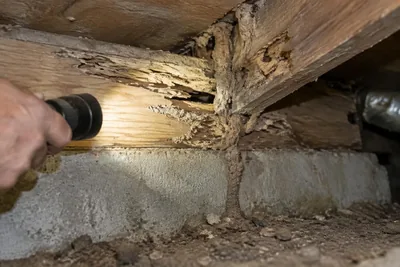
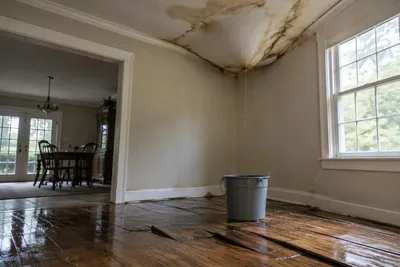
A roof leak is rarely only a roof problem. Water travels, stains ceilings and soaks insulation, so buyers and inspectors read a leak as a question about everything under it. This guide covers the roof-specific decision: whether to replace, patch, credit or sell in current condition. For damage that has already spread into floors and walls, read selling a house with water damage; for the broader condition hub, see foundation, roof and mold problems.
What should you do first when the roof is leaking?
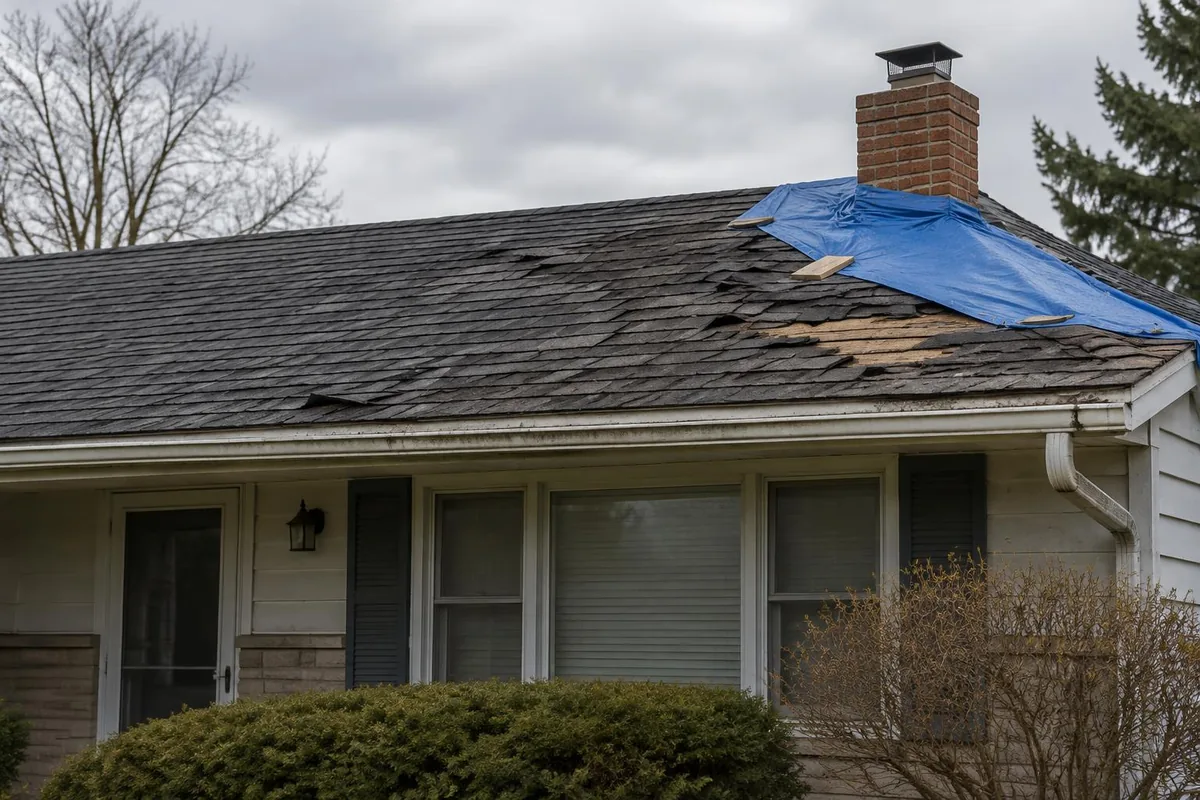
Limit new damage, then document. A temporary tarp or patch from a qualified roofer protects the house and your negotiating position while you compare options.
Catch dripping water, move belongings away from the wet area and keep receipts for emergency work. Photograph the ceiling stain, the attic decking if you can safely see it, and the outside of the roof from the ground. Date every photo. These records help with an insurance conversation, a disclosure form and any buyer who later asks how long the problem existed. Avoid climbing onto a wet or steep roof yourself.
Open the roof-leak evidence checklist
- Dated photos inside and outside
- Emergency repair or tarp receipt
- At least one written roofer estimate, ideally three
- Insurance claim number or the insurer's written decision
- Roof age from permits, receipts or prior inspection reports
- Notes on which rooms show stains or soft drywall
Should you repair the roof, replace it or offer a credit?
Repair makes sense when a contractor confirms a localized, fixable cause. Replacement or a credit becomes the real comparison when the roof is near the end of its life.
A missing flashing piece around a chimney is a different conversation from widespread curling shingles and soft decking. Ask each roofer to state the cause, the scope and whether they recommend repair or full replacement, in writing. The Federal Trade Commission recommends hiring licensed, insured contractors, getting several written estimates and refusing pressure to pay everything up front. [1]
Can you give the buyer a credit instead of fixing the roof?
Often, yes, if the buyer and lender accept it. A credit lets the buyer choose the contractor, but some loan programs and appraisers still require the roof to be serviceable before closing.
Confirm with your agent or closing professional whether the buyer's financing allows a credit for the roof. If it does not, a credit offer can delay the deal rather than save it.
Will homeowners insurance pay for a leaking roof?
It depends on the cause and your policy. Many policies treat sudden damage, such as a storm tearing off shingles, differently from gradual wear and missed maintenance.
Read the policy and ask the insurer directly instead of relying on a contractor's opinion of coverage. The consumer guide from state insurance regulators explains how to review coverage, deductibles and claim duties. [2] In Texas, the state insurance department warns that contractors may not offer to waive your deductible or build it into a bid, and that you should read anything presented as an estimate before signing. [3] If you are selling a Texas home, our Texas home-selling guide covers the wider process. Rules differ by state, so check with your own insurance department.
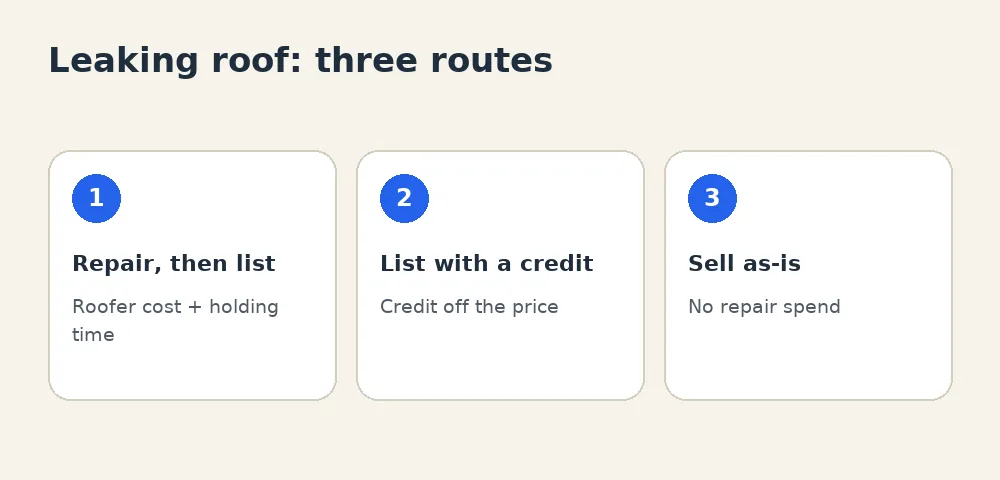
| Route | What you pay or give up | Main risk |
|---|---|---|
| Repair or replace, then list | Roofer cost plus holding time | Delays, scope growth |
| List with a buyer credit | Credit off the price | Lender may refuse it |
| Sell as-is for cash | Lower price, no repair spend | Leaving equity behind |
A worked net comparison with example numbers
Write each route as net proceeds after costs and time. The figures below are invented examples for illustration, not an offer, appraisal or typical roof price.
Suppose a home would list at $260,000 with a sound roof. The written replacement estimate is $16,000, and replacing first adds six weeks of holding costs at $1,200 per month, about $1,800. Listing costs of 7%, or $18,200, leave an example net of $224,000 before payoff: $260,000 − $16,000 − $1,800 − $18,200.
Now list without replacing at $252,000 with a $16,000 credit. Seven percent of $252,000 is $17,640, leaving $218,360, provided the buyer's lender accepts the credit. Finally, an as-is cash offer of $215,000 with $3,000 of seller closing costs leaves $212,000, with no roofer to schedule and no showings in the rain.
In this example, repairing first nets the most on paper, but only if the scope holds and the sale goes as planned. The cash route nets less and removes those risks. Your own estimates decide which matters more.
Do you have to disclose a roof leak when selling?
In most states you must disclose known material defects, and an active or past leak usually qualifies. The exact form and wording depend on your state.
Disclose what you know, including past repairs, and keep the receipts. A repaired leak is easier to explain than a hidden one discovered at inspection. Do not paint over stains to hide them. The glossary entry on real estate disclosure explains the basics; your state's seller form and a real estate attorney settle the specifics. An as-is sale changes who handles repairs, not your duty to be truthful.
When DispoKey may not be your best option
If the leak is small, the fix is confirmed and you have time to list, repairing and selling on the open market may net more. Use a cash offer as a comparison, not a default.
If the roof is failing, insurance has declined the claim or you cannot carry the house through a repair, request an as-is cash offer and compare it with your listing numbers. A Seller Success Manager reviews the photos and estimates you already have; you can close in as little as 21 days, subject to title and the transaction. Related reading: selling with foundation problems and selling with code violations.
Key takeaways
Stop the water, document it and get written estimates. Compare repair, credit and as-is routes as net proceeds over time, disclose known leaks and verify insurance and contract terms yourself. This is educational information, not legal or insurance advice; disclosure duties and claim disputes need qualified review.