
Quick answer: You can sell a house with mold three ways: remediate first and list, disclose and list as-is with a price cut, or take a cash offer as-is. EPA guidance says an area under about 10 square feet is usually a do-it-yourself cleanup; larger growth needs a professional. DispoKey buyers make as-is offers and can close in as little as 21 days.
- Fix the moisture source first — mold returns if the leak stays.
- Measure the affected area before you call anyone.
- Get a written remediation quote so you can compare real numbers.
- Disclose what you know; hiding mold creates bigger problems after closing.
Finding mold while you are getting ready to sell is stressful, but it is a moisture problem with a price tag, not a dead end. This guide helps you size the problem, compare your three options with labeled example numbers, and pick the path that leaves you the most money with the least risk. If water caused it, read selling a house with water damage too, and the as-is definition explains what an as-is sale really means.
How serious is the mold in your house?
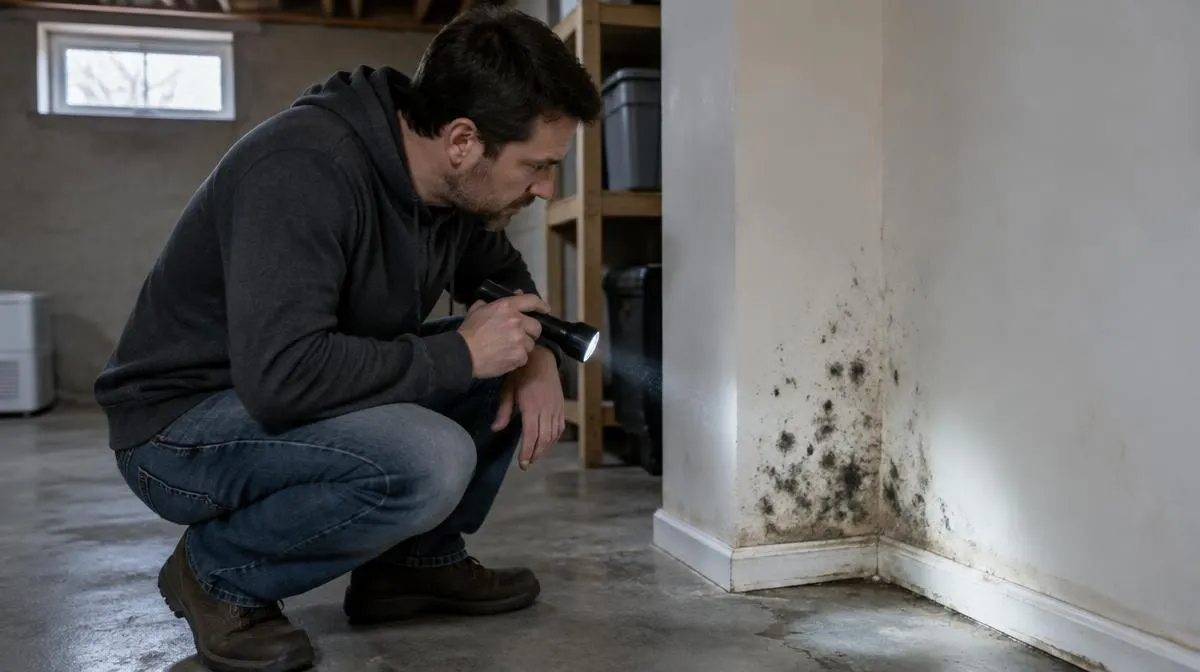
Seriousness depends on size, location and cause. A small patch on a bathroom ceiling is routine; growth inside walls, across a basement or in the duct system is a bigger project because it usually means a long-running moisture problem.
What does the 10-square-foot guideline mean?
The EPA's homeowner guide says that if the moldy area is less than about 10 square feet — roughly a 3-foot by 3-foot patch — you can generally handle the cleanup yourself. Above that, the EPA points homeowners to its professional remediation guidance. [1] Treat that figure as a sizing tool, not a health verdict.
Is black mold worse than other mold?
Color does not tell you how dangerous mold is. The CDC explains that mold can affect people differently, especially those with allergies, asthma or weakened immune systems, and that the practical response is the same: remove the growth and fix the moisture. [2] Ignore anyone who quotes a scary price because of a color alone.
What are your options when selling a house with mold?
You have three realistic paths. Each trades time, cash and certainty differently, so put them side by side before deciding.
| Option | Cost and time | Best when |
|---|---|---|
| Remediate, then list | Repair cost; weeks of work plus listing time | Small problem, time to spare |
| Disclose, list as-is | No upfront cost; listing time, often longer | Local buyers accept projects |
| Cash offer as-is | No upfront cost; as little as 21 days | Large problem or tight timeline |
When does remediating first make sense?
Remediating first makes sense when the problem is contained, the moisture source is already fixed, and the quote is small relative to the price buyers will pay for a clean house. Keep every invoice and any clearance report; buyers and their inspectors will ask for them.
What happens if you list as-is with mold?
Listing as-is means you disclose the mold and let the price absorb it. Expect inspection-driven renegotiation, and expect some buyers' lenders to slow down or stop when the inspection reports active growth.
How does a cash offer handle mold?
A cash buyer prices the cleanup into the offer and takes the house as it stands, so there is no remediation to schedule and no lender inspection to pass. You trade some price for certainty and speed — DispoKey's buyers can close in as little as 21 days, and you can request an as-is offer without making a single repair.
Worked example: which option nets more?
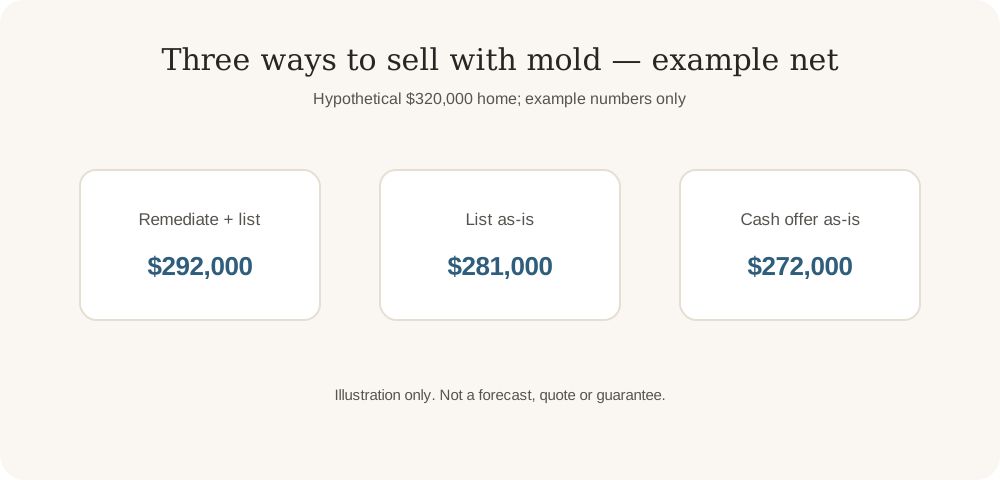
Compare net proceeds after cost and time, not sale price alone. The numbers below are a labeled example for one hypothetical $320,000 home with mold across a finished basement.
| Option (example only) | Example net | Extra months carried |
|---|---|---|
| Remediate + list: $320,000 price, −$9,500 work, −$18,500 selling costs | $292,000 | 2–4 |
| List as-is: $300,000 price, −$19,000 selling costs | $281,000 | 2–5 |
| Cash offer as-is: $272,000, no repairs or commissions | $272,000 | Under 1 |
In this example the remediate-and-list route nets the most on paper, but only if the quote holds, nothing new turns up behind the walls, and you can carry the house for several more months. If any of those is uncertain, the gap narrows fast. Run your own numbers with your quotes before deciding, then compare them with a written cash offer.
Do you have to disclose mold when selling?
In most states, sellers must disclose known material defects, and mold or past water intrusion is commonly on the state disclosure form. Rules differ by state, so read your state's own disclosure form and answer every question about water and mold accurately.
What should you disclose about mold?
Disclose what you know: where the mold was found, what caused it, what work was done and by whom, and whether the moisture source was fixed. Attach invoices and any testing or clearance reports. Accurate disclosure protects you after closing far better than silence does.
What should you do before you call a buyer or contractor?
Spend one afternoon gathering facts so every conversation starts from real numbers.
- Stop the water. The EPA's cleanup guidance is direct: fix the leak or moisture source, or the mold comes back. [3]
- Measure and photograph. Note square footage and every location.
- Lower the humidity. The EPA recommends keeping indoor humidity below 60%, ideally 30–50%. [1]
- Get one or two written remediation quotes. Ask what is included: containment, removal, drying and rebuild.
- Request an as-is offer. Compare it with your quote-adjusted listing net.
When DispoKey may not be your best option
If the mold is a small bathroom patch you can clean in an afternoon, the moisture source is fixed and your home is otherwise move-in ready, listing on the open market will probably net you more. A cash offer is strongest when the problem is large, the cause is still unclear, you are short on time, or you do not want to fund repairs. Compare selling as-is options if you are unsure.
How does selling a house with mold to DispoKey work?
You share the address and what you know about the mold, a Seller Success Manager reviews it with you, and our buyers make an as-is offer that already accounts for remediation. There is nothing to clean, no showings and no repair requests, and you choose the closing date. See how the process works or start your cash offer.
Key takeaways
- Size the problem first; the EPA's roughly 10-square-foot line separates small cleanups from professional jobs.
- Fix the moisture source before anything else.
- Compare net proceeds after costs and time, not headline price.
- Disclose what you know, with invoices and reports.
Frequently asked questions
Can you sell a house with mold?
Yes. You can remediate and list, list as-is with full disclosure, or accept a cash offer that prices in the cleanup. The right option depends on the size of the problem, your timeline and your repair budget.
Does mold kill a house sale?
Rarely on its own. Mold usually changes the price, the inspection negotiation or the buyer type rather than ending the sale, especially once the moisture source is fixed and documented.
How much does mold lower home value?
There is no fixed percentage. Buyers subtract the remediation cost, the risk of hidden damage and the hassle, so a documented quote is the best way to keep the discount reasonable.
Should I test for mold before selling?
The EPA says sampling is usually unnecessary when mold is visible, because the fix is the same. A clearance report after remediation, though, gives buyers useful proof.