

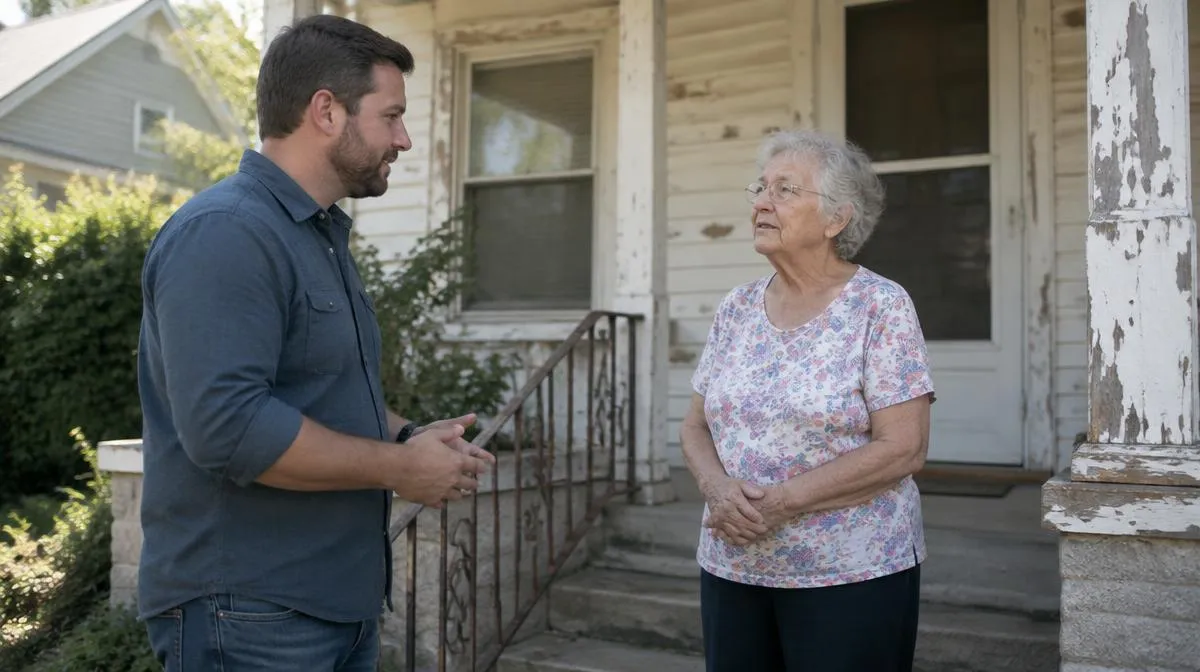
Quick answer: To negotiate with motivated sellers, solve their problem first and price second: learn the timeline and the pressure, show the repair and buyer math openly, and offer inside a range that still leaves room for your fee. DispoKey's dispo team matches off-market contracts with buyers in 72 hours, on a 60/40 split favoring you and $0 upfront.
- Ask about the situation before the price.
- Walk the house and write repairs down in front of the seller.
- Show your number's math, not just the number.
- Never promise a closing you cannot deliver.
Most contracts that fall apart were lost at the kitchen table, not at dispo. A seller who felt rushed or misled backs out, and a price that ignored buyer math never sells. This guide covers the conversation, a worked price range, common objections and the honest limits. Pair it with how to price a wholesale deal and how to comp a wholesale deal.
What does a motivated seller actually need?
Usually certainty, speed or relief from a specific problem, more than the last dollar. Your job is to find which one before you talk numbers.
What questions should you ask first?
Ask open questions and let the seller talk: What happens if the house does not sell? When do you need to be out? Who else is involved in the decision? What repairs has it needed? Write the answers down; they become your offer terms.
Why do all owners need to be at the table?
Every person on title has to sign. Negotiating with one heir or one spouse and discovering a second owner later is the most common reason a signed contract dies. Pull the deed before the appointment and confirm who owns the house.
How do you build an offer the seller can trust?
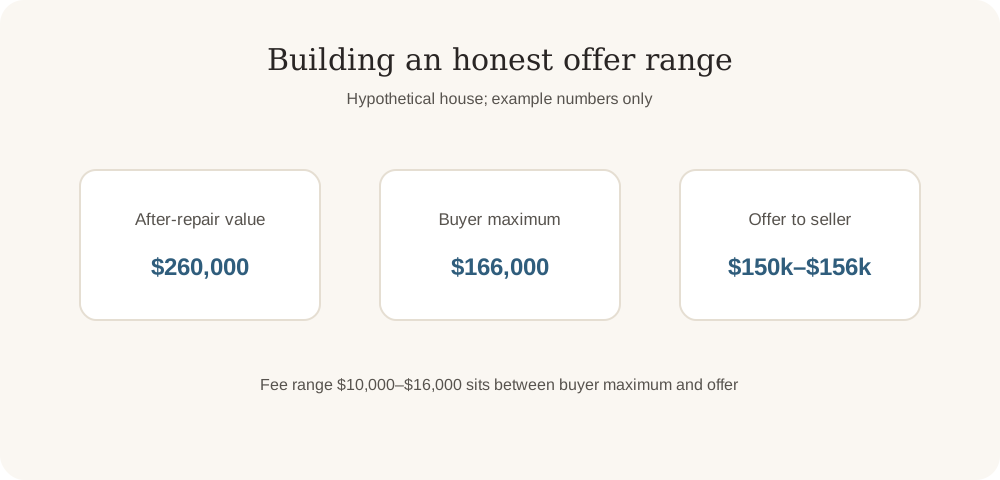
Build it from the after-repair value, the repairs and what cash buyers in that zip code actually pay, then show the seller the steps.
| Step | Example figure | Source |
|---|---|---|
| After-repair value | $260,000 | Three sold comps, last 6 months |
| Buyer's maximum price | $166,000 | 70% of ARV minus $16,000 repairs |
| Your fee range | $10,000 to $16,000 | Your market's buyer tolerance |
| Offer range to seller | $150,000 to $156,000 | Buyer max minus fee |
How do you anchor the price on repairs?
Walk every room with the seller and list what a buyer will replace: roof, HVAC, kitchen, flooring. When the list is theirs as much as yours, the gap between their hoped-for price and a cash price makes sense. The MAO calculator helps you show the math on the spot.
Why should you start at the bottom of your range?
Starting low inside an honest range gives you room to move on price when the seller needs it, or to trade a better date, a longer move-out or covering closing costs instead. Never start below what the math supports just to see what sticks.
Which terms can you trade instead of price?
Price is only one lever. Sellers often value a flexible move-out date, paying their closing costs, handling the cleanout, or a short leaseback more than a few thousand dollars. Ask which of these matter before you raise your number, and write any trade into the contract so nothing depends on memory.
- Move-out date: let the seller pick within your closing window.
- Cleanout: leave unwanted furniture and belongings behind.
- Closing costs: confirm in writing who pays which fees.
How do you handle common seller objections?
Answer the objection with facts, then stop talking. Silence after a fair answer does more than another argument.
- "Zillow says it's worth more." Show the sold comps and the repair list side by side.
- "I need to think about it." Agree, set a follow-up date and leave a written offer.
- "Another buyer offered more." Ask whether that offer is in writing with a closing date.
When should you walk away?
Walk away when the price the seller needs is above what buyers will pay. Tying up a house you cannot sell wastes the seller's time and damages your name in the market.
What are the honest limits in seller negotiations?
Disclose what you are and what you will do. Several states require wholesalers to tell sellers in writing that they intend to assign the contract, so check your state's real estate commission rules before you sign.
What rules apply to calling and texting sellers?
The FTC's Telemarketing Sales Rule and the National Do Not Call Registry govern many outbound sales calls, and the registry is enforced by the FTC, the FCC and state officials. [1] [2] Our skip tracing guide covers consent and scrubbing.
How should you treat older or distressed sellers?
Slow down, invite a family member or advisor, and put every term in writing. If the seller is facing foreclosure, point them to HUD-approved housing counselors as well; HUD lists free help for homeowners avoiding foreclosure. [3]
When DispoKey may not be your best option
If you already have a proven buyer waiting for this exact house, sell it to them directly and keep the whole fee. DispoKey fits when you have a signed off-market contract and need the 72-hour buyer match without paying anything upfront. We do not take on-market deals.
What happens after the seller signs?
Submit the deal with photos, the repair list and access details. Our team matches it with buyers within 72 hours under a 60/40 split favoring you. Read how the wholesaler program works or text your DK ID to (802) 618-0015 with questions.
Key takeaways
- Learn the seller's problem before the price.
- Build the offer from ARV, repairs and buyer math, and show the steps.
- Answer objections with facts and know when to walk.
- Disclose your role and follow calling rules.
Frequently asked questions
How do you negotiate with a motivated seller?
Find the seller's real problem first, build your offer from ARV, repairs and buyer math, show the math openly and trade terms like the closing date before you move on price.
What should you not say to a motivated seller?
Do not promise a closing date, price or certainty you cannot deliver, and do not hide that you may assign the contract where your state requires disclosure.
How low should a first offer be?
Start at the bottom of an honest range your math supports, not below it. That leaves room to move without losing the buyer's margin.
What if the seller wants more than buyers will pay?
Explain the gap with comps and repairs, leave a written offer, and walk away if the numbers do not work.