

Quick answer: Real estate lead nurturing turns sellers who are not ready today into contracts later. Stage each lead by timeline, follow a set cadence across calls, mail and email, give useful information instead of pressure, and follow CAN-SPAM and texting consent rules. Growth Lab runs nurture systems for $1,500/mo and you own every lead.
- Tag every lead by timeline: now, 3 months, 6+ months.
- Set a cadence and let your CRM schedule it.
- Measure contracts from nurtured leads, not opens.
Why lead nurturing matters
Most seller leads are not ready to sign on the first call. They are waiting on a family decision, a tenant move-out or a probate step. Without follow-up, those leads go to whoever calls last.
A nurture system keeps you in touch respectfully until timing is right. It costs far less than generating a new lead, which is why old leads are often the cheapest contracts you will get.
How to stage seller leads
Sort every lead by timeline and motivation so each gets the right follow-up.
- Hot: ready within 30 days; call often.
- Warm: 1 to 6 months; check in on a set schedule.
- Long-term: 6+ months or unsure; light monthly touch.
- Dead: sold, not interested or asked to stop; remove.
Record the reason they are waiting. That note tells you when to call back. Our investor CRM guide shows how to set up stages.
What is a good follow-up cadence?
Fast and frequent early, then steady. A common pattern is several touches in week one, weekly for a month, then every two to four weeks.
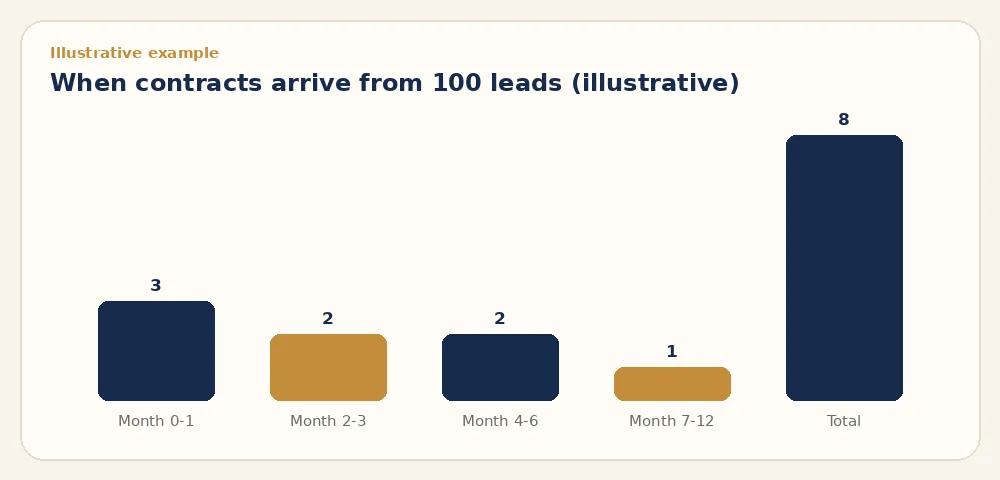
Mix channels: a call, a short email, a mailed letter. Use texts only with the right consent; see our text marketing guide. The illustrative example in this guide shows how contracts arrive months after the first contact.
| Months after first contact (illustrative 100 leads) | Contracts |
|---|---|
| Month 0 to 1 | 3 |
| Month 2 to 3 | 2 |
| Month 4 to 6 | 2 |
| Month 7 to 12 | 1 |
| Total from one batch | 8 |
What to send in nurture messages
Send something useful each time, not just "are you ready yet?"
- A plain guide to their situation, such as inherited homes or repairs.
- A reminder of how your process works.
- A check-in tied to the reason they gave for waiting.
- An updated offer when their timeline or property changes.
Keep each message short and signed by a real person.
Email and text rules for nurturing
Follow the law in every channel. The FTC's CAN-SPAM guide says commercial email must have accurate headers and subject lines, identify itself as an ad, include a valid postal address and give a working way to opt out, honored within 10 business days.
For calls and texts, the FCC treats texts as calls, and marketing via autodialer needs prior express written consent. Check Do Not Call lists and keep consent records. Our TCPA guide and email marketing guide go deeper.
How to revive old seller leads
Your CRM likely holds leads that went quiet months ago. A short, respectful re-engagement campaign can reopen many of them.
- Clean the list: remove sold properties, opt-outs and wrong numbers.
- Check for changes: new liens, vacancy or a listing that expired.
- Send a plain check-in: ask whether their plans changed, with an easy way to reply or opt out.
- Call the replies first: speed matters even on old leads.
Expect only a small share to respond, but each one already knows you. Record the result for every lead so the next pass is cleaner.
Nurture by situation
Group leads by situation, such as inherited homes, tenant problems or major repairs, and send content that fits. A landlord tired of tenants wants different information than an heir dealing with probate.
How to automate without sounding robotic
Let software schedule tasks and send routine emails, but keep calls and key messages personal. Reference what the seller told you and use their name and property.
Review automations monthly. Remove leads that asked to stop, fix broken links and refresh content that no longer fits.
How to measure lead nurturing
Track contracts and revenue from leads older than 30 days, by original source. That shows which channels pay off over time, not just on day one.
Also watch response rate, opt-outs and time from first contact to contract. Compare this with your speed-to-lead results.
Who owns follow-up on your team
Nurturing fails when no one owns it. Assign each lead to one person who is responsible for every touch until the lead signs or opts out.
- Acquisitions: owns hot leads and appointments.
- Follow-up specialist or assistant: owns warm and long-term touches.
- Owner or manager: reviews stalled leads weekly.
Write the cadence down so a new hire can follow it on day one. Hold a short weekly review of every lead with no touch in 30 days, decide the next step for each, and log the reason in the CRM. That one meeting catches most leads that would otherwise slip away.
Lead nurturing with Growth Lab
Growth Lab builds the ads, landing pages and nurture system for $1,500/mo. You own every lead and contract, and DispoKey disposition is optional. We do not guarantee lead counts or ROI. See Growth Lab.
When Growth Lab may not be your best option
If you have few leads to nurture, or you already run a disciplined follow-up system, focus spending elsewhere first. Growth Lab fits investors who want lead generation and follow-up built and run together.
Key takeaways
- Most seller leads are not ready on the first call.
- Stage leads by timeline and record why they are waiting.
- Follow CAN-SPAM and texting consent rules.
- Measure contracts from leads older than 30 days.
Frequently asked questions
What is lead nurturing in real estate?
Consistent, useful follow-up with leads who are not ready yet, until their timing is right.
How often should I follow up with seller leads?
Several times in week one, weekly for a month, then every two to four weeks for long-term leads.
Do nurture emails have to follow CAN-SPAM?
Yes. Commercial email needs accurate headers, a postal address and a working opt-out, per the FTC.
Does Growth Lab guarantee contracts from nurturing?
No. Growth Lab costs $1,500/mo, you own every lead and results depend on your market.