Quick answer: Pre-1978 flip lead-safe contractor verification starts with who will perform covered renovation work: you, employees or an outside firm. DispoKey recommends two separate checks, firm certification and the assigned certified renovator, plus confirmation of the administering jurisdiction. A house's age is a screening fact, not proof that every surface contains lead.
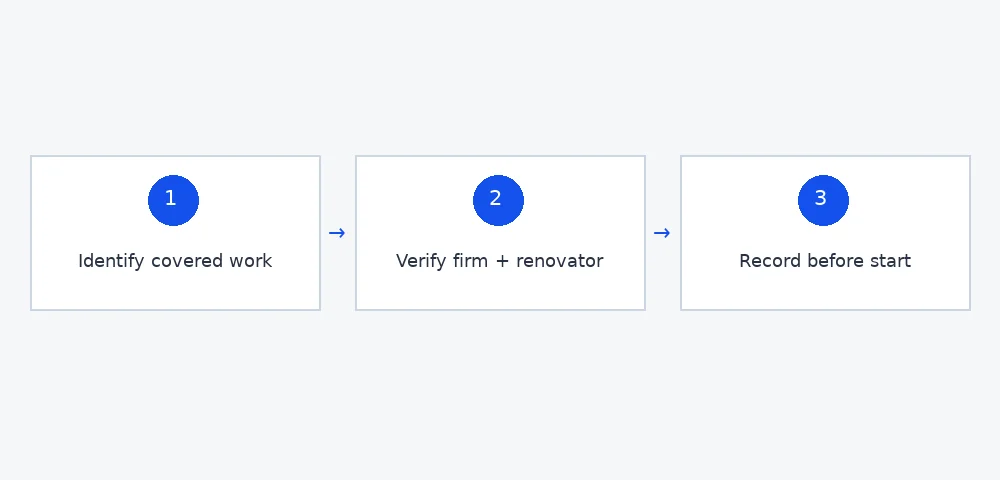
- Identify the work and who actually performs it.
- Verify the firm and renovator credentials separately.
- Confirm applicable program requirements before work begins.
A renovation budget can look complete while the person responsible for lead-safe work is still unidentified. This guide is about that responsibility gap, not another repair-cost formula. It applies to Fix & Flip and Buy & Hold planning when an older property may involve covered work. For general budgeting, use estimating rehab costs; establish the compliance scope before attaching a price to it.
Identify the older-home work scope first
Screen the building age and planned renovation activities, then determine whether the lead-safe renovation program applies. Do not assume every old-house task has the same requirements.
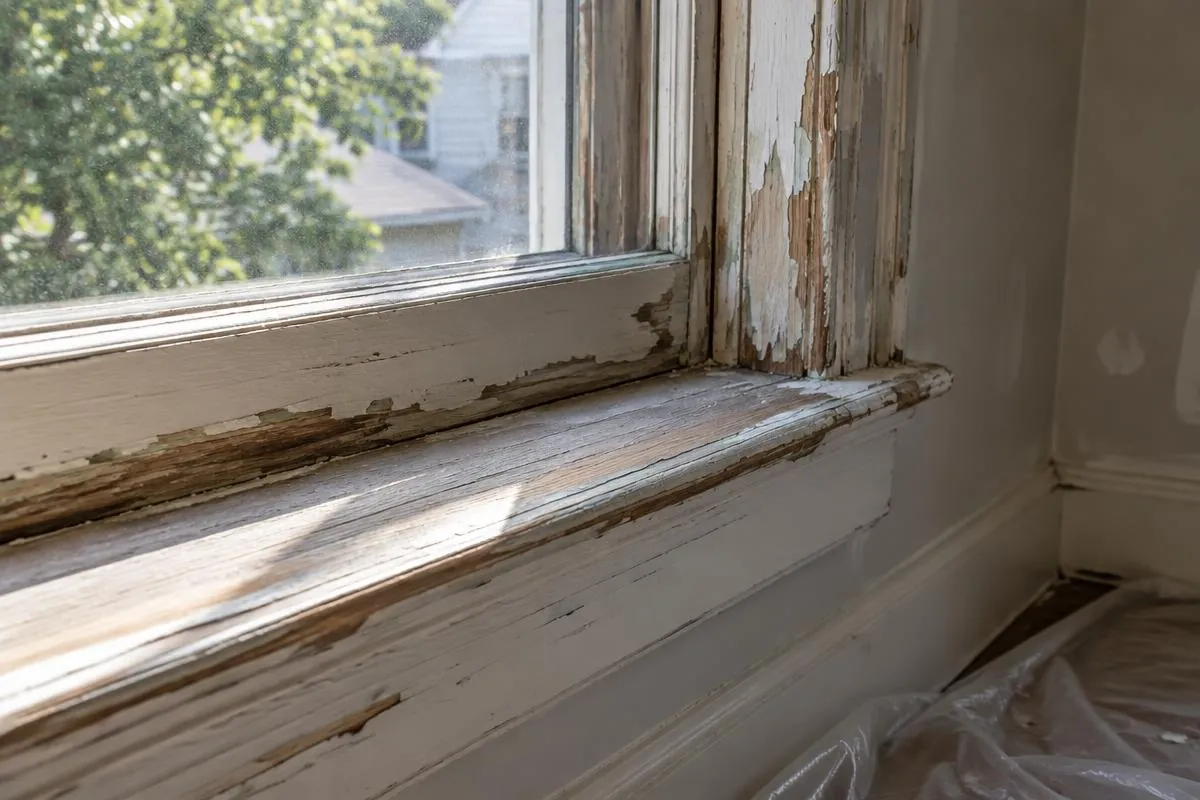
Write down the rooms, surfaces and activities involved. Removing a painted window, disturbing trim and changing a modern appliance present different questions. Ask the qualified firm how it determines whether work is covered and what documentation supports any exception. A photograph of chipped paint is not a lead test. Neither a clean-looking surface nor a seller's informal reassurance replaces the applicable assessment and program requirements.
What changes if the investor performs the renovation?
EPA's investor-specific guidance states that for-profit buyers who renovate and sell pre-1978 homes and perform covered work themselves are subject to the RRP Rule. Firm and renovator responsibilities matter, not just ownership. [1]
Calling yourself the owner does not automatically make a business renovation a do-it-yourself homeowner exception. Describe the actual arrangement: personal labor, an employee crew or an outside contractor. Ask the program administrator or a qualified professional to confirm the scope. This guide does not create a blanket answer for every housing type, activity or jurisdiction.
Separate the firm from the certified renovator
A firm's certification and an individual renovator's qualification answer different questions. Verify both where required rather than accepting a training card as proof that the business is certified.
Open the contractor-verification checklist
- What exact business will perform the covered work?
- Is its applicable certification current?
- Who is the assigned certified renovator?
- Which program administers this property location?
- How will work records and completion documentation be supplied?
Record the business name used in the contract, the certification details, the person assigned to the project and the verification date. If someone else turns up to perform the work, ask whether that changes the approved arrangement. A polished proposal is not credential verification. Resolve mismatches before authorizing work, not after materials have been disturbed.
| Who performs work | Verification conversation | Before-start record |
|---|---|---|
| Investor or employees | Applicable firm and renovator responsibilities | Confirmed program requirements |
| Outside renovation firm | Firm certification and assigned renovator | Credential verification |
| Different jurisdiction | Local program administrator | Location-specific requirements |
Understand your role when hiring an outside firm
Hiring an outside renovation firm changes who performs the work; it does not mean credentials can be ignored. EPA's landlord guidance distinguishes the owner's certification position from the hired firm's obligations. [2]
Use that guidance for the situation it actually addresses rather than treating it as an exemption from all owner duties. Confirm the renovation firm's status and the certified renovator assigned to covered work. Specify what the written proposal includes, who coordinates access and which records the owner receives. Consult a qualified adviser about responsibility allocation when subcontractors or employee crews are involved.
Separate lead-safe planning from sale disclosure, insurance and local permit requirements. They may all affect the same project, but satisfying one does not necessarily satisfy the others. Ask each professional which question they are answering. Keep the resulting records in distinct folders so a permit is not accidentally presented as proof of lead-safe certification.
Verify credentials through the correct program
Check whether EPA or an authorized program administers the requirements for the property's location. The firm-certification guidance identifies that distinction. [3]
Use the applicable official lookup or administrator instead of a search advertisement or a screenshot supplied without context. If a firm is absent, ask the relevant program what that means before drawing conclusions. A name variation, expired status or different jurisdiction needs resolution, not speculation. EPA also provides directions for finding certified renovation firms. [4] Save the verification details with the project file and repeat the check if the firm or scope changes.
Does certification prove my renovation plan is compliant?
No. Credentials identify qualifications; they do not establish that every aspect of this particular project has been planned or performed correctly. Ask how the firm will apply requirements to the actual work.
Discuss occupant access, containment, cleaning, waste handling and required records with the qualified firm. Do not use this article as instructions for disturbing painted surfaces. A completed training course is not a substitute for project-specific precautions. If conditions change after demolition begins, pause the affected activity and obtain guidance rather than assuming the original scope covers everything discovered.
Compare bids using the same verified scope
Bid comparisons are meaningful only when they include the same work and documented requirements. The lowest number may exclude a responsibility another firm has explicitly included.
Here is a labeled example, not a market estimate: proposal A quotes $8,000 for a window package but leaves required preparation and records unclear. Proposal B quotes $9,200 and itemizes them. The $1,200 difference does not establish that B is expensive or A is sufficient. Ask A to describe the missing scope, then compare complete proposals. Never assign an invented nationwide compliance allowance to close the gap.
For the investment model, use confirmed bids and a contingency appropriate to the property. Review Fix & Flip analysis and vacant-property insurance planning for adjacent decisions. Credentials belong in the diligence packet; they do not guarantee resale value or a particular project schedule.
When DispoKey may not be your best option
If you need financing contingencies or a specialist to certify a renovation plan, marketplace access does not solve that requirement. Obtain qualified advice before committing to a property.
DispoKey's buyer hub serves Fix & Flip and Buy & Hold buyers. Apply for buyer access; the team reviews applicants before marketplace approval, and credentials are provided by call or email, never text. No instant access or inspection-period promise is implied. The rehab-budget glossary supports the financial terminology, not certification advice.
What if the renovation firm replaces the crew?
Confirm whether the replacement changes the assigned certified renovator, contracting firm or agreed work practices. The original credential packet should describe the people and business actually responsible.
Ask for an updated project contact and documentation before the affected work resumes. Keep the original and replacement records labeled by date; silently substituting one file for another makes later responsibility questions harder to resolve. A staffing change is a verification trigger, not automatic proof of a violation.
Key takeaways
Identify covered work, determine who performs it, verify firm and individual credentials and record the applicable jurisdiction before starting. Keep the renovation compliance question separate from acquisition pricing and seller disclosure. This is educational guidance requiring qualified legal and program review, not a certification or a determination that a particular project is exempt.