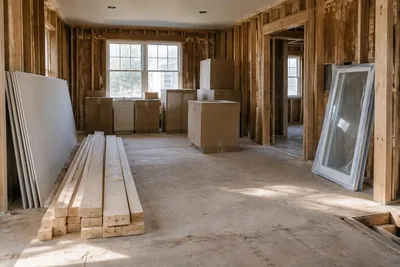
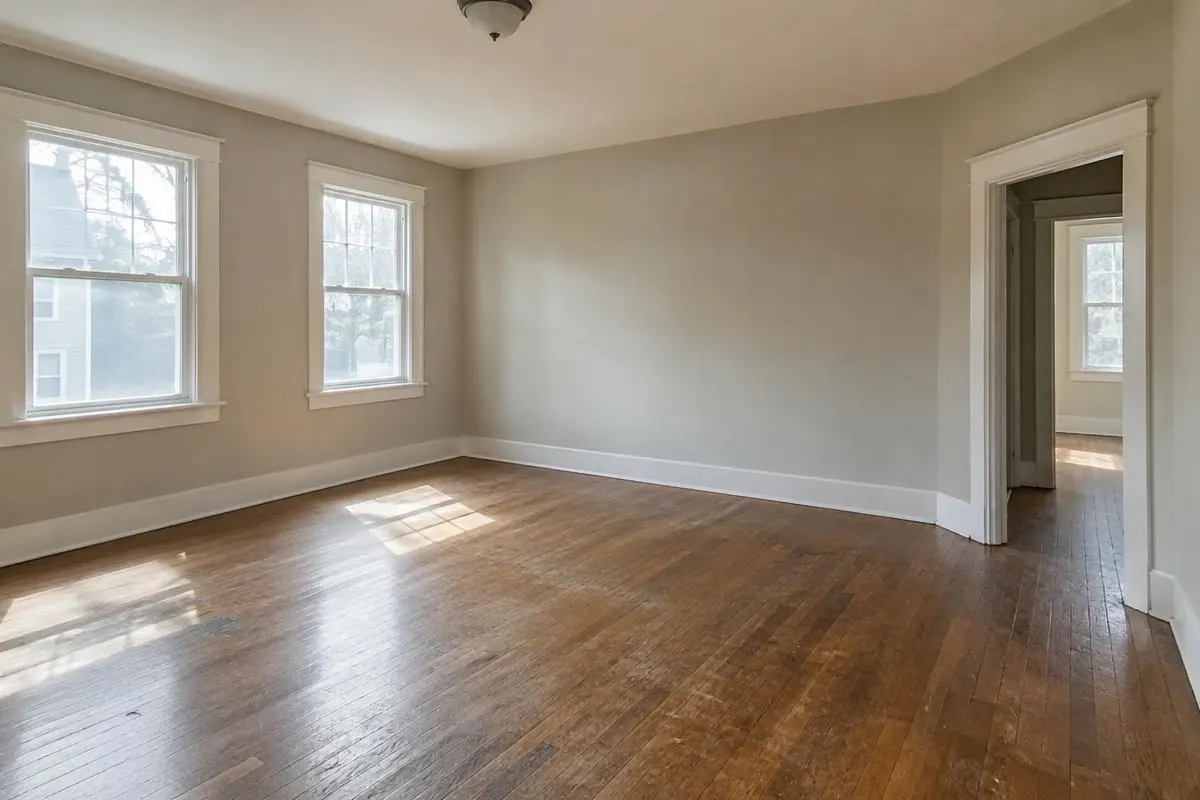
Quick answer: Arrange vacant property insurance before closing by giving an insurance professional the actual occupancy, condition, planned renovation and purchase date. Ask for written coverage and effective-date confirmation, not just a quote. DispoKey buyers should check three separate items: property coverage, liability and flood protection; policy terms and waiting periods can differ.
- Tell the insurer the house is empty and how long it will remain empty.
- Describe the intended Fix & Flip or Buy & Hold plan accurately.
- Confirm coverage begins when your responsibility begins.
A purchase budget can look complete while the insurance plan is still a placeholder. An empty house waiting for work, a house undergoing renovation and a tenant-ready rental are different exposures. This checklist concerns the acquisition handoff, not choosing a policy solely by the smallest premium.
Describe actual occupancy, not your future plan
Tell the insurance agent or broker what is happening at the property today. Future intentions do not establish present coverage.
Give the address, property type, expected closing date and known vacancy timeline. Explain whether furnishings remain, whether someone occupies any unit and whether utilities are on. Ask how that insurer distinguishes vacant from unoccupied property; do not treat informal industry descriptions as the wording in your policy. NAIC advises checking coverage and timelines with an agent when moving and leaving a home behind. [1]
For a Buy & Hold purchase, an empty period before tenant move-in still matters. For a Fix & Flip, explain the planned work rather than requesting ordinary owner-occupied coverage.
What condition information does the insurer need?
Disclose known conditions and the scope of planned work so underwriting can address the actual risk. A marketing photograph is not a complete condition report.
Discuss roof condition, visible damage, electrical and plumbing concerns, security, outbuildings and major renovations. Share available inspection findings without claiming certainty about unseen systems. Ask whether the insurer needs photographs, an inspection or contractor details before binding. If repairs are required for eligibility, get the requirement and timing in writing. Do not schedule work around an assumption that the insurer will approve it later.
Use a coverage-confirmation checklist before closing
The goal is to resolve material gaps before you take responsibility for the property. A quote alone does not tell you that coverage is active.
Open the pre-closing insurance checklist
- Named insured and buying entity are correct.
- Actual vacancy and renovation plans are disclosed.
- Effective date and time are confirmed.
- Coverage limits, deductibles and exclusions are understood.
- Lender evidence requirements are met.
- Flood protection is considered separately.
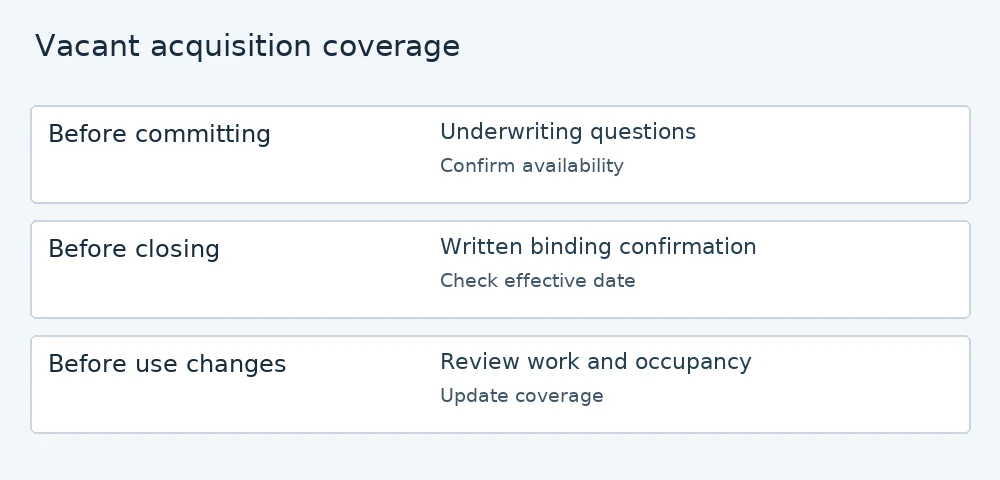
| Acquisition stage | Ask for | Stop and clarify if |
|---|---|---|
| Before committing | Underwriting questions and realistic availability | Condition or intended use is unacceptable |
| Before closing | Written binding and effective-date confirmation | Only a price quote is available |
| Before work or occupancy changes | Revised coverage instructions | Planned use differs from insured use |
Compare coverage terms before comparing premiums
Ask what the policy covers, what it excludes and how losses are valued. Two quotes with similar premiums can leave very different gaps.
Discuss the property coverage limit, replacement-cost or actual-cash-value basis, deductibles and covered causes of loss. Ask about vacancy provisions, water damage, theft, vandalism and liability without assuming any particular peril is included. NAIC notes that combining or changing insurance calls for a review of coverage needs, not simply a discount calculation. [2]
Landlord coverage, vacant dwelling coverage and renovation coverage are not interchangeable labels. Ask the licensed professional to explain the form proposed for your property and any endorsement required. Keep the explanation with the policy documents.
Does property coverage also address liability and contractor risks?
Not necessarily. Ask separately about premises liability, work at the site and the insurance carried by contractors.
A contractor's certificate does not prove your property has every protection you need. Request advice about insured entities, subcontractors, job scope and changes in exposure. For a substantial rehab, ask whether a builders-risk or another appropriate form should be considered; do not decide from the name alone. Check the insurance plan against the scope in our rehab-cost guide so underwriting is not based on a cosmetic repair when the budget includes major systems.
Check flood protection and timing separately
Do not assume standard property coverage includes flood loss. Ask about flood exposure and the effective date of any separate flood policy.
FEMA says National Flood Insurance Program coverage generally has a thirty-day waiting period, with exceptions. [3] That is not a universal thirty-day delay for every policy or every purchase. Ask an insurance professional which exception, if any, applies and obtain confirmation rather than relying on a general article. A lender's requirement and your own risk tolerance may be different questions.
Use official flood information and property-specific records. A seller's statement that the house has never flooded is not a coverage determination. Budget the premium you are actually offered and the deductibles you can afford.
Coordinate the effective date with the closing handoff
Get the coverage start date and any binding conditions confirmed before closing. Also confirm when the purchase agreement transfers relevant responsibility.
Give the insurer the buyer's correct legal name, financing information where needed and any revised closing date. Ask the lender or closing professional what evidence is required. If the date changes, contact the insurer; do not presume coverage shifts automatically. Keep the written confirmation, policy number when issued and a contact for claims or amendments accessible to the person managing the property.
The seller's insurance is not your coverage. Resolve gaps before proceeding.
Budget the premium without confusing it with protection
Convert the actual quote to the planned holding period, then keep uninsured exposures separate. This example explains budgeting only, not typical insurance prices.
Suppose the insurer quotes $2,400 annually and your initial plan is a four-month hold. A simple planning allocation is $2,400 divided by twelve, multiplied by four: $800. That arithmetic does not prove you can buy four months of coverage or recover the unused portion. Ask about minimum earned premium, cancellation and other applicable terms.
If a covered loss carries a $5,000 deductible, the $800 allocation does not cover that potential outlay. Test an eight-month hold and a coverage change during renovation. Add the answers to your Fix & Flip analysis or rental budget, using actual quotes instead of copied averages.
Review coverage when the property's use changes
Notify your insurance professional before substantial work or occupancy changes. A purchase-stage policy should not be assumed to remain suitable indefinitely.
Examples include starting demolition, finishing renovations, signing a lease or leaving the property empty longer than expected. Ask what notice or new coverage is needed and when. A Buy & Hold owner should connect the change to their property-management handoff; the person arranging maintenance needs the relevant insurance contacts and restrictions. Keep dated confirmation of amendments rather than relying on a remembered call.
When DispoKey may not be your best option
If your purchase requires financing contingencies or you cannot resolve condition and coverage questions before committing, another acquisition route may fit better.
DispoKey serves Fix & Flip and Buy & Hold cash buyers through off-market opportunities. Apply for buyer access; our team reviews applications before granting marketplace access. Credentials are provided by call or email, not text. No access approval replaces your own insurance, legal or financial diligence.
Key takeaways
Disclose actual occupancy and work plans, compare policy terms and bind the correct coverage for the handoff date. Check flood timing separately and review changes promptly. Treat this as educational preparation for a licensed insurance professional, not a recommendation of a particular policy.