Quick answer: A rental property inspection checklist covers safety first (smoke and carbon monoxide alarms, electrical, gas, stairs), then major systems (roof, plumbing, HVAC, water heater), then unit condition room by room. HUD's NSPIRE standards and its HQS inspection form are free, official baselines. DispoKey buyers use the checklist on off-market Buy & Hold deals before closing and before each new tenant.
- Safety items that can fail a housing inspection.
- Major systems that drive your capital budget.
- Room-by-room condition you record with dated photos.
Why use a written inspection checklist
A written checklist turns a walkthrough into evidence. It protects your budget when you buy, documents condition at move-in and move-out, and shows you met basic habitability standards if a tenant or housing agency asks.
Use one template for three moments: pre-purchase, move-in and move-out. The same rows at each stage make it easy to compare condition and to support security-deposit deductions with dated photos.
Start from an official standard
HUD publishes two free baselines you can borrow. NSPIRE is HUD's current physical inspection standard for HUD-assisted housing, and the older HQS inspection checklist (form HUD-52580) lays out room-by-room items for voucher units. Even if you never rent to a voucher holder, they show what an inspector treats as a deficiency.
For homes built before 1978, add lead-based paint items. Federal rules at 40 CFR 745.113 require a lessor to give tenants the lead disclosure and pamphlet before a lease of target housing; see our lead paint disclosure guide and EPA's disclosure rule page.
The checklist: safety first
Safety items come first because they are the ones that can stop a lease or fail an inspection.
- Smoke alarms in each bedroom, outside sleeping areas and on every level; carbon monoxide alarms where there is fuel-burning equipment or an attached garage, as your state or local code requires.
- Electrical: covered outlets and switch plates, no exposed wiring, GFCI protection near water, a labeled panel with no scorching.
- Gas and heat: no gas odor, vented water heater and furnace, working temperature and pressure relief valve.
- Stairs and rails: secure handrails, no loose treads, working exterior lighting.
- Egress: bedroom windows that open and are not painted or nailed shut.
- Radon: a recent test result, or a note to test, using EPA's action level of 4 pCi/L.
The checklist: major systems
Major systems set your capital reserve, so record age, condition and any visible failure for each.
Roof and exterior
Note roof age, missing or curled shingles, flashing, gutters, grading toward the foundation and any visible foundation cracks.
Plumbing and water heater
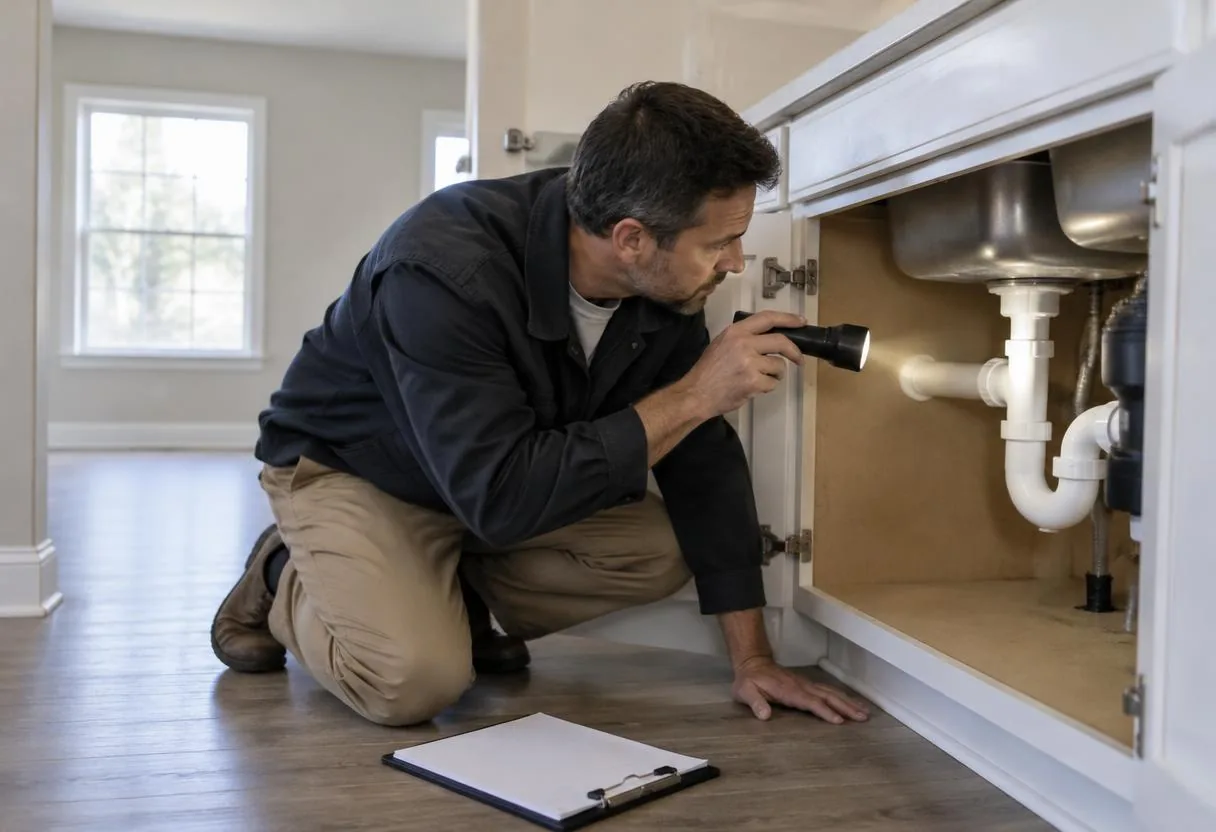
Run every fixture, look under sinks for active leaks, note pipe material and water heater age, and flush toilets to check for slow drains. Older homes may need a sewer scope.
HVAC
Record the age of the furnace and air conditioner, filter condition, and whether every room gets air. Ask for the last service date.
The checklist: room by room
Walk each room in the same order and photograph each wall, the floor and the ceiling. Note flooring, wall damage, doors and locks, window screens and blinds, cabinets and appliances. In kitchens and baths, test the range, refrigerator, dishwasher, exhaust fans and caulking around tubs and showers.
Example: turning findings into a budget
The table is an illustrative example of how one Buy & Hold investor ranked findings on a three-bedroom house. Your prices will differ.
| Finding (example) | Priority | Example cost |
|---|---|---|
| Missing bedroom smoke alarms | Before move-in | $90 |
| Leaking trap under kitchen sink | Before move-in | $180 |
| Water heater 14 years old | Reserve, 0–12 months | $1,600 |
| Roof 18 years old, minor curling | Reserve, 1–3 years | $9,500 |
| Worn carpet in two bedrooms | At turnover | $1,800 |
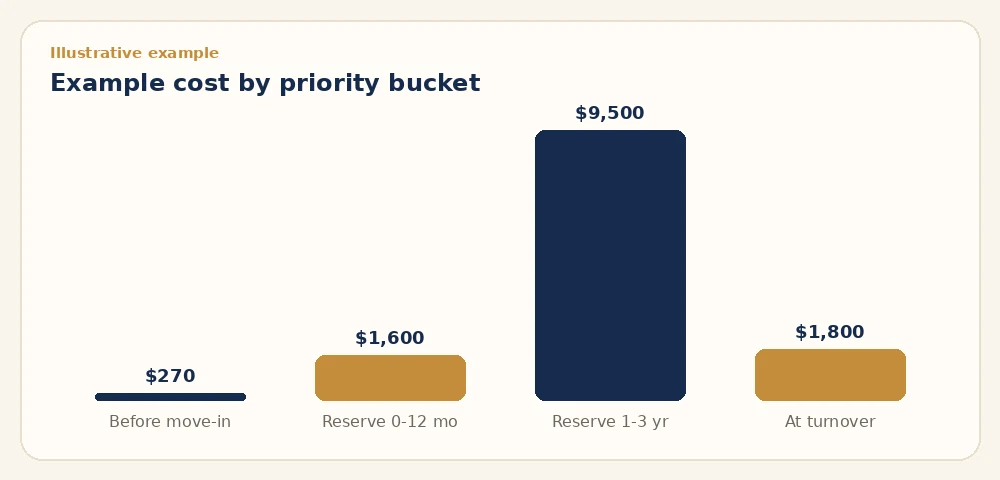
Sort every finding into three buckets: fix before a tenant moves in, reserve for in the next one to three years, and handle at turnover. That split feeds directly into your rental cash flow analysis and your offer price.
Using the checklist on off-market deals
Off-market properties often come with limited access windows, so arrive with the checklist printed and a flashlight, moisture meter and outlet tester in hand. Because DispoKey does not promise inspection periods on marketplace deals, the walkthrough is where you price the work. Pair the checklist with our rehab cost guide and the Buy & Hold strategy guide.
Approved buyers see off-market deals in the DispoKey marketplace; to get access, apply as a cash buyer and our team reviews each application.
Tools to bring to every inspection
A short tool kit makes the checklist faster and the findings more reliable. Bring a bright flashlight, an outlet tester with a GFCI button, a moisture meter, a step stool, a tape measure and a phone with plenty of storage for photos. A thermometer checks water heater and supply-air temperatures, and a notebook or tablet keeps the rows in order.
Photograph every finding with something for scale, and name files by room and date. When you compare move-in and move-out photos later, consistent angles and names save hours and support any deposit deduction you make under your state's security-deposit rules.
When DispoKey may not be your best option
If you need a financing contingency or a formal inspection period before you commit, a traditional listed purchase is a better fit. Our deals suit buyers who can walk a property, price repairs from the checklist and close with cash or arranged financing.
Key takeaways
- Use one checklist for purchase, move-in and move-out so condition is comparable.
- Borrow HUD's NSPIRE and HQS items as a free official baseline.
- Sort findings into before move-in, reserve and turnover buckets.
- On off-market deals, the walkthrough is where you price the work.
Frequently asked questions
What should be on a rental property inspection checklist?
Safety items such as alarms, electrical and gas, major systems like roof, plumbing and HVAC, and room-by-room condition recorded with dated photos.
How often should a landlord inspect a rental property?
At move-in and move-out at minimum, plus periodic inspections with proper notice under your state's landlord-tenant law and the lease.
Is there an official rental inspection checklist?
HUD publishes the HQS inspection form HUD-52580 and the newer NSPIRE standards. Local rental registration programs may add their own lists.
Can a landlord enter to inspect without notice?
Most states require reasonable notice except in emergencies. Check your state's landlord-tenant statute and your lease terms before scheduling.