Quick answer: Virtual wholesaling means finding, contracting and selling off-market deals in a market where you do not live. You rely on remote lead generation, local helpers for photos and access, an investor-friendly title company and electronic signatures. DispoKey supports virtual wholesalers with a 72-hour buyer match, a 60/40 split favoring you and $0 upfront.
- Pick a market from data, not habit.
- Build a local team: photographer, lockbox access, title company.
- Verify wiring and identity on every remote closing.
How virtual wholesaling works
The steps are the same as local wholesaling: find motivated sellers, negotiate, sign a contract and match a buyer. The difference is that someone else stands at the property for you.
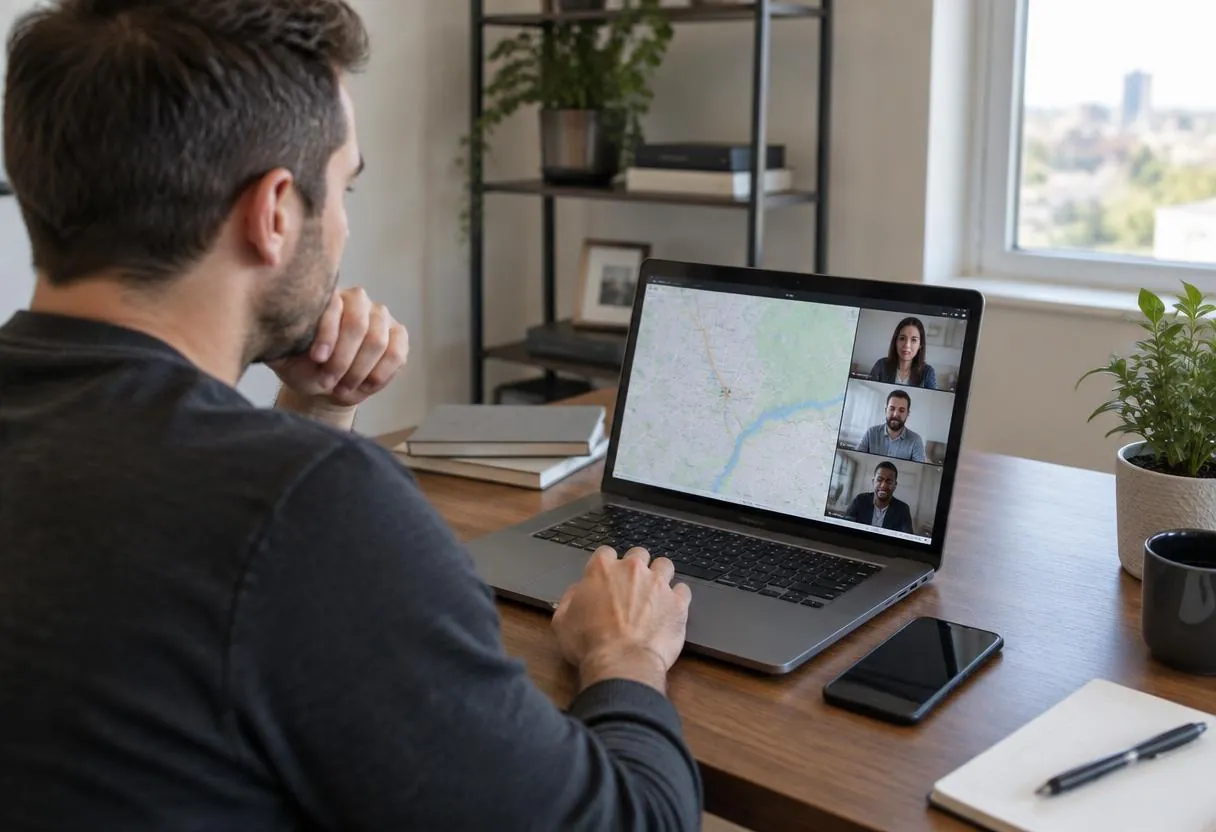
Leads come from mail, calls, texts and online ads aimed at the target market. A local field partner meets the seller or takes photos and video, and a title company closes by mail or electronic signing. Our wholesale business plan guide explains how to set goals for a new market.
Choosing a market remotely
Choose a market where prices, investor demand and seller distress overlap, and where the law is clear about wholesaling. Data replaces local knowledge you do not have.
Use public data such as the Census American Community Survey for housing age and ownership, and the FHFA House Price Index for price trends. Check each state's real estate commission; Oregon's wholesaling page is an example of a state that licenses the activity. Buyer demand shows in cash sales and active investor lists, and DispoKey's buyer city pages, like Houston, show where our buyers look.
Building your remote team
You need three local roles: someone to see the property, someone to close and someone to answer the buyer's questions. Each can be a contractor rather than an employee.
Field partner
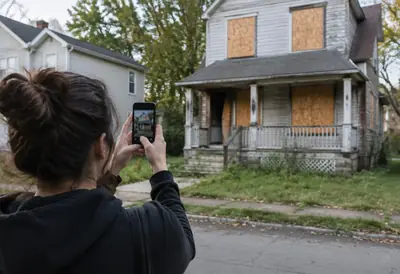
A photographer, inspector or agent who visits the property, shoots photos and video and installs a lockbox with the seller's permission.
Investor-friendly title company
One that handles assignments and double closings, with mobile notaries or e-closing. See how to choose an investor-friendly title company.
Acquisitions help
Callers or texters who follow your scripts and log every contact. The wholesaling scripts guide covers wording.
Remote marketing and outreach rules
Remote outreach still follows federal and state telemarketing rules. Before calling or texting, scrub numbers against the National Do Not Call Registry and honor opt-outs.
The FTC's Telemarketing Sales Rule guidance explains Do Not Call duties, and the FCC Reassigned Numbers Database helps avoid calling numbers that changed hands. Our TCPA guide for real estate and skip tracing guide go deeper.
Worked example: remote deal economics
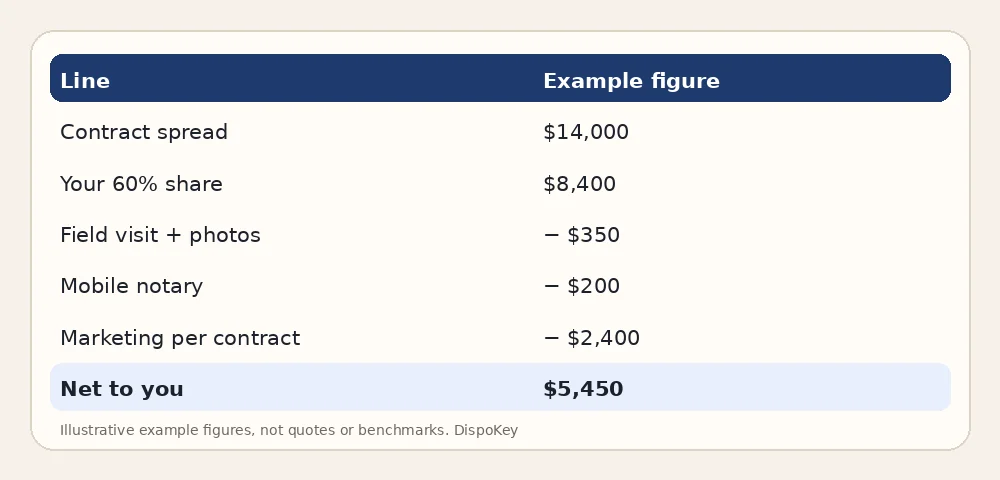
Remote deals add field and closing costs, so check them against the spread before you scale. Here is one deal with labeled example numbers.
Illustrative only: a contract leaves a $14,000 spread. Field visits and photos cost $350, a mobile notary costs $200 and marketing for the month that produced the lead averaged $2,400 per signed contract. Through DispoKey's 60/40 JV split favoring the wholesaler, your share is $8,400. After $2,950 in costs, your net is $5,450. If marketing cost per contract doubles, the net falls to $3,050, which is why tracking cost per contract matters.
| Line | Example figure |
|---|---|
| Contract spread | $14,000 |
| Your 60% share | $8,400 |
| Field visit + photos | − $350 |
| Mobile notary | − $200 |
| Marketing per contract | − $2,400 |
| Net to you | $5,450 |
Protecting remote closings from fraud
Remote closings are a target for wire fraud, because buyers, sellers and title companies communicate by email. Confirm wiring instructions by phone using a number you already know, never one in the email.
The FBI describes business email compromise, where criminals impersonate a closing party to redirect funds. Our guide to changed wire instructions lists verification steps. Use identity checks on every signer you have not met.
JV your remote deals with DispoKey
Disposition is the hardest part of a new market, because you have no buyer list there yet. DispoKey matches off-market contracts with vetted cash buyers within 72 hours, with $0 upfront and a 60/40 split favoring you.
Submit through the deal form or read how the JV works. You can text (802) 618-0015 with your DK ID. On-market deals are not accepted.
Your first 90 days in a new market
Treat the first quarter as a test with a fixed budget and clear checkpoints. Without them, remote markets can absorb money for months before you know whether they work.
Days 1 to 30
Choose the market, confirm state rules, hire a field partner and open an account with a title company. Launch one lead channel and log every response in your CRM.
Days 31 to 60
Run appointments by video, send field partners to the most promising properties and make written offers. Track response time and offers made.
Days 61 to 90
Review cost per lead, cost per contract and time to buyer match. Keep, adjust or exit the market based on those numbers, not on one good or bad week.
When DispoKey may not be your best option
If you already have strong local buyers in the target market, assigning directly keeps your whole fee. A JV fits best when you are entering a market without a buyer list or need a faster match than your own list provides. If the target state requires a wholesaler license you do not yet hold, or the market has few cash buyers at your price points, pause and fix that first. Remote deals magnify every weak link, so a smaller, well-run pilot beats a rushed multi-market launch.
Key takeaways
- Pick markets with data and clear wholesaling rules.
- Build a field partner, title company and caller team.
- Verify wire instructions by phone on every remote closing.
Frequently asked questions
Can you wholesale real estate virtually?
Yes. Many wholesalers run lead generation, contracting and disposition remotely with local helpers and e-closings.
What is the hardest part of virtual wholesaling?
Usually disposition in a new market, because you lack local buyers, plus coordinating property access remotely.
Do I need a license to wholesale virtually?
It depends on the state where the property is located. Some states require a license or registration for wholesaling.
How do sellers sign contracts remotely?
Most use electronic signatures for the agreement, and closings use mobile notaries or the title company's e-closing process.