
Quick answer: Wholesaling land means putting a vacant parcel under contract and selling that contract, or double closing, to a land buyer. Land deals live or die on zoning, legal access, flood zone, soil and utilities. Line up builders or adjacent owners first. DispoKey's buyer network buys houses, so submit only buildable lots tied to a house deal.
- Pull owner lists of vacant parcels from county records.
- Check zoning, access, flood, wetlands and soil before you sign.
- Price from sold land comps and confirm a buyer exists.
How wholesaling land works
The mechanics match a house deal: you sign a purchase contract with the owner, then assign it or double close with an end buyer. The buyers and the due diligence are what differ.
Land has no rent or repair comps. Its value comes from what can be built or done on it, so you are selling a buyer certainty about use. A cheap parcel with no road access or in a wetland may be nearly unsellable. Follow your state's rules for marketing contracts and disclosing your role; several states now regulate wholesaling directly.
Where to find motivated land sellers
Owners of vacant land are often out of state, inherited the parcel or are tired of paying taxes on it. County records let you find them.
- Assessor data: filter for vacant land use codes and mailing addresses in another state.
- Tax-delinquent lists: unpaid taxes on unused land are a strong signal.
- Probate filings: heirs often want to sell land they never visit.
- Adjacent owners: neighbors may want to buy as much as sell.
Direct mail works well because land owners rarely live nearby. See direct mail for real estate investors for list and budget planning, and skip tracing for finding phone numbers legally.
Land due diligence checklist
Check these items before you sign, or make your contract subject to them. Each one can make a parcel worthless to a builder.
Zoning and allowed use
Call the county or city planning office to confirm zoning, minimum lot size and setbacks.
Legal access
A parcel needs recorded road frontage or an easement. Landlocked land sells for far less.
Flood zone and wetlands
Look the parcel up on FEMA's Flood Map Service Center and the U.S. Fish and Wildlife Service Wetlands Mapper.
Soil, septic and utilities
USDA's Web Soil Survey shows soil types. Ask the health department whether a septic perc test is needed and whether water, sewer and power reach the lot.
How to price a land wholesale deal
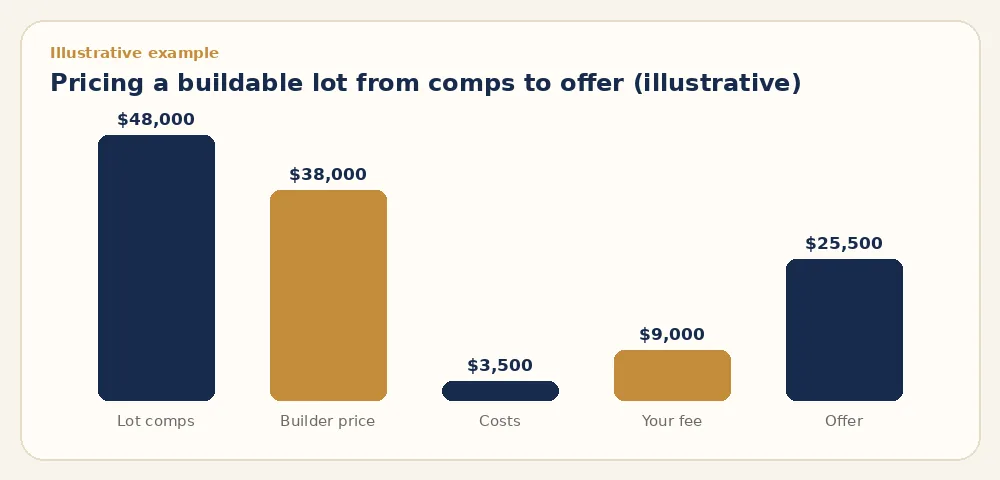
Price from sold land comps, not asking prices, then work back to an offer that leaves room for your fee and the buyer's margin.
Land comps are thin, so widen your search and compare per-acre or per-lot prices for similar zoning and access. Our guide to pricing a wholesale deal covers the backward math. Confirm a buyer's price range before you commit; a builder may pay a premium for a lot that fits their plan.
Write the contract for land risks
Give yourself a due diligence period long enough to confirm access, zoning and utilities, and spell out who pays for a survey or perc test. State whether the price is per acre or for the whole parcel, and what happens if a survey shows less acreage than the tax record. Our wholesale contract guide covers the clauses that let you exit cleanly if a buyer cannot use the land.
Check the county's own records
Large counties publish parcel maps, zoning layers and tax status online. For example, the Maricopa County Assessor and the Harris Central Appraisal District both offer parcel search with owner mailing addresses and land use codes. Use the official record, not a listing site, for acreage, zoning and the owner of record before you send an offer.
| Land deal line (illustrative example) | Amount |
|---|---|
| Sold comps for similar buildable lots | $48,000 |
| Builder's price after their margin | $38,000 |
| Survey, perc test and closing costs | -$3,500 |
| Your target fee | -$9,000 |
| Offer to owner | $25,500 |
Who buys wholesale land?
Land buyers are specialized. Line them up before you contract, because a house buyer list rarely wants a five-acre rural parcel.
- Local builders looking for infill lots.
- Adjacent owners who want more yard or privacy.
- Land investors who resell with seller financing.
- Recreational buyers for hunting or camping parcels.
Ask each buyer what they will pay for, in writing: zoning, minimum size, utilities, access and price per acre or per lot. Then market parcels only to buyers whose criteria they match. A short buyer profile like this saves you from contracting land nobody on your list wants, and it lets you tell a seller honestly how quickly you can close.
When DispoKey can help
DispoKey's buyers are Fix & Flip and Buy & Hold investors in houses. A buildable infill lot in a market where our buyers build or flip may fit; raw rural acreage usually will not.
For off-market house deals, our JV terms apply: a 72-hour buyer-match guarantee, a 60/40 fee split in your favor and $0 upfront. On-market deals are not accepted. Submit a deal or read how JV with DispoKey works. Wholesalers can text (802) 618-0015 with their DK ID.
When DispoKey may not be your best option
If your contract is raw land, timberland or acreage without a house plan, a land-specific buyer list will move it faster than our network. If you already have a strong land buyer, close with them directly.
Key takeaways
- Land value comes from use, so zoning, access and utilities come first.
- Vacant land owners are often absentee, inherited or tax-delinquent.
- Price from sold land comps and confirm a buyer before contracting.
- Follow your state's wholesaling disclosure and licensing rules.
Frequently asked questions
Is wholesaling land easier than houses?
There are no repairs, but buyers are fewer and due diligence is different. Access, zoning and utilities decide value.
How do you find buyers for wholesale land?
Local builders, adjacent owners, land investors and recreational buyers. Line them up before you sign a contract.
What due diligence does vacant land need?
Zoning, legal access, flood zone, wetlands, soil, septic suitability and utility availability, checked with official sources.
Does DispoKey buy land deals?
Our buyers buy houses. Buildable lots in active markets may fit; raw acreage usually needs a land buyer.