
Quick answer: To buy a duplex, choose financing, verify current rents and leases, inspect both units, confirm zoning allows two units, and underwrite cash flow with vacancy and reserves. Investor loans usually need more down than owner-occupied loans. DispoKey's marketplace shows vetted off-market Buy & Hold and Fix & Flip duplexes to approved cash buyers.
- Get the rent roll, leases and deposit list before you offer.
- Confirm two units are legal under zoning.
- Underwrite with real expenses, not seller estimates.
Why investors buy duplexes
A duplex puts two rents under one roof, one lot and one tax bill. That spreads costs and means one vacancy does not stop all income.
Duplexes are a common Buy & Hold step between single-family rentals and larger buildings. They are still financed as residential property, which keeps loan options wider than for five or more units. Many buyers start by house hacking one, then buy the next as a pure rental.
How to finance a duplex
Financing depends on whether you will live there. Investor loans usually need a larger down payment and higher rates than owner-occupied loans.
- Conventional investor loans: down payment and reserve rules vary by lender and unit count.
- DSCR loans: qualify on the property's rent compared with its payment rather than your personal income.
- Cash or a line of credit: fastest for off-market deals, then refinance later.
- FHA or VA: only if you will live in one unit; HUD and VA set those occupancy rules.
Get pre-approved before you shop so you know your price range and closing timeline.
How to verify rents and leases
Do not rely on the listing's rent numbers. Ask for documents and check them against bank deposits and the market.
- Rent roll with each tenant, rent, lease dates and deposit.
- Signed leases and any amendments.
- Estoppel letters where tenants confirm their rent and deposit.
- 12 months of income and expense records.
Compare rents with nearby listings and HUD Fair Market Rents; our guide on how much rent you can charge shows how. Below-market rents are upside, but only if leases and local rules let you raise them.
What to inspect on a duplex
Inspect both units, not just the vacant one. Shared systems and the unit you did not see often hide the biggest costs.
Separate meters and utilities
Check whether electricity, gas and water are separately metered. Shared meters mean you pay the bill or need a fair way to split it.
Roof, foundation and shared walls
Look at the roof, foundation, sewer line and the firewall between units. Our rental property inspection checklist covers each room and system.
Is the second unit legal?
Confirm with the city or county that the property is legally two units. Some duplexes are conversions done without permits.
Ask the planning or building department about zoning, the certificate of occupancy and any open permits. A legal nonconforming duplex may be allowed to continue but limited if it is damaged or left vacant. An illegal unit can mean fines, lost rent and trouble with insurance or refinancing.
How to tell if a duplex is a good deal
Run the numbers with full expenses and reserves. If it only works at 100% occupancy, it does not work.
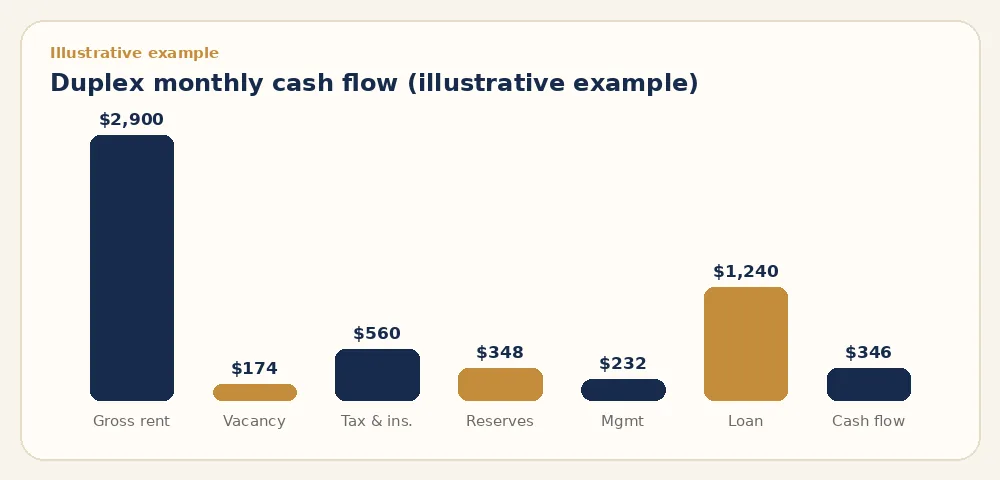
Start with gross rent, subtract vacancy, taxes, insurance, repairs, capital reserves, management and owner-paid utilities, then subtract the loan payment. The illustrative example in this guide shows the steps. Our guides to rental cash flow and cap rate go deeper.
| Monthly line (illustrative duplex example) | Amount |
|---|---|
| Gross rent, two units | $2,900 |
| Vacancy (6%) | -$174 |
| Taxes and insurance | -$560 |
| Repairs and capital reserves (12%) | -$348 |
| Management (8%) | -$232 |
| Loan payment | -$1,240 |
| Monthly cash flow | $346 |
What happens to tenants when you buy a duplex
Existing leases usually stay in force after the sale, so you inherit the tenants, their rents and their deposits. Plan for that before closing rather than after.
- Deposits: make sure security deposits transfer to you at closing, with a written list per tenant.
- Prorations: rent collected for the month of closing is split by day on the settlement statement.
- Notice: send each tenant a letter with your name, how to pay rent and how to request repairs.
- Local rules: some cities limit rent increases or require notice periods, so check before you plan raises.
If you plan to renovate one side, budget for the lost rent while it is vacant. Treat the vacant months as a real cost in your numbers, the same way you would on any Buy & Hold purchase.
Taxes and depreciation
Rental income is reported on Schedule E, and the building, not the land, is depreciated over 27.5 years for residential rental property, as IRS Publication 527 explains. Keep records of improvements separately from repairs.
Finding off-market duplexes through DispoKey
DispoKey's marketplace lists off-market Buy & Hold and Fix & Flip properties, including small multifamily, for approved cash buyers. Access requires team approval, and you review each deal on its own numbers. Apply as a buyer or see markets such as Houston.
When DispoKey may not be your best option
If you need a long inspection period or a financing contingency, or you plan to use an owner-occupied FHA loan, a listed duplex with an agent fits better. Our deals suit investors who can close with cash or investor financing.
Key takeaways
- Duplexes spread costs across two rents and stay residential for financing.
- Verify rents with leases, estoppels and deposits.
- Inspect both units and confirm the second unit is legal.
- Underwrite with vacancy and reserves.
Frequently asked questions
Is a duplex a good first investment property?
It can be. Two rents share one roof and one loan, but you still need reserves and good tenants.
How much down payment do I need for a duplex?
Investor loans often require more than owner-occupied loans. Lenders set the amount by program and unit count.
Can I use an FHA loan to buy a duplex?
Yes, if you live in one unit. HUD allows FHA loans on one to four units for owner-occupants.
What documents should I ask for when buying a duplex?
A rent roll, signed leases, deposit records, estoppel letters and 12 months of income and expense records.