
Quick answer: You can wholesale real estate with little or no money by using free lead sources (driving for dollars, county records, referrals), keeping earnest money small and refundable where the contract allows, and partnering on disposition instead of buying marketing. With DispoKey JV you pay $0 upfront, get a 72-hour buyer-match guarantee and keep 60% of the fee.
- Free leads: driving for dollars, public records, networking.
- Small earnest money, written into the contract.
- A JV dispo partner so you never pay for buyers.
What "no money" really means
No money means no marketing budget and no capital tied up in the property, not zero cost. You still need a phone, time, a written contract and usually a small earnest money deposit. The goal is to replace paid marketing with effort and to let a partner handle buyers so you are not paying for lists or ads.
Before you start, check your state's rules. Several states now regulate wholesaling directly; for example, Ohio Revised Code §5301.95 sets disclosure duties for wholesalers, and Connecticut's §20-329aaa framework requires registration. Our guide to whether wholesaling is legal explains how to read your state's rules.
Step 1: find sellers without paying for leads
Free lead sources trade money for time, and they work when you are consistent. Pick two and work them every week.
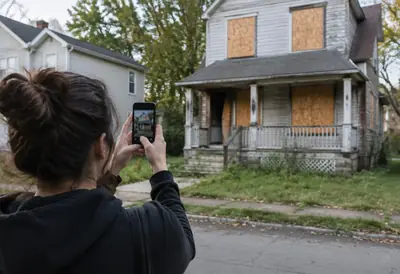
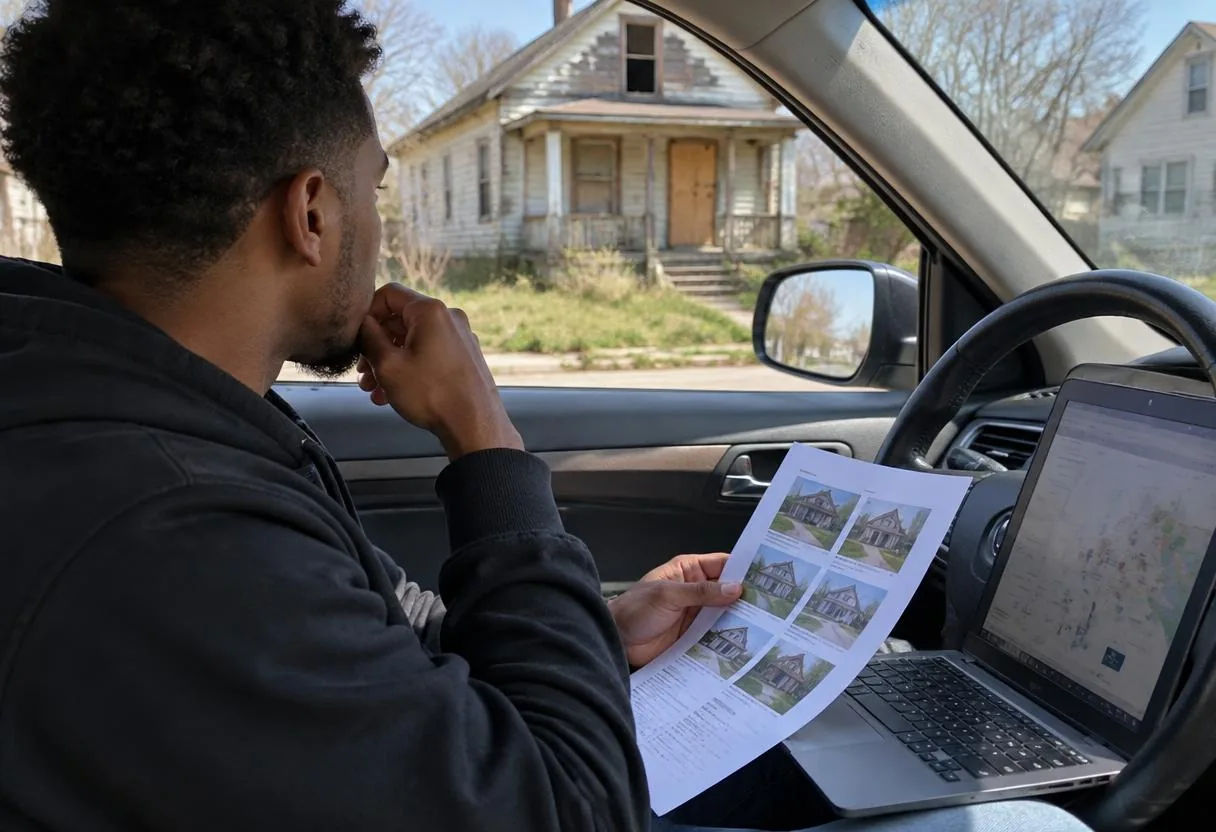
- Driving for dollars. Note vacant, overgrown or boarded homes and look up owners in county records. Our driving for dollars guide covers the routine.
- County public records. Probate filings, code violation lists and tax-delinquent rolls are public in most counties and point to owners with a reason to sell.
- Referrals. Contractors, property managers and estate-sale companies see distressed houses first.
- Skip tracing on a budget. Pay-per-record skip tracing costs cents per lookup rather than a monthly plan.
If you call or text sellers, follow the federal calling rules at 47 CFR 64.1200, including the National Do Not Call Registry; our TCPA guide explains consent.
Step 2: make an offer you can defend
Your offer has to leave room for a cash buyer's profit and your fee. Estimate after-repair value with our ARV guide, price repairs with the rehab cost guide, then work back to a maximum allowable offer with the MAO calculator.
Be honest with the seller about who you are and what happens next. Federal law at 15 U.S.C. 45 bars deceptive practices, and several state wholesaling laws require written disclosure that you may not be the end buyer.
Step 3: keep earnest money small
Earnest money is usually the only real cash in a no-money deal. Negotiate a modest deposit, hold it with a title company or attorney, and write clear conditions for its return into the contract. Our earnest money guide and the EMD glossary entry cover typical terms.
Step 4: let a partner find the buyer
Building a buyers list takes money and months. A JV disposition partner brings buyers to your contract instead, and you split the fee only if the deal closes.
With DispoKey you submit an off-market contract, pay $0 upfront, and we match a buyer within 72 hours under our buyer-match guarantee. You keep 60% of the fee. We accept off-market contracts only; on-market deals are not accepted. Read how the JV works for wholesalers or our guide to JV deals.
Example: one deal with almost no cash out
The figures below are an illustrative example, not a typical result.
| Line (example) | Amount |
|---|---|
| Skip tracing, 200 records | $30 |
| Mailing 40 handwritten letters | $40 |
| Earnest money (refundable per contract terms) | $500 |
| Total cash at risk | $570 |
| Total fee on the deal | $12,000 |
| Your 60% share via DispoKey JV | $7,200 |
| Partner 40% share | $4,800 |
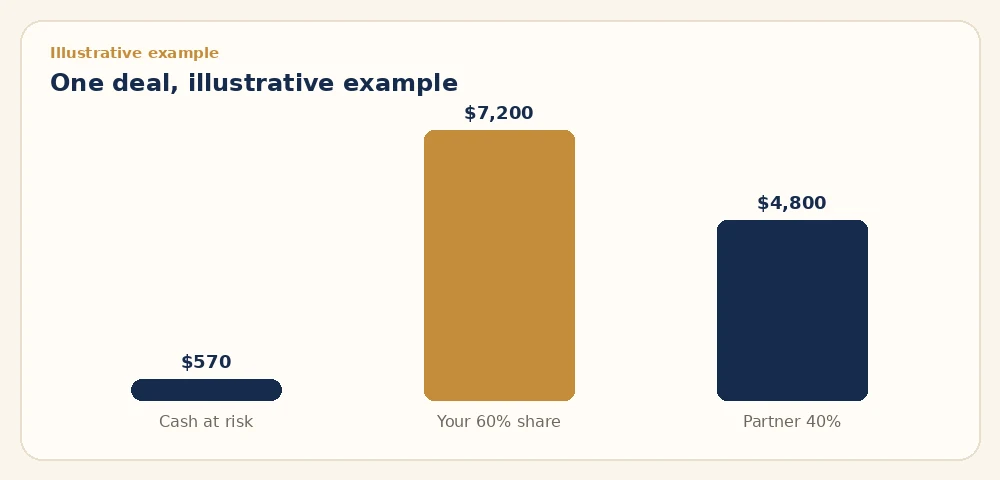
In this example the wholesaler risked $570 and kept $7,200 when the deal closed. Many leads never become contracts, so treat the example as one outcome, not a forecast.
Step 5: track every lead
A simple spreadsheet or free CRM tier keeps follow-ups from slipping. Log the source, first contact date, motivation, next step and outcome. After 60 days you will know which free source produces contracts, and that is where your hours go. See our CRM setup guide.
Taxes on wholesale fees
Wholesale fees are generally ordinary business income. The IRS explains that sole proprietors report business income on Schedule C and may owe self-employment tax. Keep receipts for skip tracing, mail and mileage, and read IRS guidance for sole proprietors.
Tools you need on a zero budget
Free and low-cost tools cover most of the work. A smartphone with a second number for business calls, a free spreadsheet, county record websites and a map app for routes are enough to start. Add a pay-as-you-go skip tracing account and a basic e-signature tool when you send your first contract.
When DispoKey may not be your best option
If you already have a strong buyer lined up for a contract, you may not need a JV partner and can keep the full fee. DispoKey fits when you have an off-market contract and want a buyer fast without paying for marketing.
Key takeaways
- No money means no marketing budget, not zero cost; plan for a small deposit.
- Work two free lead sources every week and follow calling rules.
- Check your state's wholesaling law before you contract.
- A JV partner replaces a paid buyers list: $0 upfront, 72-hour match, 60/40 split.
Frequently asked questions
Can you really wholesale with no money?
Mostly. Free lead sources and a JV partner remove marketing and buyer costs, but you usually need a small earnest money deposit and basic tools.
Do you need a license to wholesale real estate?
It depends on the state. Some regulate wholesaling or require registration or a license. Check your state real estate commission and statutes first.
How much earnest money does a wholesaler need?
It is negotiated. Many wholesale contracts use a modest deposit held by a title company, with return conditions written into the contract.
How does DispoKey help a wholesaler with no money?
You submit an off-market contract with $0 upfront. DispoKey matches a buyer within 72 hours and you keep 60% of the fee.
Official references
- IRS: Self-employment tax (Social Security and Medicare taxes)
- IRS: Sole proprietorships
- Ohio Revised Code 5301.95
- National Do Not Call Registry for telemarketers